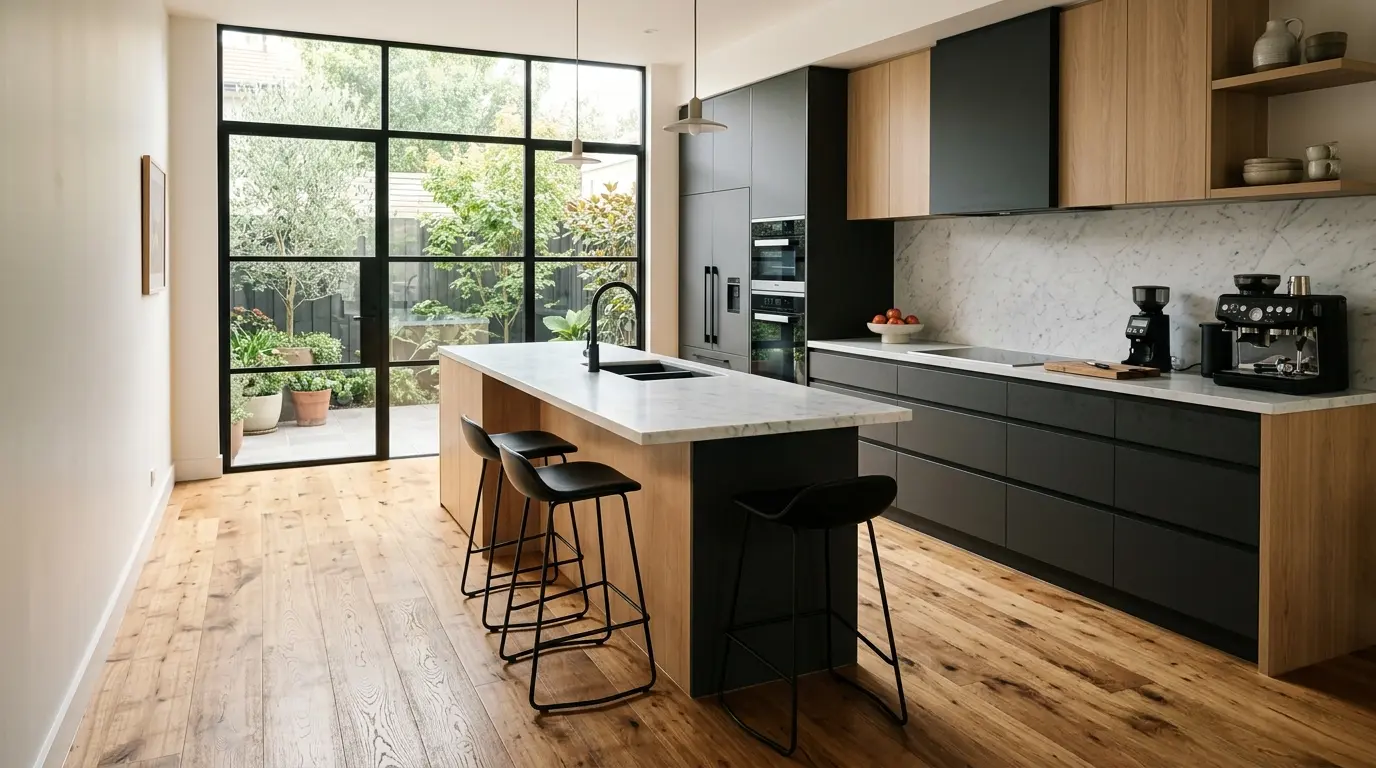
The absolute best hardwood floors in kitchen spaces are high-quality engineered timber or dense Australian solid hardwood, finished with a robust, moisture-resistant sealant. Kitchens are the busiest rooms in any home, demanding a surface that can handle dropped pots, continuous foot traffic, and inevitable spills. For homeowners living in Melbourne, selecting the right timber not only tackles these daily challenges but also ties your interior design together beautifully.
If you are renovating or building from scratch, reviewing your options before making an investment is crucial. Below is a quick summary to help you identify the perfect match for your home.
| Flooring Type | Moisture Resistance | Durability | Best Suited For |
| Engineered Timber | High (Highly stable core) | Excellent | Open-plan living, modern kitchens, fluctuating temperatures |
| Solid Australian Hardwood | Medium (Requires good seal) | Unmatched (Can be sanded) | High-traffic family homes, traditional renovations |
| Parquetry Flooring | Medium to High | Very Good | Statement kitchens, luxury architectural builds |
What is the Best Timber Flooring for Kitchens?
In the debate over the best wood flooring for kitchens, two names typically emerge: engineered oak and traditional solid timber. Having a sturdy, well-built floor is just as critical as having one that looks good, as the kitchen environment is constantly changing temperature, generating steam and moisture.

Engineered Wood:
Engineered hardwood flooring for kitchen spaces is one of the most popular choices among builders and designers due to its exceptional stability and timeless appearance. Floorboards are made with a true hardwood veneer over several layers of cross-directed plywood. This particular design results in engineered wood being very stable. It greatly reduces the natural expansion and contraction of wood when it is subject to high temperatures and moisture. This is why it is the best flooring choice for many builders and designers for kitchen flooring. When it comes to long-lasting stability while retaining the classic charm of wood, it’s sometimes best to look at high-quality Engineered Timber Flooring Melbourne.
Engineered hardwood flooring for kitchen is also a practical option for those looking for engineered wood flooring in kitchen spaces, as it combines the appearance of natural timber with improved stability in areas exposed to temperature and moisture changes.
On the other hand, nothing can be as solid and heavy as solid wood. The extreme density and Janka hardness ratings of Australian native species like Blackbutt, Spotted Gum and Tasmanian Oak are well known throughout the world. Solid wood is slightly more sensitive to moisture fluctuations than engineered wood, but has the longest life span of any type of wood. The great thing about it is it can be sanded and refinished over the decades. A heavy pan will leave a dent in the floor or years of foot traffic will take its toll on the finish and all of this can be remedied with a quick sand and polish to make it look brand new. Solid timber flooring Melbourne continues to be a big hit for kitchen renovations, and is certainly a popular choice of generations.
Why Timber Flooring is Best Choice For Your Kitchen
When it comes to kitchen flooring, most homeowners opt for tiles, vinyl, or some other material that they think is too fragile for wood. But when you think about how timber flooring is the ideal flooring material for your kitchen, you’ll realize that there are numerous practical and stylish advantages.
1. Seamless Open-Plan Flow
The modern Australian house is quite a popular design, and many of them will incorporate open-plan living, with the kitchen area flowing into the dining and living rooms. The kitchen timber floor creates a unified floor space, when used in the entire kitchen area. Having a sudden change from one flooring material to another, such as tile, can make the room look smaller and disjointed.
2. The softness and warmth of floor.
There are long periods of stand-up involved in the kitchen, whether you are prepping meals, washing dishes or hosting guests! Tiles and polished concrete are cold and hard, and cause fatigue in the feet, lower back. Wood is naturally more elastic and warm, which is a lot more comfortable to stand on for a long time, particularly in Melbourne’s cold winters.
3. Age-old aesthetics and real estate worth.
The colour and pattern of tiles are constantly changing, and can seem out of date in just 10 years. The classic and forever popular timber. Moreover, premium timber floors are a very popular and desirable property characteristic in the real estate sector. A high-quality kitchen floor is a wonderful asset to your property that will enhance its value and beauty.

Adding Elegance: The Rise of Patterned Kitchen Floors
The traditional long plank is the norm for wood floors in kitchen spaces, but there is increasing use of geometric wood patterns to elevate their design. Patterned wood is ideal for creating a kitchen that is as visually striking as it is functional.
Herringbone and Chevron are classic patterns that add a luxurious and dynamic feel to a kitchen. The blocks are installed at a cross angle and are therefore very resistant to heavy foot traffic and structural. If you’re looking to craft a bespoke and high-end culinary environment, having the Parquetry Flooring Melbourne fit into a conventional kitchen is to create a jaw-dropping architectural wonderland.
Common Problems or Mistakes with Kitchen Flooring
Even the best wood is spoiled when not treated with respect. If you want to install timber in a damp environment, these are some of the common mistakes to avoid, and you can save thousands of dollars in repair costs.
Selecting the improper finish.
Your kitchen timber flooring is protected by the finish. Oil-based finishes generally have a matte and natural appearance, which many people prefer. However, oils need to be reapplied regularly and are less resistant to standing water. A good quality water based polyurethane finish is much better for a kitchen. It forms a waterproof layer on top of the wood that allows plenty of time to clean spills before they soak through the grain.
Failure to account for Subfloor Preparation.
Floors in the kitchen should be completely flat. If the concrete or structural subfloor under the timber is not level, the floor boards will flex when walking on them, causing squeaking, cracking and the eventual failure of the structure. In addition, if the moisture barrier is not properly installed between the concrete foundation and the timber, then the rising damp will distort the timber boards from the bottom.
Letting Spills Sit
Wood is made up of many pores. A sealant will give great protection, but it is not impenetrable. One of the most frequent mistakes that homeowners make is ignoring a fallen ice cube, spilled wine or splashed water from the sink. Water leaks into the micro-bevels between the boards may cause swelling or “cupping” on the edges if allowed to stand overnight.
As Bunnings explains, “spills need to be wiped up immediately, so moisture doesn’t seep between the boards.”

How to Do It Right and Maintain Your Floor
Cleaning up kitchen in Australia doesn’t involve too much physical effort but it does take regularity and the correct techniques to maintain it.
- Quality, non-slip rugs directly in front of sink and stove. These are the places where the most oil splatters and water splashes happen and are the most heavily trafficked. A mat prevents mud from getting on the wood.
- Refrain from Using Steam Mops: Do not use a steam mop on timber flooring. The high temperatures and pressure moisture will remove the protective finish and drive water into the heart of the wood, which will be irreparable.
- Use the right cleaning products: Sweep or vacuum (on a hard floor attachment) every day to get rid of grit and dirt that can be like sandpaper underfoot. Use a slightly damp (but well wrung out) microfibre mop fitted with a pH neutral wood cleaner when mopping.
- Felt Pads are Mandatory – Kitchens are Dynamic Spaces. Drag heavy appliances, bar stools are continually being dragged back and forth. Use heavy-duty felt pads on legs of all kitchen chairs, stools and movable tables to prevent deep gouging.
When to Hire a Professional for Timber Flooring Melbourne
While DIY projects can be tempting to save money, kitchen flooring is absolutely an area where professional expertise is non-negotiable. Because the kitchen features heavy cabinetry, fixed islands, integrated appliances, and plumbing fixtures, the installation process is highly complex.
A professional team understands exactly how to install engineered wood flooring for kitchen spaces, including how to manage expansion gaps around kitchen islands so the floor can breathe naturally without buckling. They also know how to perfectly level the subfloor, apply the correct acoustic underlayments, and seal the wood specifically for a high-moisture environment.
If you want the job done right the first time, ensuring your investment lasts for decades, you need the right team. At Boss Timber Flooring, we specialise in premium timber flooring Melbourne installations. We take the time to understand your lifestyle, your design vision, and your home’s specific environment to recommend and install the flawless kitchen floor you deserve.
FAQs
Can you put real timber flooring in a kitchen?
Yes, absolutely. Real timber flooring can be installed in a kitchen provided it is finished with a high-quality, water-resistant polyurethane sealant and spills are cleaned up promptly. Engineered timber is highly recommended due to its structural stability.
Why is engineered timber often considered the best timber flooring for kitchens?
Engineered timber features a multi-layered, cross-ply core that severely restricts the wood’s ability to expand and contract. This makes it highly resistant to the humidity, steam, and temperature fluctuations commonly found in active kitchens.
How do I protect my kitchen timber flooring from water damage?
The best way to protect your kitchen timber flooring is to wipe up spills immediately, place protective mats near the sink and dishwasher, and ensure your floor is professionally coated with a durable protective finish. Never use wet mops or steam cleaners.
What is the best flooring for a kitchen in Australia?
For Australian homes, the best flooring for a kitchen balances durability with the harsh local climate. High-quality engineered oak, or incredibly dense native hardwoods like Spotted Gum or Blackbutt, are widely considered the best options for long-lasting beauty and resilience.


2 Responses
I’m planning a kitchen renovation and really like the look of timber flooring. Is engineered timber generally a better option than solid timber for a kitchen, especially around the sink and dishwasher?
Engineered timber can be a practical choice for kitchens because its layered construction generally provides greater dimensional stability than solid timber when exposed to normal changes in humidity. However, it isn’t waterproof, so areas around sinks and dishwashers still need careful installation and prompt attention to spills or leaks.
Solid timber can also be used successfully in a kitchen when the subfloor, installation method and moisture conditions are properly managed. Whichever option you choose, a suitable finish, well-sealed joints and good ventilation are important. It’s also worth checking the manufacturer’s recommendations, particularly for areas that may be exposed to regular moisture.