
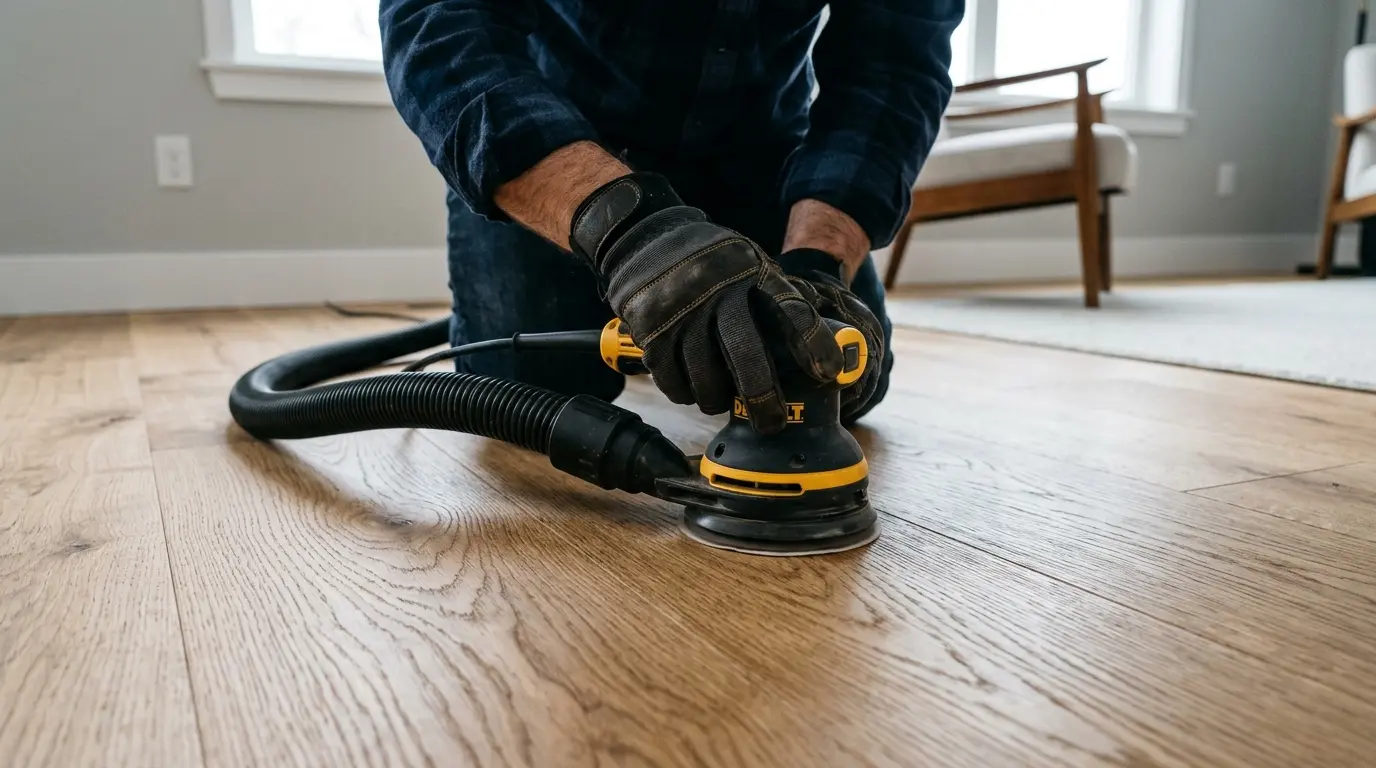
Dustless timber floor sanding utilizes continuous, high-powered HEPA cyclonic vacuum systems attached directly to commercial sanding machines to capture up to 99.9% of microscopic airborne wood dust at the point of contact. This innovative process eliminates the messy residue, lingering dust clouds, and toxic respiratory hazards traditionally associated with timber floor restoration.
For homeowners across Melbourne where restoring original period pine or solid Australian hardwood floorboards is a prized architectural investment dustless sanding transforms a historically disruptive renovation into a clean, efficient, and health-conscious process. Traditional drum sanding flings billions of fine wood particles into the air, coating walls, infiltrating heating ducts, and settling onto furniture weeks after the job concludes. By eliminating airborne debris, modern dust-free floor sanding protects indoor air quality, significantly shortens project timelines, and ensures a flawless, glass-smooth protective finish free from trapped dust nibs. Below is a direct comparison between conventional sanding and modern dustless restoration.
Dustless vs Traditional Floor Sanding
| Feature | Modern Dustless Floor Sanding | Traditional Floor Sanding |
| Airborne Dust Capture Rate | 99.5% to 99.9% captured immediately | 50% to 60% (heavy airborne dispersion) |
| Indoor Air Quality Impact | HEPA filtration keeps air clean and safe | Lingering toxic dust clouds for weeks |
| Post-Sanding Clean-Up Time | Zero to minimal (quick wipe down) | Extensive heavy cleaning required |
| Impact on HVAC & Ducts | Completely protected from contamination | Filters clog; dust spreads via heating vents |
| Coating Finish Quality | Flawless, mirror-smooth polyurethane/oil | High risk of dust nibs settling into wet coats |
| Household Disruption | Minimal; stay in your home comfortably | High; temporary relocation often required |
What is Dust Free Timber Floor Sanding?
The mechanics of commercial sanding machinery combined with the industrial filtration system is the key to understanding dust free timber floor sanding. These waste products are sent down the waste exhaust of a heavy drum sander while the top layer of polyurethane, wax and old wood fiber is ground down, which is the traditional timber restoration method. Cloth bags give off microscopic dust in the surrounding room since it is not sealed with finer particles.

Modern dustless sanding machines replace crude cloth bags with a continuous, sealed containment hose system that connects all sanding equipment from heavy continuous belt sanders to planetary rotary buffers and precision edge sanders to a multi-stage HEPA (High-Efficiency Particulate Air) cyclonic dust extraction unit.
HEPA Cyclonic Filtration explained.
The extraction unit normally is placed outside the house or in a centralised area, and has a very high suction pressure. The abrasive sanding belt cuts into the timber floorboards and the dust is immediately drawn through sealed antistatic hoses.
The air-borne dust is filtered through medical-grade HEPA filters and the heavier wood chips spun down into a sealed collection bin inside the extraction machine. These filters capture 99.97% of particles as small as 0.3 microns, which is smaller than mold spores, pollen and bacteria. As such, clean filtered air is expelled back out, thus preventing any wood dust from being released into your home.
This is because “Dustless” does not necessarily equate with “100% Dust-Free”.
Professional timber companies will employ the terms ‘dustless’ or ‘virtually dust-free’. Continuous containment systems will result in a 99.9% retention of all airborne debris, but changing the abrasive or edging around tight radiator pipes can release a small amount, in the order of a fraction of a gram, of dust to the floor surface. But this micro amount is instantly absorbed before the covering is applied so that there is no dust rising in the air or drifting into neighbouring rooms.
Who Benefits from Dustless Floorsanding?
Asking the question of who benefits from dustless floorsanding? has quite an answer! The benefits benefit the family’s physical well-being, interior finishes of your property, and the strength of the new wood coating.
1. Asthmatics, Allergies, Respiratory Conditions and their families.
Fine timber dust is not just a nuisance at home, but is recognised internationally as a Group 1 human carcinogen by the Occupational Health organisations. Old timber floors often have remnants of decades old, lead based varnishes, chemical stains, and natural allergens such as fungal spores between the floor boards.
- Health Protection: Particles smaller than 2.5 microns pass through the natural filter of the nose, and become trapped in lung tissue. Dustless sanding hardwood floors safeguards the elderly, children and people with chronic asthma from acute respiratory inflammation and allergic reactions during home improvements.
2. Homeowners looking to remain in their property.
In the past, families had to rent homes or stay in hotels for as long as a week in order to get away from the dust storms and chemical fumes.
- Easy and Cost Effective: As the extraction units are manufactured in a modernized way, it is safe for the homeowner to live in the upper levels of the property or nearby rooms while the timber floors are being restored. This can save the disruptions, stress and cost of temporary family relocation.

3. A total of three owners of Delicate Art, Electronics, and Soft Furnishings.
As tiny as wood dust is, it has an electrostatic charge that makes it stick to fabric curtains, plush velvet upholstery, bookshelves and oil paintings. In addition, fine dust can easily settle in the internal cooling fans of TVs, desktop computers and kitchen appliances, which can cause the appliance to overheat and short out. Dustless containment means that you can keep your valuable assets clean, with no need to wrap every room in plastic shrink wrap.
4. Property Owners Who Want a Perfect Floor Finish.
No matter how good the timber craftsman is, if air-dust is floating in the room, he can’t get the glass smooth finish. When pouring wet water-based polyurethane or hardwax oil onto a freshly sanded floor, the gravity will draw the dust particles that remain in the air down out of it. Particles settle in wet finish and cure to form the “dust nibs” which are rough and abrasive. Dustless sanding ensures a perfectly smooth and professional topcoat by keeping the working area free from dust.
Common Problems and Mistakes with Traditional Floor Sanding
A lot of Melbourne homeowners try some of the home timber restoration services, or get services from cheap operators which still use the old and dusty equipment. These are the most common pitfalls that cause major damage to properties and damage the look of the floor.
- Using masking tape and plastic sheeting.
One of the most common errors made when restoring a floor is to hang a thin plastic painter’s drop sheet over the doorways which is supposed to catch the fine timber dust. The tiny dust particles are carried by the air. Dust falls under the tape lines and moves through ceiling spaces when a door is opened, or when air pressure is changed to a room by central heating, it can coat bedrooms two storeys away. - The contamination of Ducted Heating and Cooling Systems
The use of ducted gas heating and reverse cycle air conditioning is common for Melbourne homes. Return-air grilles pull billions of wood particulates in when floor sanding takes place without industrial HEPA extraction. This dust then rolls around in the ductwork, and is released into living areas when the heater is turned on the next 6 months, which will cost a ton of money for professional duct cleaning to take care of. - Using Hire-Shop DIY Drum Sanders
Light, “cloth dust bag” drum sanders are commonly rented out at equipment hire depots. These machines are known for poor containment of dust and instability of the sanding drum. Amateur operators soon find that the bag is quickly filled with fine powder, the vibration drum chattering permanent scars into the heritage floorboards, and dense clouds are blowing out of the exhaust collar. - Failing to remove Toxic Old Coatings
Older homes built prior to the 1970s may have floor boards that have been covered with finishes that contain heavy metals or toxic shellacs. The sanding of these surfaces releases toxic substances that can be spread on carpets and preparation surfaces in the kitchen. When removing unknown vintage surface coatings, the only safe method to use is certified dust-free containment.

Preparing for Dustless Sanding Hardwood Floors
Dustless extraction eliminates all the hassle of sanding, but with the right site preparation, the restoration process goes smoothly and delivers professional results.
Step 1: The first step is to completely clear the floor space.
No furniture needs to be covered with protective sheeting but the surface of the floor should be completely free of furniture. Take all sofas, dining tables, rugs and potted plants out of sanded area. Remove low hanging floor length curtains, as they could catch on newly applied wet coatings on the floor.
Step 2: Make sure all the floorboards are secure and fastened.
Walk across the floor to check for squeaky boards, loose nails or structural bounce before sanding machines arrive. Use a nail punch to drive all protruding nails down at least 3-5mm into the wood surface. One raised nail head will immediately tear up an expensive sanding belt and cause sparks that can cause a fire in the vacuum lines of dust extraction systems.
Step 3: Seal Off Adjoining High Traffic Areas
The establishment of a clean working boundary is good practice even with 99.9% dust containment. Confine pets to carpeted bedrooms or to the outside. Fit clean walk off mats at the entrance and exit points of the renovation area to prevent family members from accidentally bringing garden dirt and/or grit into the freshly sanded wood before sealing.
Step 4: The next step is to combine the sanding with low VOC coatings.
Ensure the maximum health benefits of a dust free restoration by using a high quality, low VOC (Volatile Organic Compound) water-based polyurethane coating or plant-based hardwax oils with your clean sanding. A water-based glaze finish will cure quickly and will not off-gas toxic, smelly fumes for weeks like solvent-based glaze finishes, but will retain the natural, organic colour of your timber.
According to Bona, successful hardwood floor refinishing starts with proper site preparation, securing loose boards, and selecting high-quality low-VOC finishes to achieve a durable surface while maintaining healthier indoor air quality.
When to Hire a Professional Floor Sanding Specialist
Simple maintenance such as re-oiling a deck can be done by the weekend do-it-yourselfer, but structural floor sanding within the interior of a house is a demanding trade that requires specialized machinery and years of practice in this tactile profession. It is impossible to level a cupped timber board, remove deep pet urine stains or restore historic parquetry with standard leveling equipment without creating uneven surfaces and damaging the tongue-and-groove joints.
Hiring professional Floor Sanding services guarantees that your property will receive the best three-phase continuous HEPA (high-efficiency particulate arrestance) extraction machines, which are not available for hire at local tool hire shops. Professional floor techs know that different species of Australian hardwoods (from Victorian Ash to Spotted Gum) will respond to different abrasive grits. They carefully work their way through levels of coarser and finer passes, all the way to ultra-fine rotary buffing, to produce a perfectly flat and receptive surface upon which the protective topcoat is applied.
If you’re restoring an old weatherboard cottage or installing new floorboards in a new extension, there’s no better way to ensure they’re installed to the highest standard than by using the services of specialists from in the local area who know exactly what your property will require, like the precision Timber Flooring Ringwood residential project experts. A certified technician ensures that features such as architectural details, height transitions from room to room, and complex board edges are sanded to ensure there’s no gouging and that dust is not introduced.
Get rid of dust in your home with Dust Free Timber Restoration!
Your hardwood floors are the backbone of the beauty in your home. Don’t be afraid of clouding dust, dust residues and airborne dust and toxicity to hold up the restoration of your timber. Dustless floor sanding provides an elegant, efficient and healthy floor renovation using advanced HEPA cyclonic extraction to expose the natural warmth of your floorboards without changing your life.
When floors are scratched, faded, or covered with worn down carpet, it’s time to get them back to life safely. Call our experienced crew today and avail of our extensive consultations and best Timber Flooring Melbourne restoration services. Enjoy the revolutionary improvement of truly dust-free floor sanding, and a superb, lasting timber floor finish just right for your home.
FAQs
Is dustless timber floor sanding genuinely 100% dust-free?
While the industry term is “dustless,” the process is accurately described as 99.5% to 99.9% dust-free. Professional continuous HEPA extraction systems capture microscopic wood dust right at the sanding abrasive head before it enters the air. You will not experience airborne dust clouds, dusty furniture, or contaminated air ducts, though an isolated trace amount of heavy particles on the floor surface is normal and vacuumed away immediately before coating.
How much more does dustless floor sanding cost compared to traditional sanding?
Dustless floor sanding generally costs roughly the same as or slightly more than traditional sanding, depending on the timber condition and topcoat selected. However, when you factor in the money saved on post-renovation professional house cleaners, specialized HVAC duct cleaning, and temporary hotel accommodation, dustless sanding can be significantly more cost-effective overall.
Who benefits from dustless floorsanding the most?
Individuals suffering from asthma, severe dust allergies, or chronic respiratory issues benefit immensely from dustless floor sanding, as medical-grade HEPA filters trap carcinogenic wood dust and old finish particles. It is also the ideal solution for busy families working from home, parents with newborn infants, and owners of delicate electronic equipment or fine art who cannot afford airborne particulate contamination.
Can dustless sanding remove deep scratches and water stains from hardwood floors?
Yes. Dustless floor sanding uses the same heavy-duty, industrial belt and drum sanding machinery as traditional restoration; the only difference is the powerful vacuum extraction system attached to the exhaust ports. It effectively strips away old polyurethane coats, levels warped or uneven boards, and grinds out deep gouges, pet claw marks, and surface water stains to reveal fresh, raw timber underneath.


4 Responses
Great read! I’ve always avoided having my timber floors refinished because I was worried about all the dust getting through the house. When you say “dustless” sanding, does that mean there’s absolutely no dust at all, or just significantly less than traditional sanding? Also, is it a good option for families with young children or people who have allergies?
Thanks for your question, Andrew! That’s one of the most common concerns we hear. Dustless floor sanding doesn’t mean there is literally zero dust, but professional dust extraction systems capture the vast majority of airborne dust during the sanding process, making it dramatically cleaner than traditional methods. This not only reduces cleanup time but also creates a healthier environment, which is especially beneficial for families with children, pets, or allergy sufferers. If you’re considering restoring your timber floors, we’d be happy to explain the process and recommend the best solution for your home.
I’m thinking about having my timber floors sanded but I’m worried about dust getting into the furniture and air-conditioning. How effective is dustless sanding at keeping the rest of the house clean during the process?
Modern dustless sanding systems can significantly reduce the amount of airborne timber dust compared with traditional sanding, as the sanding equipment is connected to high-efficiency extraction systems that capture much of the dust at the source.
However, “dustless” doesn’t mean completely dust-free. Some fine particles can still escape, so it’s sensible to remove or cover furniture, close off nearby areas and consider how air-conditioning or ventilation systems may circulate dust. A professional flooring contractor should also explain their extraction and containment process before work begins.