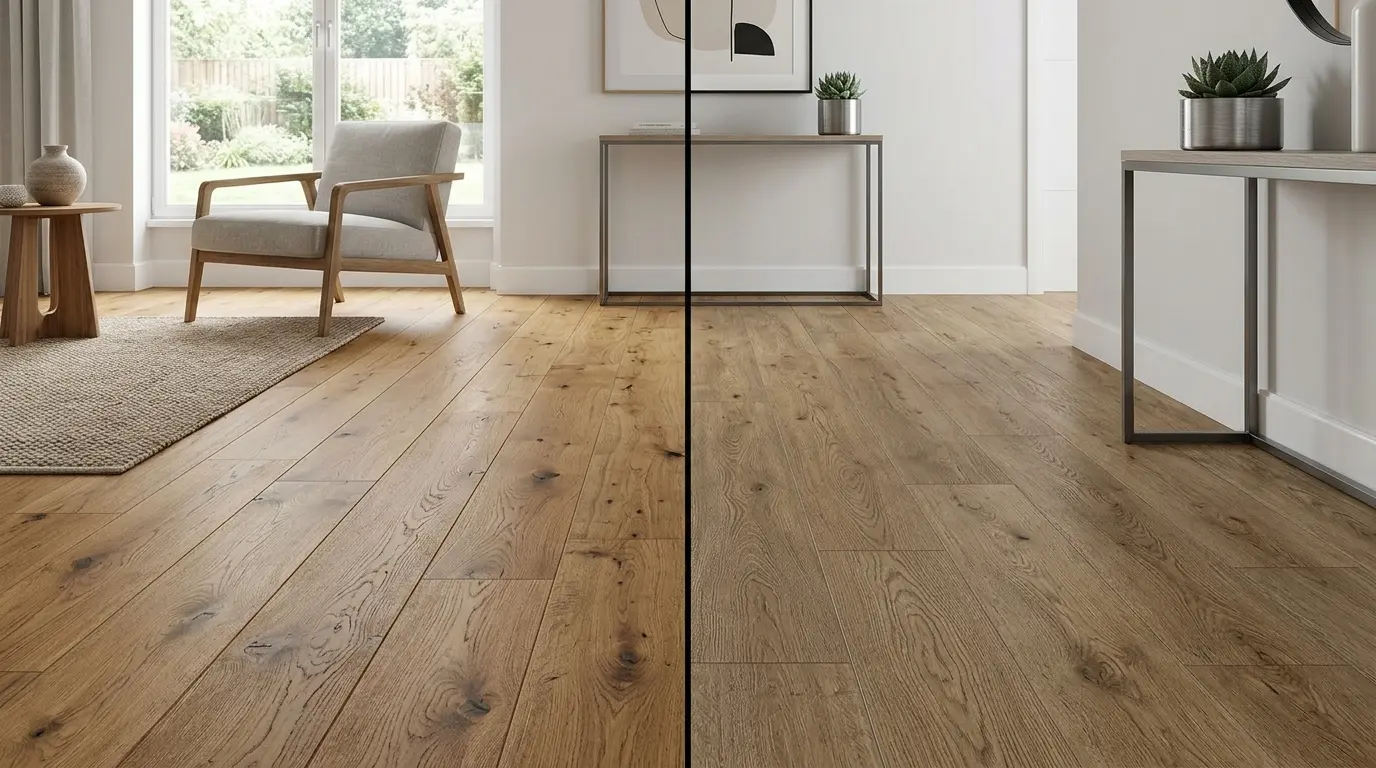
When comparing engineered timber flooring vs hybrid flooring, the direct answer comes down to authenticity versus waterproofing: engineered timber offers a genuine, resandable hardwood surface that adds massive property value, whereas hybrid flooring provides a 100% waterproof, highly durable synthetic core ideal for wet areas and active families. For Melbourne homeowners navigating a climate of extreme summer heat and sudden, damp winters, choosing the right material is vital for long-term durability.
| Feature | Engineered Timber | Hybrid Flooring |
|---|---|---|
| Composition | Real hardwood veneer over a plywood or HDF core. | Limestone/plastic core (SPC) with a printed vinyl top layer. |
| Water Resistance | Moderate. Spills must be wiped quickly; not for bathrooms. | 100% waterproof. Can be installed in kitchens and laundries. |
| Longevity & Repair | Can be sanded and refinished 1-3 times over its lifespan. | Cannot be sanded. Damaged boards must be replaced entirely. |
| Aesthetics & Value | Unique, natural grain that heavily boosts property value. | Highly realistic printed patterns, but repeats can be visible. |
Engineered Flooring vs Hybrid Flooring Australia
You will need to know the structural anatomy of both materials before making an educated decision about it for your remodel or new construction. The Engineered Flooring vs Hybrid debate is similar to that of which is “the best” as much as it is which is “the most perfect” to fit your lifestyle, budget, and architectural needs. Understanding the key differences between engineered timber and hybrid flooring can help you choose the option that best suits your home, lifestyle and project requirements.
What is Engineered Timber Flooring?
Engineered timber is genuine and true wood. But, engineered boards are different from solid timber which is a single thick block of wood, they are made up of layers of wood. The top layer (the wear or veneer layer) consists of a piece of real premium hardwood including European oak, blackbutt or spotted gum. This layer offers the same appearance, feel and warmth as solid wood. This laminated surface is backed by a cross-done core of high quality plywood or high density fibreboard (HDF). Compared to solid timber, this layered design ensures high structural stability, helping to minimise the board’s tendency to expand, cup and warp with the quick fluctuations in humidity found in Melbourne.
What is Hybrid Floorings?
Hybrid flooring is a new creation of the synthetic world, and it is created to blend the advantages of laminate and vinyl flooring. It has a rigid core, which is typically constructed of Stone Plastic Composite (SPC) or Wood Plastic Composite (WPC). This core is covered with a very realistic photo print layer (for timber or stone) followed by a strong commercial clear wear layer. Hybrid flooring is 100% waterproof as there’s no actual wood in the core or surface. It will NOT swell, rot or warp when exposed to water, and is a revolutionary product for modern Australian homes.
As CHOICE explains, engineered timber flooring has a genuine timber surface, while hybrid flooring is a composite product designed to combine durability with resistance to moisture.

Engineered Timber vs Hybrid Pros and Cons
There are a lot of considerations to make when making your decision between these two giants of the flooring industry, and it will have a big effect on your daily life and your home’s financial worth. So, let’s delve deeper into the advantages and disadvantages of Engineered timber flooring and hybrid flooring.
Engineered timber offers several great benefits.
The biggest virtue of engineered timber is its superior and luxurious authenticity. Due to the top being cut off a real tree, no two boards are identical. You get the real feel, acoustic qualities and natural essence of hardwood. In addition, high-quality engineered floors are an investment for the long haul. They can be sanded back and refinished many times to remove any scratches or to alter the stain colour, depending on the thickness of the veneer. Real estate agents consider real timber floors to be a substantial mark-up for resale value of a home.
The downside? It takes more tender loving care. Engineered timber could be scraped by big dogs or pulled furniture, and it may not be used in damp areas such as bathrooms because it will be damaged by water.
There are several advantages to hybrid flooring
If you’re comparing Hybrid vs Engineered Timber Flooring Australia, hybrid flooring wins hands down when it comes to durability and low-maintenance. The 100% waterproof property allows you to run one continuous floor seamlessly from your front door, into your kitchen, and into your laundry room, and without worry of water damage. The durable, protective topcoat is highly resistant to pet claws, dropped toys and lots of foot traffic. Also, hybrid flooring is usually more cost effective than actual wood in terms of material price and installation since they normally come with a basic click-lock mechanism and acoustic underlay already attached.
The downside? It is still a synthetic product. The patterns are extremely realistic now, but they will never be as warm and comfortable to sit on or walk on as real wood. Protective wear layer can be sanded and restored for 15 years, but when it becomes scratched or dull, the floor will have to be replaced entirely.
Comfort and Feel Underfoot
Comfort is where the two materials genuinely diverge, not just for your feet but for how a room feels day to day. Engineered timber carries the resonant, slightly warmer feel of real wood — that faint natural give underfoot that hybrid, for all its toughness, can’t fully replicate. Because it’s genuine hardwood over a stable core, it also retains some of timber’s natural acoustic warmth, softening the room rather than amplifying it. Hybrid flooring feels firmer and more consistent underfoot thanks to its rigid SPC or WPC core; paired with a quality acoustic underlay, it controls footfall noise well, which suits apartments and upper floors just as effectively as engineered timber does. Neither is uncomfortable to live with day-to-day — the difference shows up more in atmosphere than practicality: engineered timber tends to make a room feel warmer and more layered, while hybrid feels cleaner and more uniform underfoot.
Sustainability: Which Flooring Is the Eco-Friendlier Choice?
If sustainability factors into your decision, engineered timber generally has the edge. Reputable suppliers source their hardwood veneer from responsibly managed forests, and many ranges carry FSC or PEFC certification confirming the timber was harvested without depleting the forest. Because engineered timber uses a thin veneer over a plywood or HDF core rather than a solid block, it also makes more efficient use of each tree compared to solid timber. Hybrid flooring, by contrast, is built around a stone-plastic or wood-plastic composite core — a synthetic product that doesn’t offer the same renewable story, even though its long lifespan and resistance to damage mean fewer replacements over time. For eco-conscious renovators, ask your supplier for certification details on either product before you commit.

Common Problems or Mistakes Buyers Make
Often homeowners make costly mistakes when they do not fully understand the capabilities of the flooring they’ve selected. Knowing about these drawbacks can save you thousands of dollars.
1. Subfloor Preparation for Hybrids is ignored.
One big fallacy is that hybrid floors are hard, so they could be installed on any surface. This is completely untrue. Rigid locking mechanisms on the hybrid boards will be put under a tremendous amount of stress when walking if there are dips and bumps in the concrete slab or existing timber subfloor. These joints will crack over time, and the floor will crack and become separated. This is an essential piece of work – it is essential to the subfloor levelling.
3. Working with Engineered Timber in Wet Areas.
While engineered timber is more stable than solid wood, it is still wood. One common error is to have high-cost oak boards in bathrooms or in poorly ventilated laundries. Repeated exposure to steam, standing water, etc., will eventually result in the delamination and rotting of the hardwood veneer. Always consider moisture restrictions of actual wood.
3. Not Acclimatising Engineered Boards
The manufactured variety of timber, engineered timber needs to be delivered to your premises and left in the room(s) to be installed in for a minimum of one week before the laying process. This ensures that the real wood veneer adapts to the temperature and humidity of your home, significantly minimising the chances of the boards separating during installation or popping up.
4. Failing to understand the difference between “Scratch-Resistant” and “Scratch-Proof”
It’s a common misconception that buyers will think they can buy hybrid flooring and it will never be destroyed. Heavy metal furniture or even a fridge dragged over the surface with felt pads will still scratch the vinyl print layer, although this is scratch resistant and will work great with pets. Under any heavy items, use protective pads, no matter how you treat your floors.
5. Overlooking Silica Dust Safety When Cutting Hybrid Flooring.
Because many hybrid flooring products use a stone-plastic composite (SPC) core, cutting or trimming boards on-site can release fine silica dust — the same substance behind Australia’s tightened regulations on engineered stone. Reputable installers use wet-cutting methods, proper dust extraction and appropriate PPE when trimming hybrid planks. If you’re getting quotes, it’s worth asking your installer how they manage dust control during the cut-to-fit process, particularly around doorframes and stair edges.
How Much Do Engineered Timber and Hybrid Flooring Cost in Melbourne?
As a general guide, hybrid flooring is the more budget-friendly option, while engineered timber sits at a higher price point depending on the quality, timber species and installation requirements. The final cost can also vary based on acoustic underlay, subfloor preparation, finishing and the size and complexity of the project.
The gap comes down to raw material: real hardwood veneer costs more to source and process than a printed composite core. That said, engineered timber’s ability to be sanded and refinished can make it the better long-term value in a home you plan to keep, while hybrid’s lower upfront cost suits rentals, budget renovations and rooms where waterproofing matters more than resale prestige. Real timber floors also tend to carry more weight with buyers and valuers, so for owner-occupiers planning to sell down the track, engineered timber can add a resale premium that hybrid typically doesn’t match.
For an accurate quote based on your flooring choice, subfloor condition and installation requirements, contact us today to discuss your project and get a tailored price.
How to Choose the Right Floor for Your Space
When choosing between Hybrid flooring vs Engineered timber flooring, follow these professional tips to ensure a spectacular outcome that fits your home’s needs.
Assess Your Household Traffic
When you have a high-energy family and lots of toddlers, big pets, and a swimming pool in the backyard, you’ll be super-stressed out about what kind of flooring to put in your home. There’s no need to worry every time a wet towel falls or glass of water spills. On the other hand, if you’re in a more relaxed household or have grown up kids, the high-end appearance and esteem of high quality engineered flooring melbourne can create an unparalleled look that will enhance your interior design.
One solution to this is to consider Zoning Your Home.
There is a trend for many smart Melbourne renovators to take a “best of both worlds” option. They utilize stunning engineered timber in the principal living spaces, hallways, and master bedrooms where it will noticeably create a comfortable and striking atmosphere. Next they choose a hybrid floor in a similar colour for the high risk wet areas, such as the laundry and kitchen.
Pay attention to the thickness of the wear layer.
If you opt for the real timber road, pay attention to the specifications. When selecting engineered timber flooring hawthorn, make sure that the board has a minimum veneer of 3mm – 4mm. This ensures that the floor could be sanded and polished professionally in the future, extending the life of your investment by 2 – 3 times.
Review with Strata Rules for Apartments.
Acoustic transmission to neighbours below is a key, regulatory requirement when renovating an apartment. Many hybrid flooring products have an acoustic backing that complies with strata requirements (as standard). Special high-density acoustic rubber underlay will be needed and must be purchased separately for engineered timber.
At a Glance: Which Should You Choose?
| If you want… | Choose |
|---|---|
| Genuine timber character and resale value | Engineered Timber |
| A 100% waterproof floor for kitchens and laundries | Hybrid |
| The option to sand and refinish later | Engineered Timber |
| The lower-maintenance, budget-friendly option | Hybrid |
Still torn? Book a free in-home consultation and we’ll bring samples of both to your space.

When to Hire a Professional
Although click-locking hybrid flooring systems are marketed towards the DIY, creating a perfect, professional finish is very technical.
To prevent buckling with changing house temperature, both types of flooring must have a precise expansion gap around the room. In addition, specialized tools and a high level of experience are required to cut under the door frame, and to prepare the floor exactly level.
If problems occur during the installation, the manufacturer’s warranties on both products are immediately cancelled. To guarantee the absolute peace of mind and to secure an impeccable finish that will last a lifetime, you can be assured that you would be using a master installation team in Timber Flooring melbourne, hence, you can be certain that your subfloor will be perfectly prepped, your expansion joints will be concealed beneath elegant skirting and your investment will be safeguarded.
Looking to make a change in your floors?
The real luxury of engineered wood versus the bulletproof strength of hybrid flooring is a huge one. It doesn’t have to be walked alone. Melbourne homeowners can rely on our experts at Boss Timber Flooring to help them choose the right timber flooring to suit their lifestyle, budget and architectural style. Whether it’s a measure that’s taken to fulfill the regulations without any hassle, or it’s the perfect installation guaranteed, we do it all. Reach out to us now and see our top-notch samples, and start your journey towards the interior of your dreams today.
FAQs
1. Which is better for a family home: Hybrid Flooring vs Engineered Timber?
For families with young children and large indoor pets, hybrid flooring is generally the safer choice due to its 100% waterproof core and extreme scratch resistance. However, for families wanting to add long-term financial value and warmth to their property, engineered timber is superior.
2. What are the main Engineered timber flooring vs hybrid flooring pros and cons?
The main pro of engineered timber is its real-wood authenticity and resandability, while its con is moisture sensitivity. The main pro of hybrid is being waterproof and highly durable, but its con is that it is a synthetic product that cannot be sanded or refinished once worn.
3. Is Hybrid vs Engineered Timber Flooring Australia better for rental properties?
Hybrid flooring is highly recommended for rental properties. It is highly resistant to tenant damage, water spills, and heavy impacts, ensuring the landlord does not have to pay for costly floor repairs or sanding between tenancies.
4. Can you mix Hybrid Flooring vs Engineered Timber Flooring in one house?
Yes, many homeowners successfully mix both. They install engineered timber in dry living areas and bedrooms for aesthetic appeal, and seamlessly transition to a colour-matched hybrid floor in wet areas like kitchens, bathrooms, and laundries.
5. Which is more affordable, engineered timber or hybrid flooring?
Hybrid flooring is generally the more affordable option, both in materials and installation, typically ranging from $80 to $150 per m² installed. Engineered timber costs more due to its real hardwood veneer, usually starting around $120 to $150 per m² and rising significantly for premium species and wider boards.
6. Is engineered timber or hybrid flooring more sustainable?
Engineered timber generally has the sustainability edge, particularly when sourced from FSC or PEFC certified forests, since its thin veneer construction uses timber more efficiently than solid wood. Hybrid flooring is a synthetic composite product, so while it’s long-lasting, it doesn’t offer the same renewable material story.


2 Responses
I’m choosing flooring for an open-plan home and keep going back and forth between engineered timber and hybrid. Is hybrid actually a better choice for areas that get more moisture, or does engineered timber still make sense with the right care?
Hybrid flooring is generally more tolerant of moisture and changes in humidity, which can make it a practical option for areas where spills or moisture are more likely. However, that doesn’t mean engineered timber is unsuitable for an open-plan home. With the right product, installation and moisture management, engineered timber can perform very well in living areas.
The main difference is that engineered timber still contains a real timber wear layer, so it offers the natural appearance and feel of timber, while hybrid flooring is designed to prioritise stability and moisture resistance. For an open-plan space, it’s worth considering the moisture exposure, subfloor conditions, installation method and how you want the floor to look and feel before making the choice.