
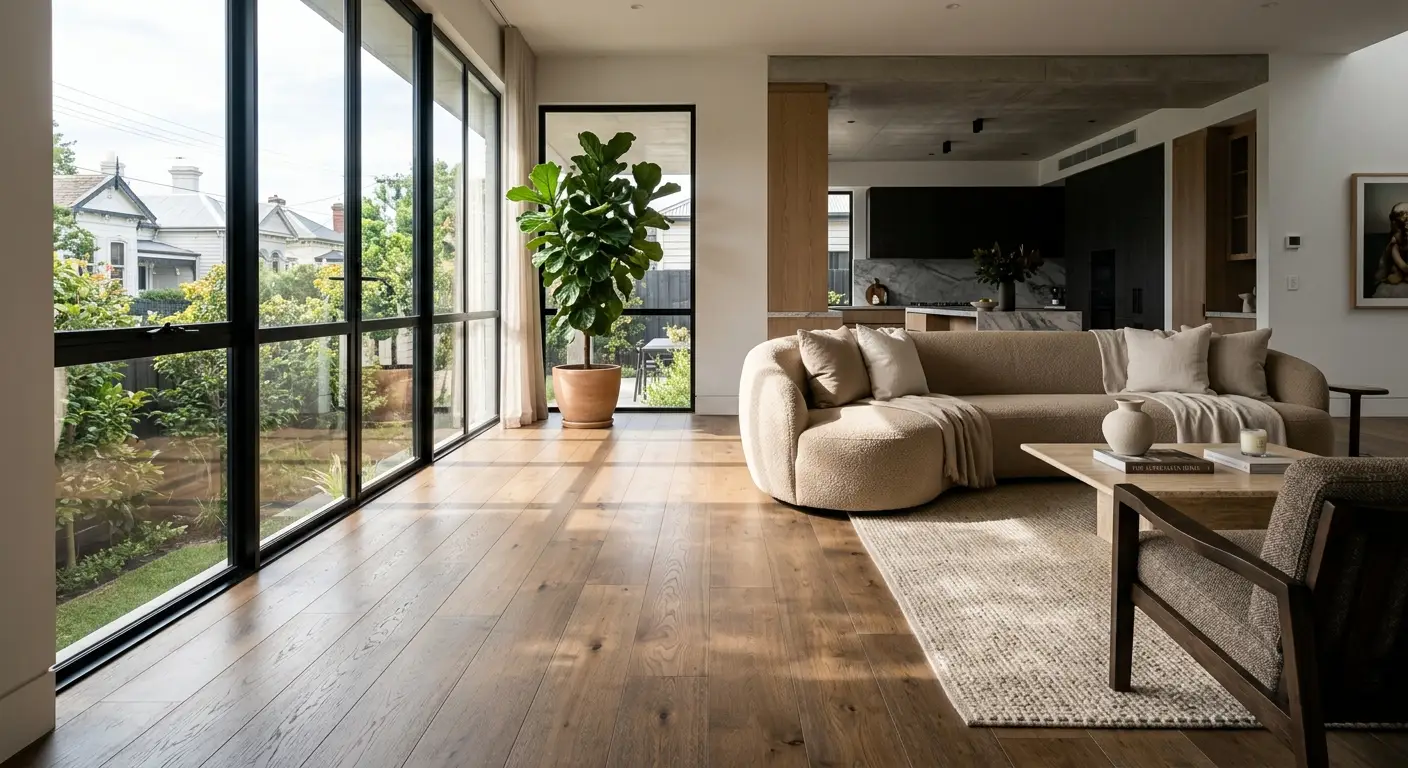
The engineered timber flooring lifespan typically ranges between 20 to 50 years. This figure directly depends on the thickness of the top veneer (wear layer), the quality of the installation, and your daily maintenance routine. Investing in high-quality flooring and having it installed professionally not only brings the warmth and beauty of nature into your home but also secures your property’s value for decades. In the table below, we have quickly summarised the main factors that determine this lifespan, giving you a clearer perspective for your interior design decisions.
| Topic | Key Info | Why It Matters |
|---|---|---|
| Wear Layer Thickness | Varies between 1 to 6 millimetres. Thicker layers can be sanded. | Determines how many times the floor can be refinished and restored. |
| Sanding and Refinishing | Each sanding session removes approximately1 millimetre of wood. |
Extends the useful life of the floor after deep scratches occur. |
| Maintenance & Moisture | Requires cleaning with specific products and maintaining balanced humidity. | Prevents the wood from swelling, warping, and cracking over the long term. |
| Professional Installation | A perfectly level subfloor and standard underlay or adhesive. | Prevents squeaking and protects the click-lock mechanisms from damage. |
Exactly How Long is the Engineered Hardwood Lifespan?

These floors are hinged on the thickness of this layer:
- Wear Layer: 1-2mm, lifespan of these floors is 15-20 years. As the natural wood layer is thin, sanding and refinishing is not often an option and only surface buffing and recoating can be used to maintain them.
- Wear Layer 3 to 4 mm: This is the most common and popular wear layer ranging from 20 to 40 years of use. It can be sanded and refinished 1-2 times its lifespan, restoring it to a brand new appearance.
- The 5 to 6 mm Wear Layer: These high-quality floors can be sanded 3 to 4 times and are able to last more than 50 years. With time, the performance of this type is almost as good as that of solid wood.
In general, when using the standard Engineered Timber options and following basic care instructions, these engineered floors can maintain their elegant appearance throughout a property’s life.
Why is Investing in This Flooring Worthwhile?
With engineered timber vs cheap laminate or extremely high cost solid wood, you may ask yourself why should you go with engineered timber? The solution is its exceptional benefits.
Structural stability is the first and most important benefit. With the multi-layered, cross ply construction, these floors offer tremendous moisture and temperature resistance far superior to solid wood. This will ensure that, in regions where there are important changes in climate, your floor will not warp or cup, and gaps will not develop between the planks.
Cost-effectiveness and a luxurious look is the 2nd advantage. You encounter the same beautiful appearance, knots and texture of real wood (French Oak, Walnut, etc.) underfoot – but with a much lower price tag. Furthermore, the engineered timber flooring life can be quite long, which means that you won’t need to replace your floors prematurely, thus creating good long term savings. They are also 100% approved and safe to use under underfloor heating systems.
According to DGFloors’ Engineered Wood Flooring Underfloor Heating Guide, engineered wood flooring features a cross-layered core that provides superior dimensional stability, helping minimise expansion, contraction and warping caused by changes in temperature and humidity.
The Impact of Core Construction: Multi-ply vs. HDF
The number of times you can sand your floor depends on the top wear layer, but the structural engineered timber flooring life span in Australia’s weather depends on the hidden core construction. Premium engineered timber floors are made with a multi-ply hardwood core (European birch, eucalyptus, etc.). This is a cross-layered plywood construction that resists extreme temperature fluctuations, high humidity and is extremely stable!
However, do not select inexpensive flooring that has an HDF (High-Density Fiberboard) core. HDF is less costly, but it is very moisture sensitive. When the water level is raised or humidity, the HDF core will swell, and cannot be sanded back down again, which will ruin the floor. The 50-year lifespan is a requirement for investing in a multi-ply core.
Where Engineered Timber Suits and Where It Doesn’t
It is extremely important to get your engineered hardwood in the proper environment to maximize its lifespan. Living rooms, dining rooms, hallways and bedrooms are ideal applications for engineered timbers that offer luxury. It is also very suitable for concrete slabs, and fully compatible with underfloor heating.
There are certain places that this type of flooring shouldn’t be used, though. The top layer (100% real natural wood) will not withstand standing water. So, engineered timber is not recommended for use in wet rooms, laundry areas or on ground floors in flood prone areas. For such rooms, it’s far better to choose 100% waterproof options, similar to SPC Hybrid flooring, to be able to prevent peeling or delamination.
Common Mistakes That Reduce Engineered Timber Flooring Lifespan
No matter how costly the floor may be anywhere in the world, if it is not properly maintained it will deteriorate quickly. The most serious floor mistakes that shorten the life of engineered floors are:
- Steam Mops: This is the worst enemy of timber floor! When hot steam is forced into the joints it breaks down the glue between the layers, eventually causing the wood to swell and peel apart.
- Watering to Excess: Natural wood will absorb water. Excessive amounts of water chewed in the mop will allow moisture to run to the core area, which will cause structural damage.
- Deep Scratches: Deep scratches occur when heavy furniture such as sofas, dining tables or fridges are moved without felt pads under the legs. These scratches may only be repaired by sanding the whole protective coating.
- Harsh Chemical Cleaners: Bleach, ammonia-based and even pure vinegar can dull the protective polyurethane over time.
- Failure to take Room Humidity into account: The wood splits and cracks when it is too dry, it swells when it’s too wet.

Practical Tips to Maximise Your Timber Floor’s Lifespan
Follow these simple tips for the care and cleaning of your engineered timber floor, to help ensure that you achieve the maximum possible lifespan of over 50 years:
- Daily Dry Cleaning: Dust, grit and sand entering from outside is like sand paper on your floor. These can be removed by vacuuming (excluding use of harsh rotating beater bars) or by using a micro fibre dust mop.
- Specific Cleaners (pH Neutral): Only use cleaning sprays which have been specifically formulated for timber floors with a neutral pH. Put a little on a slightly wet microfibre mop and mop the floor.
- Furniture Protector Pads: Place felt pads under all furniture legs including chairs, tables, sofas etc., and review periodically to make sure that gritty dust has not been trapped under them.
- Put Doormats: Put quality doormats at all entrances to trap most of the grit and moisture that gets in on people’s shoes before it gets on the floor.
When to Hire a Flooring Professional
The quality of installation and subfloor preparation is another hidden contributor that can have a significant effect on the engineered timber flooring lifespan. A non-level subfloor, not having moisture testing done or leaving expansion gaps around the floor perimeter will cause the floor to squeak or lift within 1 year.
Installation Methods and Acclimatisation
A high quality, engineered board that is only laid slightly improperly will fail much sooner than a lower quality, perfect board. During the installation process, there are two hidden secrets that will ensure the floors can last for a long time: Acclimatisation and the Glue-down method.
The timber boxes should be stored in the installation room for 5-7 days before installation of any board. The important acclimatisation period will also help the natural wood to adapt to the humidity and temperature of your home, which will significantly cut down the chances of cupping or buckling during the first year of use. In addition, floating installations are well in style, but using a direct glue-down installation will offer the best possible bond between the floor and your perfectly levelled subfloor. Attaching the boards to the floor eliminates joint movement, provides excellent acoustics (no hollow sounds) and gives your floor decades of longevity.
At later stages, the tasks of subfloor leveling, choosing the right acoustic underlay and the careful process of sanding and polishing are not DIY projects that can be done by watching YouTube videos. You don’t want to lose your investment and you need to be completely assured of the durability so you must leave the job to the professionals. The highly trained crew at Boos Timber Flooring makes sure your flooring is installed to the highest standards set by the Australian industry by selecting the most professional Timber Floor Installers Melbourne.

FAQs
1. What is the average engineered timber flooring lifespan?
Depending on the thickness of the top wear layer and your maintenance routine, these floors generally last between 20 and 50 years.
2. Can you sand engineered timber flooring?
Yes. Providing the wear layer is at least mm thick, you can sand and refinish it between 1 to 4 times over its lifespan, restoring it to a brand-new condition.
3. What is the best method to clean and preserve timber floors?
Using a vacuum cleaner with a soft brush attachment, dry microfibre mops, and neutral pH timber floor cleaning sprays without pouring excess water onto the surface.
4. Do steam mops damage timber flooring?
Yes, severely! Steam mops force heat and moisture into the joints, causing engineered floors to swell, warp, and delaminate.


4 Responses
Thanks for explaining the engineered timber flooring lifespan so clearly. I was surprised to learn that a high-quality engineered floor can last for decades with the right wear layer and proper maintenance. The section on avoiding steam mops and protecting the floor from scratches was especially useful. Great article!
Hi, thank you for your thoughtful feedback! We’re glad you found the article helpful. You’re absolutely right—a quality engineered timber floor can provide decades of performance when it’s properly maintained. Simple habits like using felt pads under furniture, cleaning with recommended products, and avoiding excessive moisture can make a significant difference over time. We appreciate you taking the time to share your thoughts!
Thanks for the detailed explanation. I didn’t realise the thickness of the wear layer could make such a big difference to the lifespan of engineered timber flooring. If someone is renovating and planning to stay in the home for the next 20–30 years, would you generally recommend investing in a thicker wear layer from the start, even if the upfront cost is a bit higher?
Hi Cooper, thanks for your great question! Yes, if you’re planning to stay in your home long term, choosing engineered timber flooring with a thicker wear layer is usually a worthwhile investment. It offers better durability and allows the floor to be sanded and refinished if needed, helping to extend its lifespan. While the initial cost may be slightly higher, it often provides better long-term value and flexibility. Our team is always happy to recommend the most suitable option based on your budget and lifestyle.