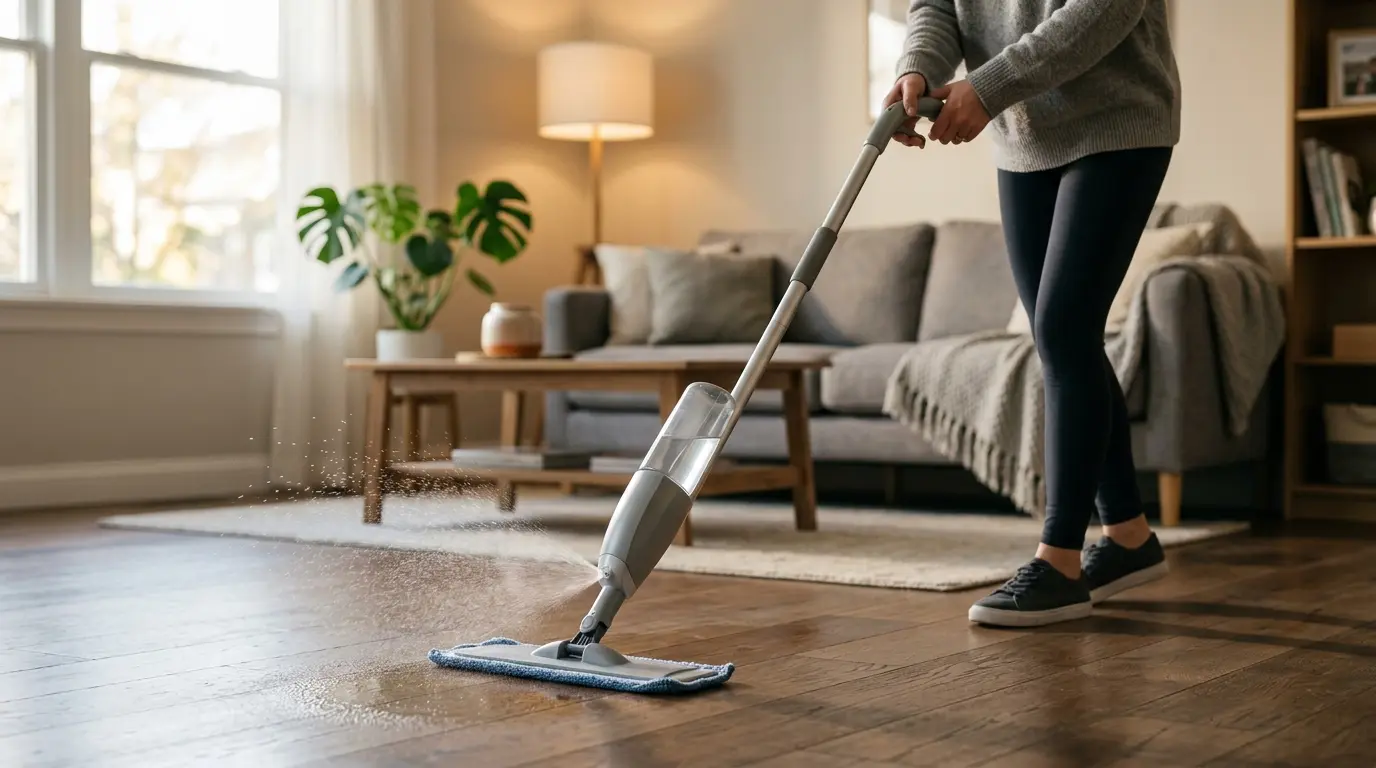
The best mop for wooden floors is a flat microfibre mop or a spray mop with a washable microfibre pad, used damp rather than wet, with a pH-neutral timber floor cleaner. The same rule applies to engineered timber, solid hardwood and parquetry with a sealed finish, because water that sits in the joints does the damage.
| Topic | Key Info | Why It Matters |
|---|---|---|
| Microfibre Flat Mops | The undisputed champion for all timber surfaces. | Uses minimal moisture, preventing water from seeping into floor joints. |
| Steam Mops | Strictly avoid on any engineered wood. | Intense heat and forced vapour will cause the timber veneer to peel and warp. |
| Sponge & String Mops | Not recommended for hardwood surfaces. | Pushes dirty water into the microscopic grooves, leaving a cloudy, dull finish. |
| Cleaning Solutions | Use pH-neutral, timber-specific formulas only. | Harsh supermarket chemicals strip the protective polyurethane coating over time. |
The Anatomy of the Best Mop
But to fully appreciate the best mops for hardwood floors, you need to know what hardwood floors are. Engineered flooring is made of a high-quality plywood or high-density fibreboard (HDF) core laminated with a real hardwood veneer. These boards are very strong and firm but the seams are susceptible to standing water.
That is why the microfibre flat mop is the best choice. Microfibre pads are made from millions of tiny manmade fibres that create static electricity when they rub against the floor. This charge pulls and pulls dust, pet dander and small dirt particles into the pad without simply pushing them around.
More important, flat mops are made to be used only slightly moistened. Rather than putting a mop in a bucket of soapy water, the floor is misted with a special timber cleaner and wiped with a microfibre pad. The pad’s absorbent material immediately collects the dirt that has been dissolved in water, and keeps the floor dry within a second. This “dry-mopping” / “mist-mopping” process means no leftover water is trapped between the planks, preventing any water from harming the core of your stunning flooring.

Best mops for hardwood floors compared
| Mop type | Suits timber? | Why | Watch for |
|---|---|---|---|
| Flat microfibre mop with washable pads | Best choice | Holds little water, lifts dust and grit | Wash pads often; no fabric softener |
| Spray mop with refillable bottle | Best choice | Fine mist, no bucket | Do not over-spray; use a timber-safe cleaner |
| Steam mop | Only with manufacturer approval | Heat and moisture can reach the joints | Never on oiled, waxed, unsealed or worn finishes |
| String or sponge mop and bucket | Avoid | Carries too much water | Cloudy finish, water in the bevels |
| Spin mop | Only if wrung almost dry | Easy to over-wet | Check the floor after one pass |
| Robot or wet-dry vacuum mop | Sealed floors, low-water setting only | Handy for daily dust | Confirm the floor maker’s guidance on water flow |
Choose the Mop According to Your Floor Finish
Not all engineered planks share the exact surface treatment, which is why matching your cleaning tools to the specific floor finish is vital. Whether your boards are sealed with a modern UV-cured polyurethane, hardwax oil, or a natural lacquer, selecting the right mop for wooden floors prevents dulling or scratching that protective barrier. High-gloss polyurethane coats show streaks immediately if cleaned with abrasive pads or soaking cotton loops, while natural oiled finishes require gentle care that won’t strip away nourishing waxes.
A genuinely good mop for hardwood floors works harmoniously with your surface seal rather than fighting it. For sealed and lacquered timber, a soft electrostatic microfibre head cleans effectively using only a fine mist of pH-neutral solution, keeping moisture from penetrating micro-seams. Taking the time to understand your timber’s topcoat ensures you choose a cleaning tool that preserves the original texture and satin or matte sheen for years to come.
Quick-Step advises homeowners to be careful with moisture when mopping timber floors, noting that “too much water” is unnecessary and could damage the floor.
Mop by finish type
Finish Mopping approach Polyurethane or lacquer (most prefinished and sanded-and-coated floors) Damp microfibre and pH-neutral timber cleaner Hardwax oil or oiled Barely damp; use a cleaner made for oiled floors and follow the finisher’s re-oil schedule Not sure Test in a hidden corner and ask the installer or finish maker
What to Look for in a Mop for Engineered Timber Floors
When shopping for the best floor mop for hardwood floors, moisture control and pad material should be at the top of your checklist. Engineered timber features a genuine wood veneer over a multi-ply core, making excess water its biggest vulnerability. Look for a mop system that uses premium, dense microfibre pads these lift dust, allergens, and grit through static charge without requiring buckets of water or harsh scrubbing. A low-profile, flat design with a 360-degree swivel head is also essential, allowing you to glide smoothly around furniture legs and follow the wood grain effortlessly.
For local homeowners, choosing the best mop for wooden floors australia often comes down to finding an ergonomic spray mop or flat-head dry-and-mist system that handles everyday dust while drying almost instantly. Reusable, machine-washable pads not only make maintenance eco-friendly and cost-effective, but also ensure you never drag trapped grit across delicate planks. Investing in a tool with these specific features guarantees safe, effortless cleaning and long-term protection for your flooring investment.
Can you use a steam mop on timber floors?
Not by default. The Australasian Timber Flooring Association advises treating steam cleaning as unsuitable for timber unless the flooring or finish manufacturer says it is acceptable. Some retailers say sealed timber with a fully intact finish is generally fine, while others advise against it, so the safe step is to check your floor maker’s instructions first. Never steam oiled, waxed or unsealed timber, or any floor with a worn or scratched finish, because steam can reach the joints and cause swelling or lifting. If you want one answer that is safe for every timber floor, use a damp microfibre mop.
Benefits of Proper Mopping
Using the right cleaning tools is not only important for a clean house but it’s important for a major investment that you’ve made.
How to preserve the polyurethane finish.
In the factory, engineered timber floors are finished with a number of layers of hard polyurethane or aluminium oxide. It is the clear coat that lends the floor its shine and which prevents any scratches or spills from touching the raw wood below. The wrong mop – in particular one that scrapes abrasive dirt on the floor or that uses harsh, acidic cleaning liquids – will gradually wear away this shield. After the clear coat has worn off, the wood will stain permanently.
Preventing Structural Damage
Wood is an organic hygroscopic material; that means it does so naturally absorb moisture from the environment. The traditional bucket and mop method is sure to leave water in the micro-bevels—those small channels between the boards. This standing water over time trickles down to the heart of the engineered board, causing the edges of the board to swell upward, which is referred to in the industry as “cupping. With a microfibre flat mop, you eliminate all of this risk.
Maintaining Manufacturer Warranties
A lot of homeowners aren’t aware that they can void their flooring warranty in a split second by using the wrong cleaning supplies. Nearly all high quality floor manufacturers make a clear statement in their maintenance instructions to not use steam mops or excessive water. By using the recommended microfibre system, you will have a complete warranty intact.

Common Problems or Mistakes in Floor Cleaning
Unfortunately, there are several tricks in the marketing world and myths about home cleaning that can lead homeowners to harm their luxury floors even when they try their best.
1. Remove Dust, Sand and Grit First
Always dry-clean the floor before introducing moisture. Fine sand, grit, pet hair and other abrasive particles can become trapped beneath a damp mop pad and act like very fine abrasive material against the protective finish.
Use a soft microfibre dust mop, soft-bristle broom or a vacuum cleaner with a hard-floor attachment designed for timber. Avoid a rotating beater bar unless the vacuum manufacturer specifically states that it is safe for the flooring.
Pay particular attention to entryways, hallways and areas around external doors, where abrasive grit is most likely to accumulate.
2. The Vinegar and Water Myth
One popular “natural” cleaning tip is a combination of white vinegar and warm water. This may be suitable for ceramic bathroom tiles but vinegar is very acidic. Your engineered floors will become dull, lifeless and easily scratched if you keep washing them with vinegar.
3. Skipping the Pre-Sweep
A wet mop applied directly to a dirty floor is a big mistake. Unless you clear off the loose grit, sand and dust first, the damp mop pad will just drag the same abrasive material across the surface as if it were a fine sand paper, resulting in thousands of tiny scratches.
Best way to clean timber floors, step by step
The trick to getting a streak-free, showroom-quality shine is having the right technique. The best mop for wooden floors – here are the ultimate step-by-step instructions.
Step 1: The first step is to dry clean the material.
All loose debris must be removed before any liquid is to be put on the floor. Use a soft bristle broom, a vacuum cleaner with a hard floor brush attachment (check that the rotating beater bar is off) or a dust mop that is made of microfibre and not treated with chemicals.
Step 2: The Fine Mist Approach is the next step.
Use small sections of work. Pour a good-quality, neutral pH, timber floor cleaner directly on the timber floor. A very fine mist is all that’s needed; no saturation of the wood is required. This can be done by lightly spraying the micro fibre pad itself. If you have put money into beautiful Engineered Timber Flooring Melbourne, then you will value the protection which you are able to get from the use of a unique, non-toxic wood cleaner.
Step 3: Mop with the Grain
Always push the flat mop with the direction of the wood grain. This method guarantees that any hard dirt is pulled out of the natural grain of the wood or micro-bevels, instead of being pushed along it, thus preventing it from getting caught.
Step 4: Rotate Pads
As you clean, your microfibre pad will fill up with dirt. Mopping with a damp and dirty rag throughout the house will result in spreading dirt around the other rooms and leave a foggy mess behind. Purchase a mop system complete with several washable replacement pads. If a pad is soiled, tear it from the velcro backing, and put it in the washing machine (no fabric softeners, softeners destroy the electrostatic properties of the microfibre), and then slap a new pad onto the velcro backing and continue.
Step 5: Keep Microfibre Mop Pads Clean
A good microfibre mop can still damage an engineered timber floor when the pad becomes saturated with dirt and grit. Instead of lifting debris from the surface, a heavily soiled pad can drag abrasive particles across the finish.
Use clean pads as they become dirty and wash reusable microfibre pads according to the manufacturer’s instructions. Avoid fabric softener where the pad relies on microfibre’s electrostatic cleaning properties, as residue can reduce its ability to attract and hold fine dirt.
Allow pads to dry completely before storing them, and replace worn pads when the fibres become flattened, damaged or difficult to clean properly.
Step 6: Follow up on Spills ASAP
Don’t put off cleaning up spills until your mopping day. When a glass of water falls, spill wine, or when doggy mud tracks in your beautiful timber flooring hawthorn home, quickly clean it up with a dry cloth or paper towel. Engineered floors are capable of absorbing liquids for a short time but the liquids left on for hours will ruin the flooring.

When to Hire a Professional
No matter how diligently you clean, a floor that has endured years of heavy foot traffic, pets, and moving furniture may eventually begin to lose its lustre. If you are using the best mops for hardwood floors and following all the correct techniques, yet your floor still looks persistently cloudy, dull, or heavily scratched, mopping will no longer solve the issue.
This is the point where professional intervention is required. Over time, the microscopic scratches in the clear coat trap stubborn dirt that standard mopping cannot remove. A professional Timber Flooring Installer or flooring technician can perform an intensive deep clean using commercial-grade extraction machines designed specifically for delicate veneers. Alternatively, they may recommend a screen and recoat a process that lightly buffs away the old, scratched surface finish and applies a fresh, flawless layer of polyurethane, restoring the floor to a like-new appearance without the need for heavy sanding. An experienced timber flooring installer can also assess the overall condition of the floor and recommend the most effective maintenance or restoration solution to maximise its lifespan and preserve its natural beauty.
Keep Your Floors Flawless with Boss Timber Flooring
Your engineered timber floors are a luxurious addition to your Melbourne home, and maintaining their elegance shouldn’t be a source of stress. Whether you need expert advice on the best cleaning products to preserve your factory finish, require a professional deep clean, or are looking to install breathtaking new timber in your property, our dedicated team is here to help. Contact Boss Timber Flooring today for unmatched expertise, premium installations, and tailored maintenance solutions designed to keep your floors looking spectacular for decades to come.
FAQs
1. What is the best mop for wooden floors?
The absolute best tool is a flat microfibre mop. Its electrostatic fibres trap dirt effectively, and it allows for a “mist and wipe” technique that uses minimal water, perfectly protecting the delicate timber veneer.
2. Are steam mops considered the best mops for hardwood floors?
No, steam mops are incredibly destructive to engineered and solid wood floors. The intense heat and forced moisture will strip the finish, cause the wood to swell, and can delaminate the top hardwood veneer from its core.
3. Can I use a traditional string or sponge mop on engineered timber?
It is highly recommended to avoid traditional sponge and string mops. They hold far too much water, which easily seeps into the joints of the floorboards, leading to structural damage and a cloudy, streaky finish.
4. How often should I use the best mop for wooden floors?
You should dry-sweep or vacuum your floors every few days to remove abrasive grit. However, damp mopping with a microfibre pad and pH-neutral cleaner is generally only required once a week, or as needed for specific spills.
5. What is the best mop for real hardwood floors?
A flat microfibre or spray mop, used damp, with a timber-specific pH-neutral cleaner.
6. How damp should the mop be?
Reader question from the comments; reuse the existing reply and add the “no water film after a few seconds” test.
7. Can I use a robot mop on timber floors?
Only on sealed floors, on a low-water setting, after checking the floor maker’s guidance.
8. What cleaner is safe for timber floors?
pH-neutral and labelled for timber; avoid vinegar, dishwashing liquid and silicone polishes.


2 Responses
I’ve recently had engineered timber flooring installed and I’m still unsure about how damp the mop should actually be. Is a slightly damp microfibre mop enough for regular cleaning, or should I use a specific cleaning solution as well?
A slightly damp microfibre mop is generally suitable for routine cleaning of engineered timber flooring. The key is to avoid excess water, as moisture left sitting on the surface or getting into joints can damage the timber over time.
You can use a timber-floor cleaning solution when needed, but choose one that is specifically compatible with your flooring’s finish and follow the manufacturer’s instructions. For everyday maintenance, removing dust and grit regularly and using a well-wrung mop is often sufficient. Avoid soaking the floor or using steam mops unless the flooring manufacturer specifically approves them.