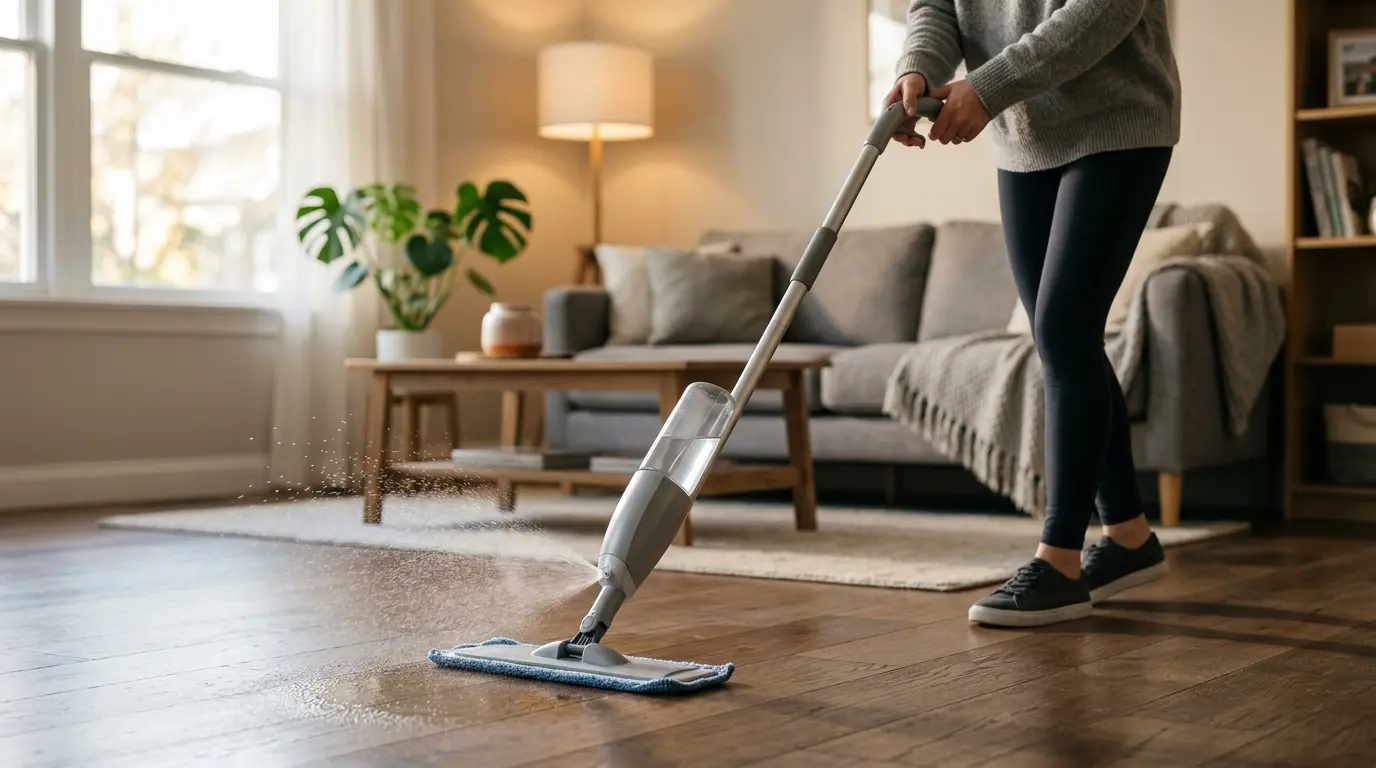
The best mop for wooden floors is a flat microfibre mop or a spray mop with a washable microfibre pad. Both options clean effectively while using minimal moisture, helping protect engineered timber, solid hardwood and timber floorboards from water damage.
Unlike traditional string or sponge mops, microfibre mops are designed to pick up dust, dirt and fine debris without soaking the floor. For the best results, use a lightly damp pad and a pH-neutral timber floor cleaner that is compatible with your floor’s finish.
Whether you have engineered timber, polished hardwood or sealed wooden floorboards, choosing the right mop and cleaning technique will help maintain the appearance and durability of your flooring.
Quick Answer: Which Mop Is Best for Wooden Floors?
| Mop type | Recommendation | Main benefit |
|---|---|---|
| Flat microfibre mop | Best overall | Uses minimal moisture and collects fine dust |
| Spray mop | Excellent choice | Controls water application and eliminates the need for a bucket |
| Steam mop | Avoid unless approved by the manufacturer | Heat and moisture may damage timber |
| String or sponge mop | Not recommended | Holds too much water |
| Spin mop | Use with caution | Can be difficult to control moisture |
| Robot or wet-dry mop | Only on compatible sealed floors | Convenient for routine maintenance |
The Anatomy of the Best Mop
Before choosing the best mop for hardwood floors, it is important to understand why timber flooring requires a different cleaning approach from ceramic tiles or vinyl.
Engineered timber flooring consists of a real hardwood veneer bonded to a stable multi-layer core. Solid hardwood is made from natural timber throughout. Although their construction differs, both types of flooring can be affected by excessive moisture, particularly around board joints and exposed edges.
This is why a flat microfibre mop is generally the safest everyday option.
Microfibre pads contain thousands of fine synthetic fibres that collect dust, pet hair and small dirt particles. Their structure allows them to lift and hold debris rather than simply pushing it around the floor.
Another important advantage is moisture control. A flat microfibre mop can be used with a lightly damp pad and a small amount of timber-safe cleaning solution.
Instead of repeatedly dipping a mop into a bucket of water, you can lightly mist the pad and clean small sections of flooring at a time. This reduces the amount of moisture left on the surface and helps prevent water from entering the joints between boards.
For homeowners looking for the best mop for wooden floors, this combination of effective dirt removal and controlled moisture makes microfibre a practical choice.

Best mops for hardwood floors compared
Different mop designs offer different levels of cleaning performance and moisture control. The following comparison explains which options are suitable for engineered timber, solid hardwood and wooden floorboards.
| Mop type | Suitable for timber? | Advantages | Things to consider |
|---|---|---|---|
| Flat microfibre mop with washable pads | Best overall choice | Collects dust and dirt while using little moisture | Wash pads regularly and avoid fabric softener |
| Spray mop with refillable bottle | Excellent choice | Applies a controlled fine mist without a bucket | Avoid excessive spraying |
| Steam mop | Only with explicit manufacturer approval | Convenient for some compatible surfaces | Heat and moisture may damage timber |
| String or sponge mop | Not recommended | Familiar and easy to find | Holds too much water |
| Spin mop | Use with caution | Can be wrung out before cleaning | Make sure the mop head is almost dry |
| Robot or wet-dry vacuum mop | Only on compatible sealed floors | Convenient for routine maintenance | Check water-flow settings and flooring instructions |
For most homeowners, a flat microfibre mop or spray mop offers the best balance of cleaning performance, convenience and moisture control.
A spray mop is particularly useful for everyday cleaning because its refillable bottle allows you to apply a small amount of timber floor cleaner directly where needed.
Choose the Mop According to Your Floor Finish
Not all wooden floors have the same protective surface treatment. The right mop for wooden floors depends partly on whether your flooring has a polyurethane coating, natural lacquer or an oiled finish.
Using the wrong cleaning equipment can leave streaks, dull the surface or gradually affect the protective coating.
For example, glossy polyurethane finishes can show water marks and streaks when cleaned with excessive moisture. Natural oiled finishes require a different cleaning solution that will not strip away their protective oils.
A good mop for hardwood floors should therefore work with the floor’s finish rather than against it.
For sealed and lacquered timber, a soft microfibre mop with a small amount of pH-neutral cleaner is generally suitable. Oiled floors should be cleaned with products specifically designed for their finish.
Quick-Step also advises homeowners to avoid excessive moisture when cleaning timber floors.
Mop by finish type
| Timber floor finish | Recommended cleaning approach |
|---|---|
| Polyurethane or lacquer | Lightly damp microfibre mop with pH-neutral timber cleaner |
| Hardwax oil or natural oil | Barely damp mop with a cleaner formulated for oiled floors |
| Unknown finish | Check the manufacturer’s instructions and test a small hidden area first |
If you are unsure about your flooring’s finish, contact your flooring installer or the manufacturer before choosing a cleaning product.
What to Look for in a Mop for Engineered Timber Floors
When shopping for the best floor mop for hardwood floors, moisture control, pad quality and ease of use should be your main priorities.
Engineered timber has a real hardwood surface supported by a multi-layer core. Although this construction provides stability, excessive water can still damage the joints and edges.
Here are the most important features to consider.
1. High-quality microfibre pads
Choose a mop with dense, soft microfibre pads that collect fine dust, pet hair and dirt without requiring aggressive scrubbing.
Reusable pads are also more economical than disposable alternatives. Make sure they can be washed according to the manufacturer’s instructions.
2. Lightweight construction
If you clean large areas of timber flooring, a lightweight mop can make everyday maintenance much easier.
Look for an ergonomic handle and a mop head that glides smoothly without requiring excessive pressure. Adjustable handles can also improve comfort during longer cleaning sessions.
3. A swivel mop head
A 360-degree swivel head helps you clean around furniture legs, under tables and along skirting boards.
A low-profile design is particularly useful for reaching underneath sofas and other furniture.
4. Controlled moisture application
A spray mop with a refillable bottle is a practical choice for homeowners who want to control how much cleaning solution reaches the floor.
Avoid systems that leave a wet film or require large amounts of water.
5. Machine-washable replacement pads
Having several washable pads means you can replace a dirty pad during cleaning instead of spreading accumulated dirt across different rooms.
Avoid fabric softeners when washing microfibre pads, as they can leave residue and reduce cleaning performance.
For Australian homeowners searching for the best mop for wooden floors, a lightweight flat-head or spray mop with reusable microfibre pads is a sensible starting point.
Can you use a steam mop on timber floors?
Steam mops should not be used on timber floors unless the flooring manufacturer or finish manufacturer explicitly confirms that the specific product is suitable.
Steam cleaning introduces heat and moisture, which may penetrate board joints, affect protective coatings and cause swelling or other damage.
The risk can be particularly concerning with engineered timber, oiled flooring, waxed surfaces and floors with worn or damaged finishes.
Although some manufacturers may approve particular steam-cleaning systems for certain sealed surfaces, there is no universal approval for all timber flooring.
Before using a steam mop, check the following:
- The flooring manufacturer’s cleaning instructions.
- Whether the specific finish allows steam cleaning.
- Whether the floor is fully sealed and in good condition.
- Whether steam cleaning affects the product warranty.
If you cannot confirm that steam cleaning is approved, choose a lightly damp microfibre mop instead.
It is the more conservative option for routine cleaning of wooden floors
Benefits of Proper Mopping
Choosing the best mop for wooden floors is not just about keeping your home looking clean. It also helps protect the flooring investment you have made.
Preserving the polyurethane finish
Many engineered timber floors have a factory-applied polyurethane or other protective surface coating.
This clear finish helps protect the timber veneer against everyday dirt, minor spills and surface wear.
Using abrasive mop pads, dragging trapped grit across the surface or applying harsh cleaning chemicals can gradually damage this protective layer.
A soft microfibre mop and a compatible pH-neutral cleaner help maintain the appearance of the finish.
Preventing moisture-related damage
Wood is a natural hygroscopic material, meaning it absorbs and releases moisture depending on environmental conditions.
Excessive water left on timber floors can enter board joints and edges. Over time, this may contribute to swelling, movement or cupping.
Using a well-wrung microfibre mop reduces unnecessary moisture and helps keep the flooring surface dry.
Protecting manufacturer warranties
Flooring manufacturers often specify which cleaning products and methods are suitable for their products.
Using an unapproved steam mop, excessive water or an unsuitable chemical cleaner may affect warranty coverage.
Always follow the maintenance instructions supplied with your flooring to help protect its finish and warranty conditions.

Common Problems or Mistakes in Floor Cleaning
Even when homeowners choose the right mop, incorrect cleaning habits can still damage timber flooring.
Understanding these common mistakes helps you keep your floors clean without unnecessary wear.
1. Not removing dust, sand and grit first
Always remove loose debris before introducing moisture.
Fine sand, dirt and grit can become trapped underneath a damp mop pad. As the mop moves across the surface, these particles may scratch the protective finish.
Use a soft microfibre dust mop, soft-bristle broom or vacuum cleaner with a suitable hard-floor attachment.
Avoid using a rotating beater bar unless the vacuum manufacturer confirms that it is safe for your flooring.
Pay particular attention to entryways, hallways and areas near external doors.
2. Using vinegar and water
Vinegar is often recommended as a natural household cleaning solution, but it is not suitable for every timber floor.
Its acidity may affect certain protective finishes, particularly when used repeatedly or at high concentrations.
Instead, choose a pH-neutral cleaner specifically formulated for timber flooring and compatible with your floor’s finish.
3. Using too much water
One of the biggest mistakes when cleaning wooden floors is using a soaking-wet mop.
Excessive moisture can enter the joints and edges of the boards, potentially causing swelling or other moisture-related damage.
A lightly damp microfibre pad is generally sufficient for routine cleaning.
4. Using dirty mop pads
A heavily soiled microfibre pad can spread dirt rather than remove it.
Replace the pad when it becomes dirty and wash reusable pads according to the manufacturer’s instructions.
Avoid fabric softener where it can leave residue on the fibres.
5. Applying too much cleaning solution
More cleaning solution does not necessarily produce better results.
Excess product can leave residue, streaks or a cloudy appearance.
Use the recommended dilution and application method specified by the cleaning product manufacturer.
Best way to clean timber floors, step by step
Knowing how to use the best mop for wooden floors is just as important as choosing the right equipment.
Follow these steps to clean engineered timber, solid hardwood and suitable sealed timber floorboards safely.
Step 1: Remove loose dust and debris
Start by dry-cleaning the flooring before using any liquid.
Use a soft-bristle broom, microfibre dust mop or vacuum cleaner with a suitable hard-floor attachment.
Make sure the vacuum’s rotating beater bar is switched off unless specifically approved for your flooring.
This prevents loose dirt and grit from being dragged across the protective finish during mopping.
Step 2: Apply a fine mist of timber floor cleaner
Choose a pH-neutral cleaning solution specifically formulated for timber flooring and compatible with your floor’s finish.
Lightly spray the microfibre pad or apply the recommended amount of cleaning solution according to the product instructions.
Avoid pouring large amounts of cleaner directly onto the floor.
Working in small sections helps you control moisture and prevents cleaning solution from sitting on the surface.
If you have invested in beautiful Engineered Timber Flooring Melbourne, using the right cleaning products is an important part of maintaining its appearance.
Step 3: Mop in the direction of the wood grain
Move the flat microfibre mop along the direction of the timber grain whenever practical.
Use gentle, consistent movements rather than applying excessive pressure.
This helps collect loose dirt and prevents unnecessary friction against the floor’s protective surface.
Step 4: Replace dirty mop pads
As you clean, the microfibre pad will gradually collect dust and dirt.
Replace it when it becomes visibly dirty or heavily soiled.
Using a fresh pad prevents accumulated debris from being transferred to other areas of your home.
Keep several washable replacement pads available, especially when cleaning large floor areas.
Step 5: Wash and maintain microfibre pads
Wash reusable mop pads according to the manufacturer’s instructions.
Avoid fabric softener where it can leave residue that reduces the fibres’ ability to collect dirt.
Allow the pads to dry completely before storing them.
Replace worn or damaged pads when they no longer clean effectively.
Step 6: Clean spills immediately
Do not wait until your next scheduled cleaning session to remove liquid spills.
Water, wine, food and other liquids should be wiped up promptly using a clean, dry cloth or paper towel.
This is particularly important in homes with engineered timber flooring, where moisture entering the board joints can cause problems.
If you have beautiful timber flooring in Hawthorn, regular care and prompt spill removal can help preserve its appearance for years.

When to Hire a Professional
Even with the best mops for hardwood floors and a consistent cleaning routine, timber flooring may eventually show signs of wear.
Heavy foot traffic, pets, furniture movement and years of everyday use can gradually affect the protective surface.
If your flooring remains cloudy, dull or heavily scratched despite regular cleaning, mopping alone may no longer solve the problem.
This is when professional assessment can help.
An experienced Timber Flooring Installer or flooring specialist can inspect the surface and recommend an appropriate maintenance or restoration solution.
Depending on the floor’s condition, this may include:
- A professional deep clean using suitable timber-flooring equipment.
- Assessment of scratches and damage to the protective finish.
- A screen and recoat process where the existing finish is suitable.
- More extensive sanding and refinishing if the damage requires it.
A screen and recoat involves preparing the existing finish and applying a compatible new protective coating without necessarily sanding the floor back to bare timber.
The appropriate treatment depends on the flooring construction, finish and overall condition.
Keep Your Floors Flawless with Boss Timber Flooring
Your engineered timber floors are an important investment in your Melbourne home. Maintaining their appearance requires the right cleaning products, suitable equipment and consistent care.
Whether you need advice about maintaining your existing timber flooring, want professional guidance on cleaning products or are considering installing new timber floors, Boss Timber Flooring can help.
Contact Boss Timber Flooring for expert advice, premium timber flooring installations and tailored solutions to help maintain the beauty and longevity of your floors.
FAQs
1. What is the best mop for wooden floors?
A flat microfibre mop is generally the best overall choice for wooden floors.
Its soft fibres collect dust, dirt and small particles while allowing you to clean with minimal moisture.
A spray mop with a washable microfibre pad is another excellent option, particularly for everyday maintenance.
Use either with a compatible pH-neutral timber floor cleaner.
2. Are steam mops suitable for hardwood floors?
Steam mops should be avoided unless the flooring or finish manufacturer explicitly approves the specific cleaning method.
Heat and moisture may penetrate board joints, affect protective coatings and cause swelling or other damage.
For routine timber floor maintenance, a lightly damp microfibre mop is the safer general recommendation.
3. Can I use a traditional string or sponge mop on engineered timber?
Traditional string and sponge mops are generally not recommended for engineered timber flooring.
They tend to hold more water than flat microfibre mops, increasing the risk of moisture entering the joints and edges of the boards.
A flat microfibre or spray mop provides better moisture control.
4. How often should I use the best mop for wooden floors?
Dry-sweep or vacuum wooden floors every few days, or more frequently in high-traffic areas.
Damp mopping is generally needed about once a week, depending on household activity, dirt levels and the flooring manufacturer’s recommendations.
Clean spills immediately rather than waiting for your next scheduled mop.
5. What is the best mop for real hardwood floors?
A flat microfibre mop or spray mop with a washable pad is an excellent choice for real hardwood floors.
Use it lightly damp with a timber-specific pH-neutral cleaner that is compatible with the floor’s finish.
Avoid excessive water and check the manufacturer’s maintenance instructions.
6. How damp should a mop be when cleaning wooden floors?
Your microfibre mop should be lightly damp, not wet or dripping.
A practical check is to mop a small section and observe the surface:
- There should be no puddles or visible water collecting around the board joints.
- The floor should not have a persistent wet film.
- The surface should dry quickly, generally within a few seconds, under normal conditions.
If water remains visible for longer, reduce the amount of cleaning solution or moisture on the pad.
Always follow the specific flooring manufacturer’s cleaning instructions.
7. Can I use a robot mop on timber floors?
Robot mops may be suitable for some sealed timber floors, provided the flooring manufacturer approves the cleaning method.
Choose a model with adjustable water-flow settings and use the lowest suitable moisture setting.
Avoid excessive water application, and check that the cleaning pads are clean and suitable for your floor finish.
8. What cleaner is safe for timber floors?
Choose a pH-neutral cleaning solution specifically labelled for timber flooring and compatible with your floor’s finish.
Avoid vinegar, harsh household detergents, abrasive cleaners and unsuitable silicone-based polishes.
If you have oiled or hardwax-oiled timber, use a cleaning product specifically designed for that surface.
When in doubt, follow the cleaning recommendations provided by your flooring manufacturer.


2 Responses
I’ve recently had engineered timber flooring installed and I’m still unsure about how damp the mop should actually be. Is a slightly damp microfibre mop enough for regular cleaning, or should I use a specific cleaning solution as well?
A slightly damp microfibre mop is generally suitable for routine cleaning of engineered timber flooring. The key is to avoid excess water, as moisture left sitting on the surface or getting into joints can damage the timber over time.
You can use a timber-floor cleaning solution when needed, but choose one that is specifically compatible with your flooring’s finish and follow the manufacturer’s instructions. For everyday maintenance, removing dust and grit regularly and using a well-wrung mop is often sufficient. Avoid soaking the floor or using steam mops unless the flooring manufacturer specifically approves them.