
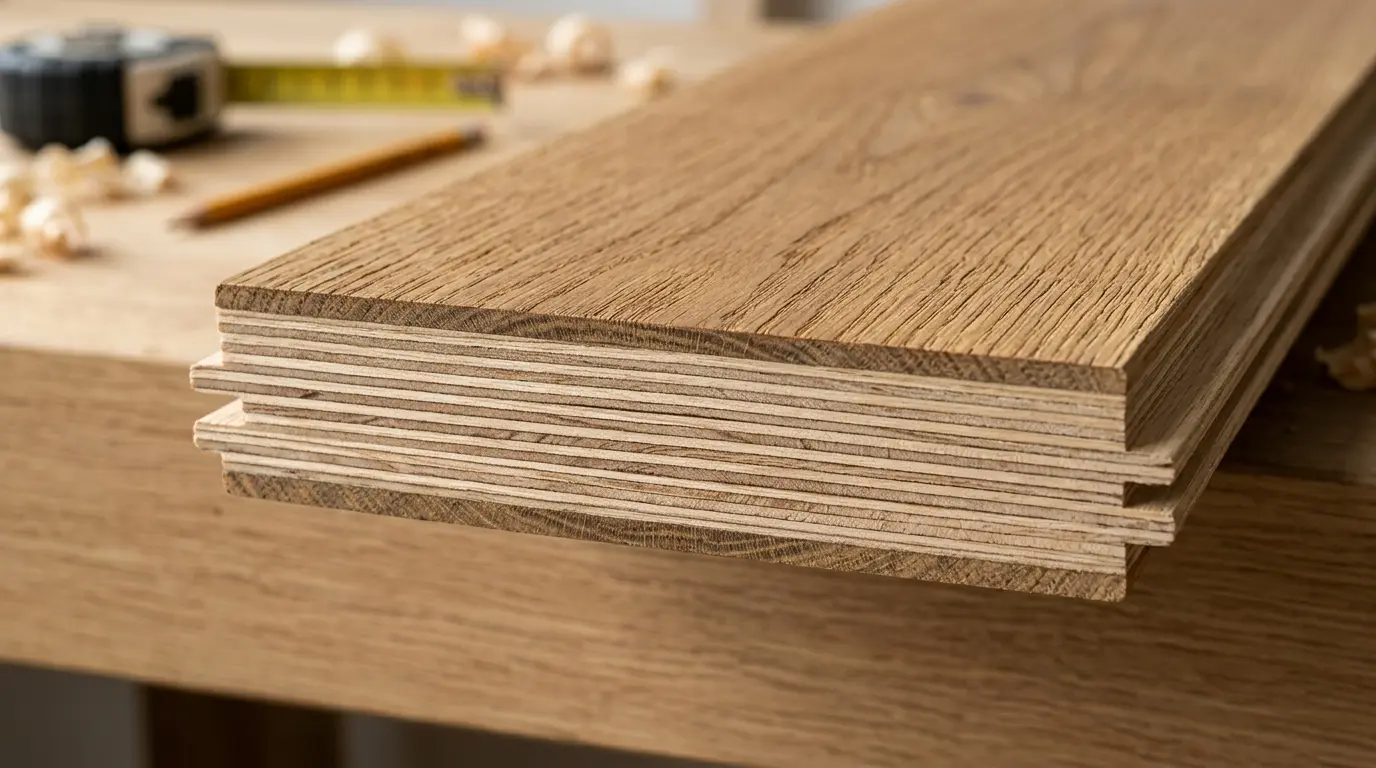
Generally, you can sand engineered timber flooring 1 to 3 times during its lifespan, depending entirely on the thickness of its top hardwood layer (the veneer). For Melbourne homeowners dealing with fluctuating weather and active households, knowing how often can engineered flooring be sanded is crucial for long-term maintenance. Below, we break down exactly what dictates this limit and how to assess your floors before making a decision.
| Veneer Thickness | Key Info (Sanding Limit) | Why It Matters |
|---|---|---|
| 1mm – 2mm | Cannot be fully sanded (0 times). | A full sand will expose the plywood core beneath, ruining the floor. |
| 3mm – 4mm | Can be sanded 1 to 2 times safely. | The most common standard for residential homes, offering great longevity. |
| 5mm – 6mm | Can be sanded up to 3 times. | Acts almost exactly like solid timber, ideal for high-traffic areas. |
| Screening (Buffing) | Unlimited, as long as the wood is intact. | Restores the top clear coat without removing any actual timber. |
How Often Can Engineered Flooring Be Sanded?
Before determining the number of times engineered timber flooring can be sanded, it is important to understand the structure of the product. Engineered wood is made from a number of layers as opposed to solid wood built from one piece of wood from top to bottom. The core is usually of high quality plywood or high density fibreboard (HDF), and is used to prevent warping and moisture damage. On top of this core is a layer of real, genuine hardwood (the veneer or wear layer).
The sanding machine physically grinds away the top surface of the wood to get rid of any scratches, dents and stains on the floor. The average amount of removal usually occurs when a professional floor sanding process is used, which will remove approximately 1 millimetre (1mm) of wood. So, the answer to how often can engineered flooring be sanded, or how many times can you sand hardwood floors, is a strictly mathematical one.
A drum sander will shred through the perfect oak or black but and reveal the dreaded plywood subfloor below if the floor has either a 1mm or 2mm wear layer. This is a ‘wear and replace’ flooring. A premium 4mm wear layer, however, can safely be sanded 1mm if it is done during a heavy sanding, leaving 3mm behind. After 10 years, you can sand it once again, removing another 1mm, leaving 2mm. The floor can be sanded twice in a total period of 20 – 30 years in this case.
For the best boards with a 6mm wear layer, you have the opportunity to get three full professional sands. It is a multi-generation floor. That’s why it’s most important to understand your floor’s exact requirements before you even begin the restoration process.
According to Hardwood Floors Magazine, “the number of times a floor can be sanded depends on several factors, including the type of wood, the thickness of the wear layer and the equipment used.”

Benefits of Refinishing
If you know how many times your floor can be sanded, it can make a huge difference in your budget and your appearance. However, many people think that as soon as their engineered floor gets scratched or dull, it should be removed and disposed of in landfill. If you know it can be fixed then you don’t have to spend a ton of money on a replacement.
Cost–Effectiveness and Property Value
Melbourne is a competitive real estate market, and well-maintained timber floors are a big attraction to potential buyers. Existing engineered floor is less expensive than replacing the boards with new materials and having to pay for the demolition and new materials. Lightly sanding and re-coating brings new life to your home’s interior while giving that colour a contemporary look, but without breaking the bank.
Environmental Sustainability
The replacement is a very unsustainable option compared to sanding and restoring. This helps to avoid good products being thrown into local tip bins and decreases the need for new trees to be cut down. Just peeling away a millimetre of the surface to expose new, undisturbed timber below.
Aesthetic Flexibility
Over the years, UV fading can happen due to the sun’s rays that enter through large windows. Glass door discolouration is frequently caused by Melbourne’s hot summers. By sanding, you’re not just fixing up damage – you can also transform the room’s overall look. Take a dark floor of a dark walnut stain and sand it back to natural blonde oak, or the other way round. An initial, good investment in premium engineered hardwood flooring melbourne guarantees a product suitable enough to achieve all these amazing design possibilities decades in the future.

Common Problems or Mistakes
Homeowners often make a few expensive mistakes when researching the number of times engineered wood can be sanded. The margin of error is just millimetres, so it can be a costly mistake to get it wrong; often the whole floor needs to be replaced.
1. Estimating the Wear Layer thickness
The worst error is to get a sander (or trying to do it yourself) without first verifying the thickness of the top veneer. If a house had been purchased and the floors were in place, one would not be able to determine by looking at the floors alone the thickness of the top floor. You will sand through to the cross-directional plywood if you assume a 4mm and have a 1.5mm. When the core is exposed, the board is ruined and has to be cut out one by one and replaced.
2. Using Engineered Wood as Solid Timber.
These 19mm thick solid wood floors can withstand the heaviest drum sanders! Engineered floors need so much more of a delicate touch. If a very coarse grit sanded engineered floor is used it will remove too much valuable veneer.
3. Ignoring the Micro-Bevels
There are many engineered floors that have a “micro-bevel”, which is a tiny V-shaped edge cut at the perimeter of the boards where they are joined together. If you choose to sand the entire board, the sander must sand the flat surface all the way down to the bottom of that groove to make the floor perfectly flat. This process will remove a much higher amount of wood than a typical sanding. A micro-bevel which is being attempted on a fairly thin wear layer will damage the floor.
4. Not taking into account a “Screen and Recoat”
People tend to over-sand floors because they have light scratches in the surface. A complete sand removes the wood. Sand the wood away if the scratches are just in the clear polyurethane topcoat, and you made an enormous blunder! Rather, only scuff the topcoat and put on another finish.
How to Do It Right
You must approach the process of floor restoration through a strategic process in order to make your floors look pristine and to extend their lifespan. These are the most important tips to follow to be successful.
Before putting on veneers, measure your teeth and determine your veneer thickness.
The first time you even put your foot on your floor, determine how thick the wear layer is. If there are still boards in the garage from the original installation, just take a look at the side profile with a ruler. If you do not have any spare boards, look in a different place where the floor stops (a floor heating vent, a strip of carpet or by carefully removing skirting board). Measure the cross section of the wood and note the solid layer in the wood.
Opt for the Screen and Recoat Method
When choosing engineered wood for renewal, you may be concerned about its repellability; if you wish to refresh your floors, you can get an answer from a professional regarding a “screen and recoat” (also called buffing) to your floor. This technique involves lightly sanding the current polyurethane finish with a very fine mesh pad, thereby eliminating very small scratches and dirt on the surface, but not damaging the underlying timber. Then a new layer of polyurethane is on top. This can be repeated anytime during the life of the floor, saving the valuable wood veneer for when it is really required (for deep dents, or water damage, for example).
Ensure that you invest in quality from the beginning.
If you need new floors and want these to last you a lifetime, make sure you don’t skimp on the wear layer. When you are looking to renovate a beautiful heritage property and you want to look after yourself (and the next generation), opting for a 4mm to 6mm veneer on your premium engineered timber flooring hawthorn means that you will have plenty of wood to work with when it’s time to restore your floor.
Optimize indoor air quality.
Melbourne is well known for its extreme weather changes. Rapid fluctuations in humidity result in expansion and contraction of the timber that can lead to the floor wearing out more quickly with micro-cracks in the finish. To extend the duration of the finish, maintain a relatively stable humidity in the interior (40% to 60%).

When to Hire a Professional
As we’ve just said, the gap between a well-restored floor and a completely destroyed one is about 1mm or 2mm. It’s not a place to experiment with the machine you have rented from the hardware store. A drum sander demands a lot of control and a keen eye to ensure that the delicate veneer is not burned or gouged by the sander.
When your floor scratches or begins to show UV discolouration or you simply want to change the colour of your floor, there is no better solution than to hire the expert. Precise orbital sanders and fine gritted papers specially designed for veneers will be used by a professional. If you are seeking a serene and flawless outcome, you are sure to get it from the hand of a reputable specialist in Timber Flooring Melbourne, who will get your valuable wear surface to maintain and give you a perfectly smooth, durable and stunning finish.
Looking to restore your beautiful floor?
We know that your floors are the backbone of your home’s design at Boss Timber Flooring. If you don’t know the thickness of any existing engineered boards, or if you require a fine sanding for your professional projects, or you are interested in a stunning new, high quality timber floor that will last generations, we’ve got your back. Our master craftsmen are experts at locating, preserving and repairing engineered veneers with utmost precision. If you’re looking to make your Melbourne home look and feel more livable and luxurious, give Boss Timber Flooring a call today for a free, no obligation site inspection.
FAQs
1. How many times can you sand engineered timber flooring with a 3mm veneer?
An engineered floor with a 3mm wear layer can typically be sanded exactly once, or perhaps twice if the sanding is done exceptionally lightly by a highly skilled professional. A standard sanding removes about 1mm of wood.
2. How often can engineered flooring be sanded over its lifetime?
This depends heavily on the household’s foot traffic, but generally, a floor only requires a full heavy sanding every 10 to 15 years. If you maintain the surface with regular cleaning and “screen and recoat” buffing, you may never need a full sand at all.
3. What happens if you sand engineered wood too many times?
If you exceed the limit and sand completely through the top hardwood veneer, you will expose the plywood or HDF core underneath. This looks terrible, cannot take a stain properly, and means the entire affected area of the floor must be completely replaced.
4. Can I change the colour of my engineered floor by sanding it?
Yes. If your engineered floor has a thick enough wear layer (at least 3mm to 4mm) to safely accommodate a full sanding, a professional can strip away the old dark stain and apply a completely new, lighter colour or natural finish to modernise your space.


2 Responses
I’ve had my solid timber floors sanded once before and they’re starting to show wear again. Is there a way to tell how much sanding the boards have left before going ahead with another restoration?
Yes. The amount of timber remaining above the tongue-and-groove joint is one of the main things a flooring professional will check before sanding solid timber again. The boards need enough usable thickness above the fixing system to be safely sanded without exposing the tongue, nails or other fixings.
The previous sanding depth, the amount of wear and any existing cupping or damage also matter. Rather than judging by the surface appearance alone, it’s best to have a few boards inspected before restoration. If there is sufficient timber remaining, another sanding and refinishing can often restore the surface without replacing the floor.