
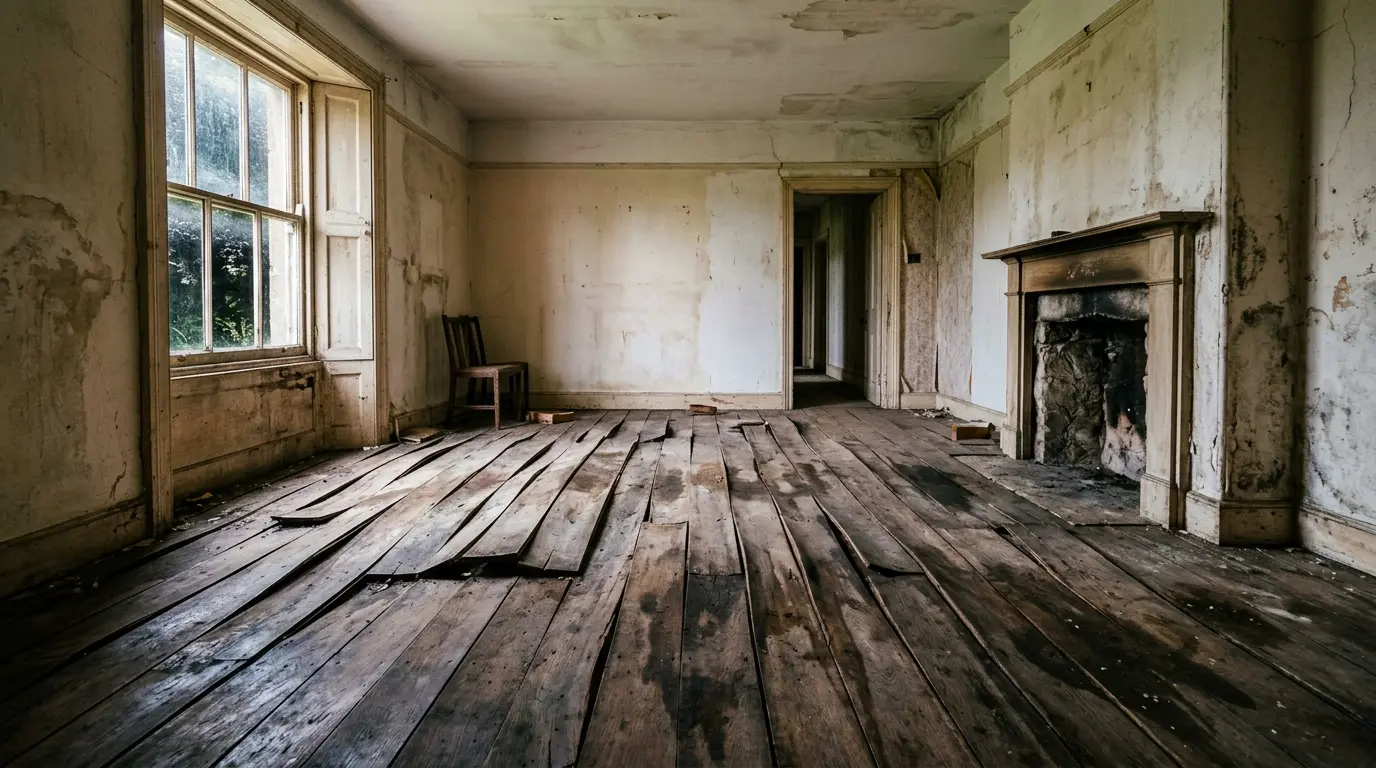
Fixing water-damaged timber flooring requires immediately stopping the active moisture source, using commercial-grade dehumidifiers to reduce wood moisture levels below 12%, and selectively sanding or replacing buckled boards only after the timber has completely dried.
Time is your greatest enemy when dealing with indoor flooding; within 48 hours of exposure, stagnant water begins breeding toxic mould and altering the cellular structure of hardwood timber beyond simple surface repair. Whether you are dealing with a burst pipe in a heritage Victorian terrace in Fitzroy or flash flooding in a modern open-plan home in Southbank, Melbourne’s unpredictable climate and distinct housing styles demand a specialised, methodical approach to timber recovery.
To help you assess the severity of your floor’s condition and take the right immediate steps, here is a quick-reference guide to water damage symptoms and solutions.
| Damage Level | Visual & Physical Symptoms | Immediate Action Required | Best Approach |
| Minor Surface Spill | Water pooled on top; no edge raising or discolouration. | Wipe up immediately with microfibre cloths; increase room airflow. | DIY |
| Mild Cupping | Edges of boards sit slightly higher than the centre. | Run industrial dehumidifiers; do not sand until moisture readings normalise. | DIY / Professional Assessment |
| Severe Buckling | Boards lifting off the subfloor; tenting or cracking visible. | Remove baseboards to allow expansion; extract standing subfloor water. | Professional Restoration |
| Tannin Staining & Mould | Dark black or grey patches; musty odour from gaps. | Apply wood bleach (oxalic acid) for stains; professional remediation for mould. | Professional Specialist |
How to Fix Water Damaged Timber Flooring
Water damaged timber floorboards are not something that should be done in a rush. Wood is hygroscopic, so it will always take in and give out water based on the conditions it is exposed to. The wood cells swell when the floorboards are saturated with a big flood or undetected leak, which creates a lot of pressure inside the wood.
How Solid and Engineered Timber Respond Differently to Water
Solid and engineered timber flooring can both be affected by excess moisture, but the construction of the boards influences how the damage develops.
Solid timber is made from a single piece of wood, so moisture can cause expansion, cupping, crowning and other dimensional movement through the board. Because solid timber can usually be sanded multiple times, some damaged floors may be restored after the moisture problem has been resolved.
Engineered timber consists of multiple layers, with a genuine timber wear layer over a structural core. Its layered construction can provide greater dimensional stability, but prolonged water exposure can still cause swelling, movement or delamination depending on the product and the extent of moisture penetration.
This is why the floor construction, installation method and condition of the subfloor should all be considered before deciding whether water-damaged boards can be restored or need to be replaced.
In order to carry out the water damaged floorboards restoration process without damaging the wood, it’s essential to follow a clearly defined 5-step process.
Use an approved flood pump or other method to remove and isolate the water.Remove and isolate water using an approved flood pump or other means.
Step 1: The first step is to stop it at the source
turn off the main water supply, fix the water leak, or patch a leak in the roof. If it’s possible to control the source, remove all surface water as soon as possible with high-capacity wet/dry vacuum extractors. Standard house towels will not work for any serious spill, because they contain gallons of water trapped between the microscopic gaps between the boards.
Step 2: Involve Realtors for the restoration process.
Avoid blowing or drying wet wood with high heat blowers or blowers. Thermal shock is extreme heating and cooling which causes the wood to crack, split or permanently check. Instead, set up an enclosed drying environment:
- Industrial Dehumidifiers: These remove moisture from the air, which results in a dry gradient that will cause the water that is trapped in the timber and concrete subfloor to evaporate.
- Air Movers: Place high-velocity fans parallel to the floorboards to establish a continuous airflow across the floorboards and not pushing moisture deeper down.
- Moisture Monitoring: The EMC range of timber floors in Melbourne is from 10% to 12%. A pinless moisture meter needs to be used every day until the boards reach this baseline moisture level, monitoring the drying process.
Step 3: Acclimatisation Waiting Period
One of the most challenging, but essential elements of water damage restoration is patience. Drying will take anywhere from 2 to 4 weeks depending on the density of the Australian hardwoods that you have (Victorian Ash & Jarrah) or the softer Baltic Pine common in Melbourne heritage homes. In this stage, warped boards can work out and level off as water bubbles are given off.
Step 4: damage assessment is to determine the structural damage versus the aesthetic damage.
After the wood is confirmed dry with a moisture meter, check the physical deformation:
- Cupping: Board’s edges are raised above the centre. This often resolves itself once completely dry.
- Crowning: Centre of the board is up higher than sides. This typically occurs when a floor was sanded when it was still wet, which causes the edges to shrink as the floor dries and creates a permanent convex hump in the floor.
- Buckling: The timber has completely separated from the subfloor/joists and a “tent” is formed. If boards are buckled, removal and replacement is almost always necessary.
Step 5: Final Assembly
Once the wood has reached equilibrium with the environment, but still has some moisture irregularities or some visible staining, then the time has come for refinishing. Drum sand the full floor surface to level the floor, being careful not to sand too deeply with thinner boards. Apply oxalic acid when surface is smooth, to remove dark black stains that may have appeared on the surface as a result of water reacting with the iron content of wood. Lastly, use a good quality commercial grade of polyurethane or hardwax oil to re-seal the floor to provide it with a protective barrier.

Can Water-Damaged Timber Flooring Be Repaired or Should It Be Replaced?
Not all water damaged timber floors have to be removed. The correct way to deal with it will depend on the depth of the moisture penetration, the length of time the floor has been damp and if there has been permanent structural damage to the timber and subfloor.
When Timber Flooring Can Often Be Repaired
If the damage is confined to surface staining, some repair may be possible if swelling or moderate cupping is present which improves as the timber dries. When moisture content is stabilized, affected surfaces can be sanded and refinished to restore the surface.
Occasionally, if there is localized damage, it can be fixed by replacing just a few boards, and not the whole floor.
The need for replacement is typically required when:
When boards are still deeply warped after drying, have buckled or pulled away from the subfloor, are structurally weak or have extensive rot or deterioration, replacement is more appropriate.
The state of the subfloor should be taken into account as well. The timber boards may look salvageable, but may need to be replaced when there is water damaged particleboard or other structural flooring materials.
Therefore, the key decision must be made after the floor and subfloor have been fully dried out and the degree of structural deterioration has been determined, and not based on how the floor appears.
Why Prompt Water Damage Restoration Matters
Ignoring a minor leak or delaying professional water damage restoration can transform a simple surface repair into a catastrophic structural failure. Timber floors are interconnected systems involving top boards, adhesives, protective underlays, subfloors, and structural joists. When moisture is left unchecked, the consequences ripple through the entire home.
1. Preventing Structural Subfloor Rot
Water doesn’t just stay on top of your floorboards, it moves down through the tongue and groove into the subfloor. In the case of a concrete slab house, trapped moisture forms a persistent vapor bath which robs adhesives, and leads to chronic timber expansion. Dry rot and wet rot – Serpula lacrymans – are literally eating away the load bearing beams under your feet if your home is built on timber stumps and bearers, which is the typical structural solution in inner Melbourne suburbs, such as Richmond, Brunswick and Hawthorn.
2. The removal of severe health hazards.
Dampness and moisture, which gets stuck under the floor boards are ideal conditions for the growth of toxic mould such as black mould (Stachybotrys chartarum) and Aspergillus. The fungal spores start multiplying in the dark and moist space under your floors in 48-72 hours. These spores enter your home’s breathing air through gaps in the floorboard, leading to asthma attacks, chronic sinus infections, allergic reactions, and mysterious respiratory diseases, particularly in young children and the elderly.
3. Maintaining Property value and reducing costs
If a localized repair is done before it becomes a problem, they can possibly repair the floorboard for a few hundred dollars. Unfortunately, when moisture can warp an entire open plan living space, rot under the floorboards and create mould growing within the plasterboard walls, your water damage floor repair cost can easily soar into the tens of thousands of dollars! Damage to the original timber structure is prevented, which safeguards the market value of your home by immediate restoration.
WoodSolutions advises that “Water can significantly damage timber flooring so any spills should be mopped up immediately and any leaks investigated without delay.”

Does the Type of Water Affect Timber Floor Repair?
Yes. The type and quality of the water may impact the restoration and the danger to the timber floor.
A small leak or a spilt bottle of water will be easier to deal with if cleaned up immediately. Bacteria, chemicals, and other contaminants can be introduced into the flooring and subfloor by floodwater, contaminated (dirty areas) water or sewage-contaminated water.
Drying and sanding are not enough to get rid of contaminated water. The affected area might need suitable cleaning, disinfection and professional evaluation, especially if moisture has gotten through to the floorboards.
Water that has been trapped under the flooring is also a different problem than a surface spill, that’s because the subfloor, adhesive or underlay may still be wet, even though the surface is dry.
When restoring it is important to not only understand the amount of water that hit the timber, but where that water came from, how long it was on the timber and what materials may have been affected below the floor.
Common Problems or Mistakes in Water Damaged Floorboards Repair
When panicked homeowners attempt DIY water damage restoration, they frequently make critical errors that cause permanent, irreversible damage to expensive timber. Avoid these four common pitfalls:
Sanding Floorboards Too Early
This is the most common error made in timber floor restoration. If the board is cupping from moisture the edges will go up. If the floor is sanded flat while the timber is wet, the raised edges that form the centre will be removed, causing the floor to do so. Eventually, after several weeks, the wood dries out and recedes to its original size, causing the centre to sink, resulting in a lifetime crown to the floor and the requirement to sand it down again – sometimes more than the thickness of the original wood.
The use of direct high-heat blower systems.
Some property owners will use a space heater or direct blowtorch to dry the house quicker. The wood is an organic substance which needs to be slowly released into the atmosphere. If moisture is driven out too quickly, the outer layers of the cell shrink faster than the wet centre, which is called “case hardening”. This leads to deep splits, face checking, and brittle boards that break with the normal foot traffic.
Failure to install the Underlay and Moisture Barriers
Water may be permanently trapped between the moisture barrier and the concrete slab when the floor is on an acoustic underlay or foam moisture barrier. Drying the upper surface of the timber will not cure an underground pool of water. In many instances, parts of the floor will need to be lifted to remove standing water from the sub-layer and to remove saturated mouldy underlay materials.
Covering Wet Floors with Rugs or Plastic Sheeting
Never place towels, rugs, or plastic drop cloths over wet timber floorboards in an attempt to soak up water or protect the area from foot traffic. Covering damp wood seals off airflow, traps relative humidity at 100% directly against the grain, and creates a greenhouse effect that accelerates rot and fungal growth within hours.
How to Protect Melbourne Homes from Moisture
Melbourne is well known for its “four seasons in one day. Extreme cold, excessive wet in winter, and wet summers put an enormous strain on natural wood floors. Here are some proactive maintenance tips to help maintain a clean and moisture-free floor before it becomes a problem:
- Control indoor relative humidity levels – Maintain an indoor relative humidity of 40-60% all year round. In the humid summer months in Melbourne use reverse-cycle air conditioners to extract moisture from the air, and in the drier, forced-heating winter months use humidifiers to keep timber from cracking and shrinking.
- Check Subfloor Ventilation – If your home is constructed on a suspended timber floor, make sure that outside subfloor air bricks and ventilation grates are never covered up with garden mulch, paving or debris. Soil moisture should be removed from under the house by good cross flow ventilation before it can rise into the floorboards.
- Lots of household water damage is caused by slow leaks under dishwashers, washers and plumbed refrigerators: Add Appliance Drip Trays. Place cheap plastic drip trays under these appliances and inspect flexible braided hoses on a regular basis, changing them every 2 years if they start to fray or rust.
- Seal Exterior Entrance Doors: Heavy horizontal rain during Melbourne storm seasons can easily pool against doorways and seep beneath entrance thresholds. Install quality weather strips and draught excluders on outside doors and use absorbent waterproof walk-off matting at all doors.
- Choose suitable flooring material for high traffic areas, kitchen spaces and areas with high humidity: In areas that are likely to experience high foot activity, a kitchen sink or high humidity, the choice of base material is essential. Although solid hardwood is stunning, there are areas of the home that are better suited to the upgraded options of high moisture content areas and Engineered flooring which has even greater dimensional stability. Engineered wood is naturally resistant to the extreme expansion and contraction that can make solid wood boards cup and buckle in changing weather conditions, due to its cross-laminated plywood core and top layer of genuine timber.
Water Damage Floor Repair Cost
When assessing the cost of water damage floor repair, it is essential to have a grasp of the financial commitment associated with the process.When considering the cost of water damage floor repair, it’s crucial to understand the financial investment involved. The price of timber can vary significantly between different species (common Baltic Pine and rare recycled Tasmanian Oak), the number of square metres of timber and the degree of water penetration.
Understanding how to manage Australian Home Insurance Claims.
Most buildings and contents insurance policies in Australia will protect against sudden and accidental water damage, including damage to a burst flexi-hose, hot water system breakage or storm damage. However, no policy will exclude damage resulting from gradual and long-term maintenance neglect (such as a slow dripping pipe under a kitchen sink not noticed for 6 months).
When a claim arises, contact a certified restoration specialist right away to obtain moisture mapping reports and itemised repair estimates and present these to your insurance assessor, and you will be assured you are full covered for drying equipment and structural floorboard replacement.

When to Hire a Professional for Water Damaged Timber Floors in Melbourne
If a spill or a domestic dehumidifier is used to remove water from a surface or to dehumidify a room, it can be done at home, but when the water ingress is significant enough it must be handled by a professional. If any of these things happen, it’s time to call a certified timber floor restoration expert:
- Black mould is seen growing between the boards or a musty smell is present that does not go away.
- The floor boards are spongy, soft and/or flex easily under foot, which means structural joist decay has taken place.
- Buckling greater than 5mm or individual boards have actually separated from the subfloor adhesives.
- The floor has been damaged and is spread over several rooms, or is a complex floor with parquetry patterns, and must be realigned geometrically.
Some repairs can be very complicated and without special equipment, the floorboards are likely to be destroyed and will be entirely removed. If your home has been flooded heavily, it is best to call in the professionals who are well versed in the profession of Timber Flooring Melbourne and will treat your property with the precision it deserves. Professional contractors are aware of the special characteristics of Australian ‘indigenous’ hardwoods that can affect their environment and are equipped with the necessary industrial machines to dry subfloor to a proper level without inducing ‘structural shock’.
From patch matching Victorian Ash in a historic home to overhauling a broken down formal dining room with bespoke handcrafted parquetry flooring Melbourne, it’s guaranteed to be flawless and provide a permanent protection of your property value. Experts aren’t only fixing the surface cosmetic issues, but they are also drying, stabilizing and strengthening the foundation to prevent future moisture from entering.
Unwilling to let Your Water Damaged Timber Floors go away?
Don’t let minor board cupping escalate into major subfloor rot and mould problems. When it comes to timber moisture, one thing is certain — time is the most important factor and taking prompt professional steps can save you thousands of dollars in structural replacement costs.
When your floors have been affected by plumbing leaks, storm flooding or high humidity warping, seek professional advice as soon as possible. Get in touch with our dedicated team of timber floor restoration specialists in Melbourne now to have a detailed moisture survey completed on site, damage mapped, and a transparent estimate of the cost of the work provided for your repair, all without any obligation. Revive your beautiful timber floors!
Frequently Asked Questions (FAQs)
How long does it take for water damaged timber floors to dry completely?
Depending on the severity of the flood, ambient humidity, and timber density, professional structural drying typically takes between 7 and 14 days using industrial dehumidifiers. However, denser hardwoods may require up to 4 weeks to fully acclimate and return to a stable equilibrium moisture content (10-12%) before any sanding or refinishing can safely begin.
Can cupped timber floorboards flatten out on their own?
Yes, mild to moderate cupping can often resolve itself naturally once the active water source is removed and the timber core dries out completely. This is why you should never sand a cupped floor immediately. If the boards do not return to a flat profile after moisture readings normalize, professional sanding will be required to level the surface.
How much does water damage floor repair cost in Melbourne?
Costs depend heavily on the required scope of work. Simple industrial drying and surface re-sanding may involve relatively straightforward restoration work, while more severe cases that require spot board replacements or structural subfloor repairs due to significant buckling and rot will naturally demand a more extensive repair process.
Does home insurance cover water damaged floorboards repair in Australia?
In most cases, standard residential building insurance covers water damage caused by sudden and accidental events, such as burst pipes, appliance ruptures, or storm flooding. However, insurers generally reject claims for damage caused by chronic, slow leaks, rising damp, or poor building maintenance. Always document the damage with photos immediately and obtain an official moisture report from a qualified restoration contractor for your insurer.


2 Responses
A small leak recently caused some of my timber boards to cup slightly. If the moisture is removed quickly, is there a chance the boards will flatten out naturally, or is sanding usually needed?
There’s a chance the boards will flatten as they dry, particularly if the leak was limited and the timber hasn’t been permanently distorted. The first step is to stop the moisture source and allow the flooring and subfloor to dry properly under stable conditions.
It’s best not to sand immediately. Once moisture levels have returned to an appropriate range, the floor can be assessed to see how much of the cupping remains. If the boards have stabilised and are still significantly distorted, sanding and refinishing may be an option, but the suitability of this depends on the depth of the cupping and the type of timber flooring.