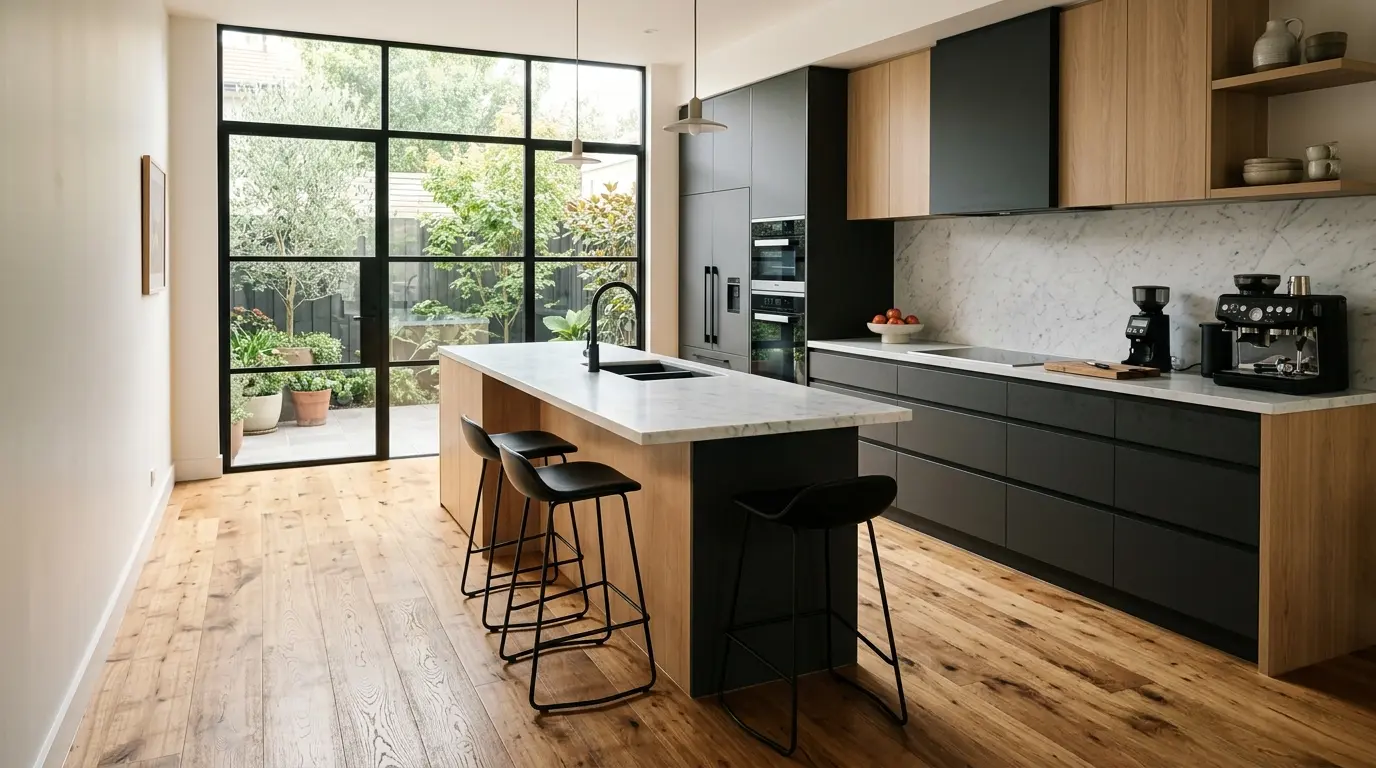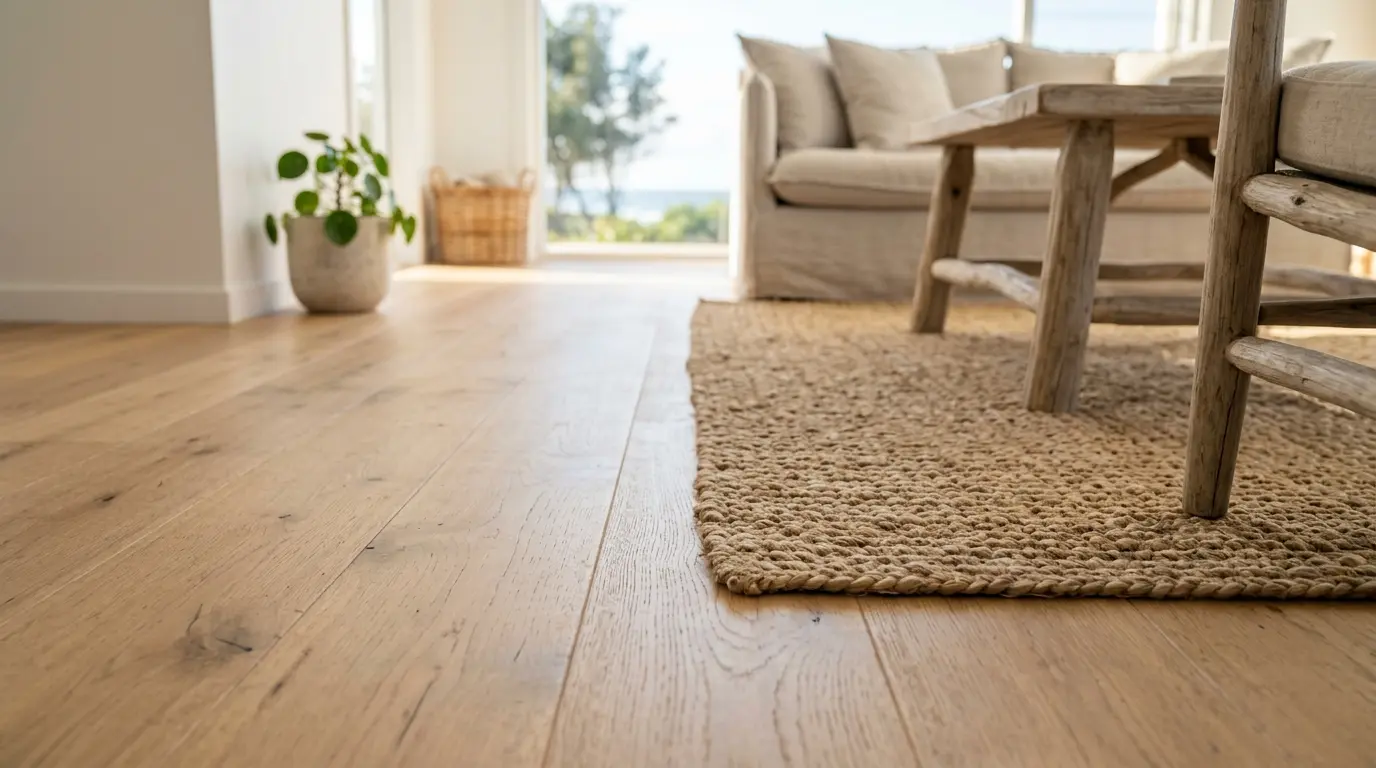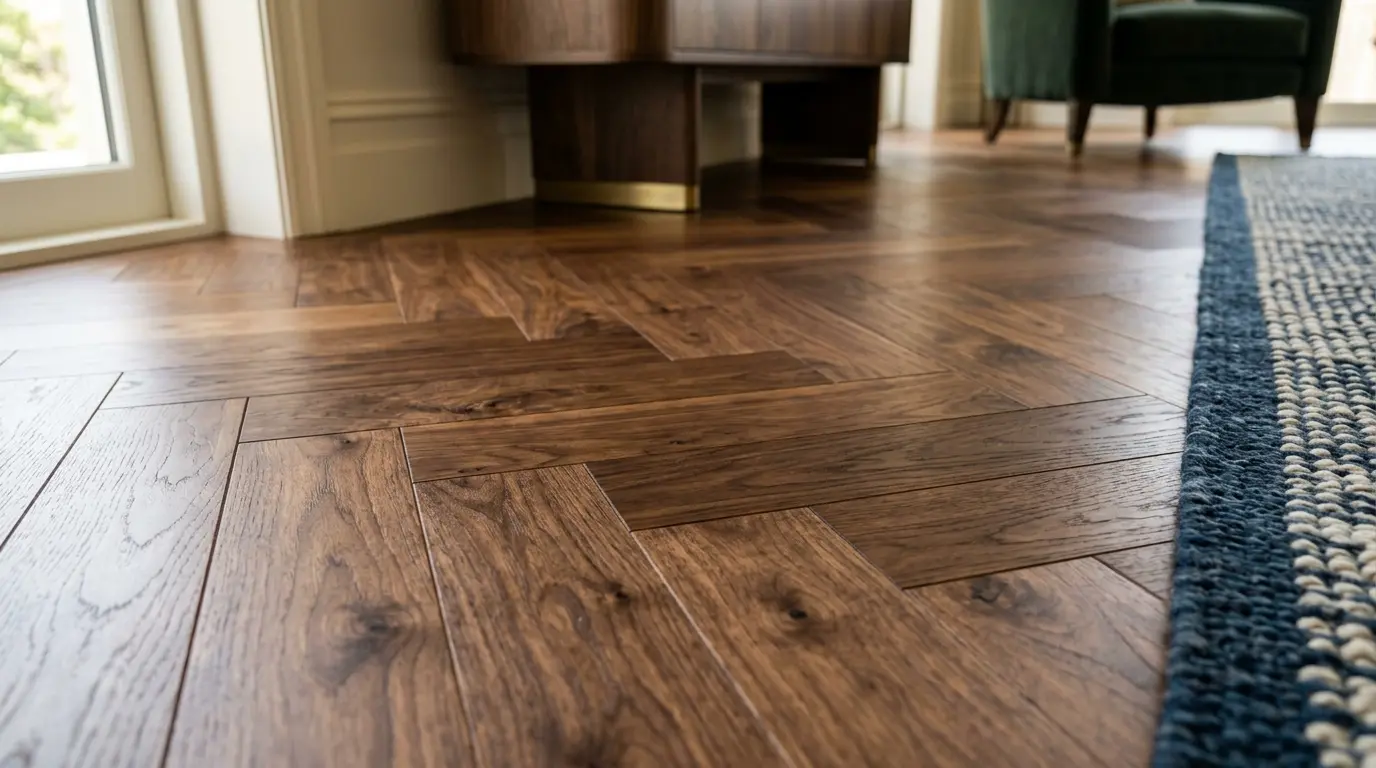
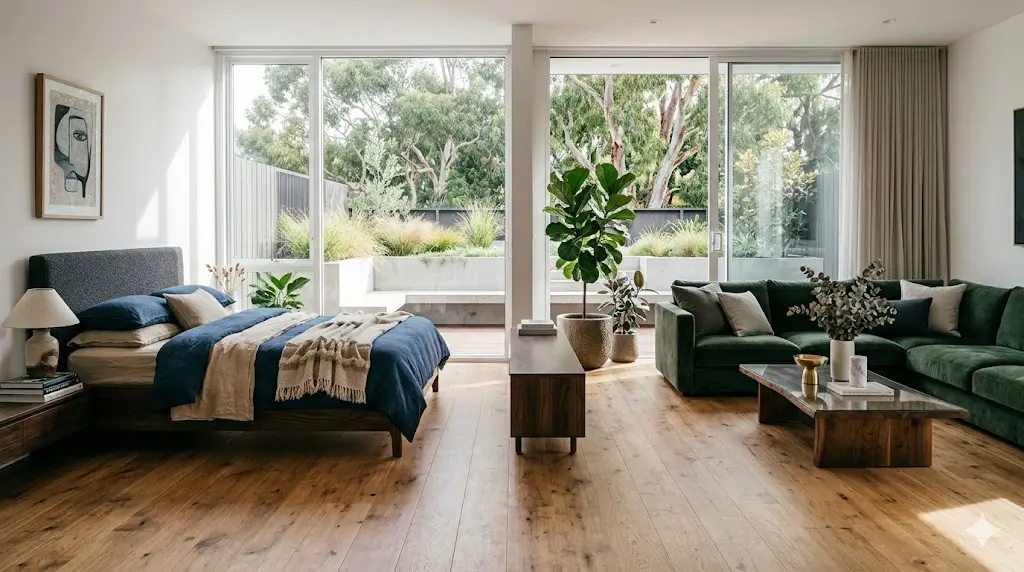
When deciding between dark vs light timber floors, the direct answer comes down to your room size, lighting, and daily lifestyle. Light timber naturally brightens a space, makes small rooms feel expansive, and easily hides daily dust. Conversely, dark timber offers unmatched elegance, grounds large rooms, and creates a dramatic, luxurious backdrop. For homeowners across Melbourne, where natural light can vary dramatically through our four-seasons-in-one-day climate, making the right choice is crucial for both aesthetics and property value.
Below is a quick comparison to help you understand the core differences before we dive deep into the details.
| Design Element | Best Choice for Small Rooms |
|---|---|
| Best Flooring Style | Light Timber Flooring |
| Ideal Plank Width | Wide Planks for Open Appearance |
| Best Colour Tone | Natural Oak & Light Timber Shades |
| Installation Direction | Lay Boards Along the Longest Wall |
| Best Finish | Matte or Satin Finish |
| Room Effect | Makes Small Spaces Feel Larger |
| Best For | Apartments, Bedrooms & Hallways |
| Maintenance | Easy to Clean & Low Maintenance |
| Popular Melbourne Choice | Engineered European Oak |
| Natural Light Impact | Reflects More Light & Brightens Rooms |
| Property Appeal | Adds Warmth & Modern Elegance |
| Recommended Flooring Type | Engineered Timber Flooring
|
Dark vs Light Timber Floors: The Main Differences Explained
The decision between dark and light timber floors essentially means that you are selecting the groundwork canvas for your home, and dark timber flooring in particular creates a bold, sophisticated base. This choice has ramifications for all other design elements wall colors, furniture, and more.
The Psychology of Colour and Space
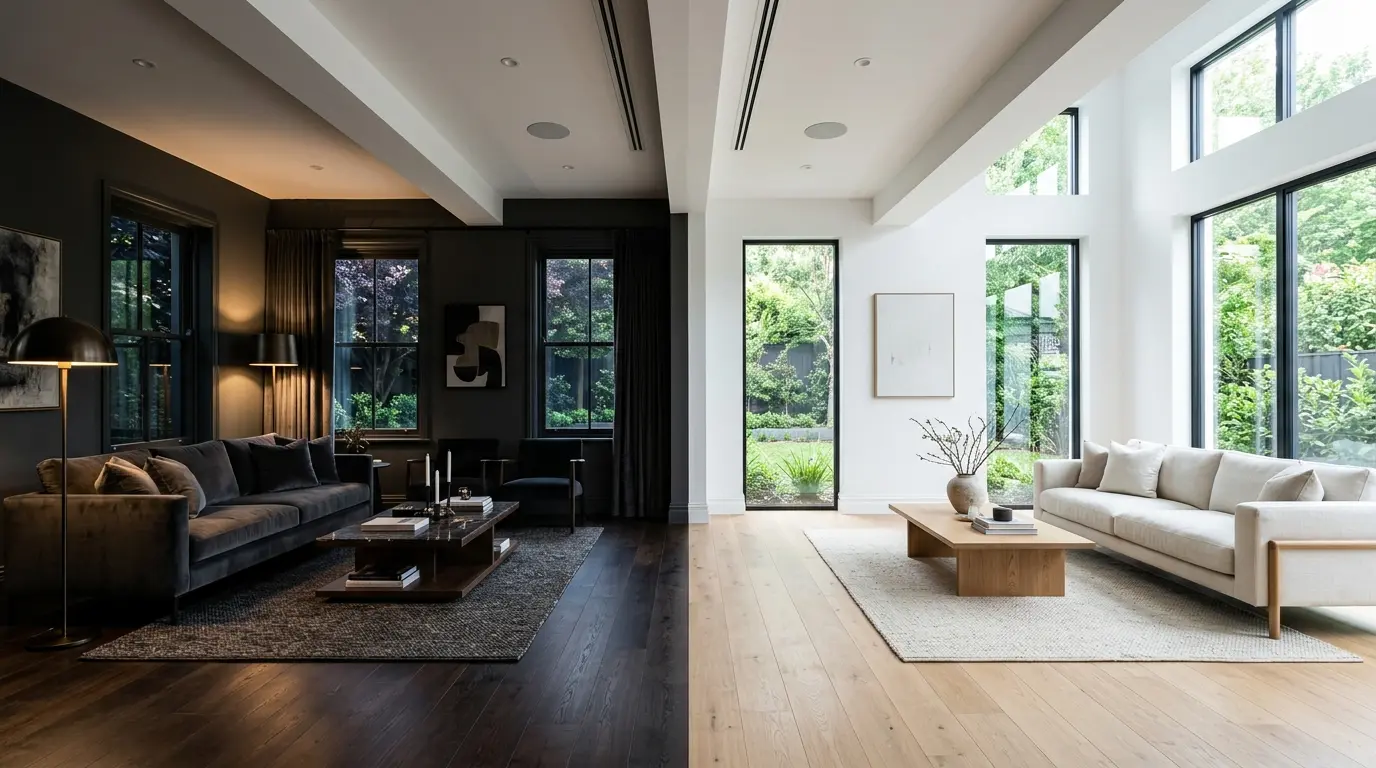
Timber floors, like traditional European Oak, Blackbutt or Tasmanian Oak, are natural reflectors. They bounce light around the room, making the room airy, breezy and optimistic. Brown floors can make a home feel dark and dull, especially in Melbourne, where you can experience a rainy winter often, and therefore a light floor colour can help to brighten up your home and enhance the ambiance.
However, dark timber floors (such as high quality Jarrah, Spotted Gum and walnut-stained oaks) absorb light. The absorption is not always a bad thing as it gives grounding, intimacy and high level of sophistication. Uses dark floor to ground a room, and bright furniture and colorful rugs stand in splendid contrast.
Material Considerations
Light or dark, the material of your flooring is important. As an example, if you select Solid Timber Flooring your floor will last for many years, and can be sanded and re-polished over the decades. This will make it possible to sand back to a natural grain in twenty years if you want to do so, if you select a darker tone. The key to choosing something you’ll enjoy for many years is knowing how light and dark colors play off of your selected material.
Benefits of Each Style Your Melbourne Home
The distinct advantages of dark and light timber floors can help you decide which one is the perfect fit for your lifestyle and design objectives.
Light timber floors have a number of advantages.
- Light floors are the best solution to space improvement if your townhouse or flat is located in inner-city Melbourne and you are short on square meterage. They make living rooms look larger and corridors wider, making it appear as though there is more space available.
- Forgiving on Mess: Light floors are very forgiving. Household dust is light grey which is often the same colour as blonde and pale timbers, making it easy to blend in. It’s also much harder to notice any minor scratches, dents or pet hair, so light floors are great for busy homes with kids and pets.
- Versatility: A light floor provides a neutral background. From minimalist Scandinavian to relaxed Australian coastal, and bohemian chic in between, light timber fits in seamlessly without dominating the space.
The advantages of Dark Timber floors are numerous.
- So, why do dark flooring tend to be the norm at high-end boutiques, luxury hotels and grand, heritage homes? It instantly adds formality, warmth and prestige to a space, which is sometimes difficult to create with light floors.
- Dark floors provides contrast to play with interior design. A dark and moody floor will look great with a crisp white sofa, bright metallic fixtures or a brightly coloured artwork.
- Fading resistance: All timber fades slightly over time when exposed to UV, but dark floors – especially those made using high-quality timber – tend to be less susceptible to sun fading than very light woods that can sometimes turn yellow if not well finished.
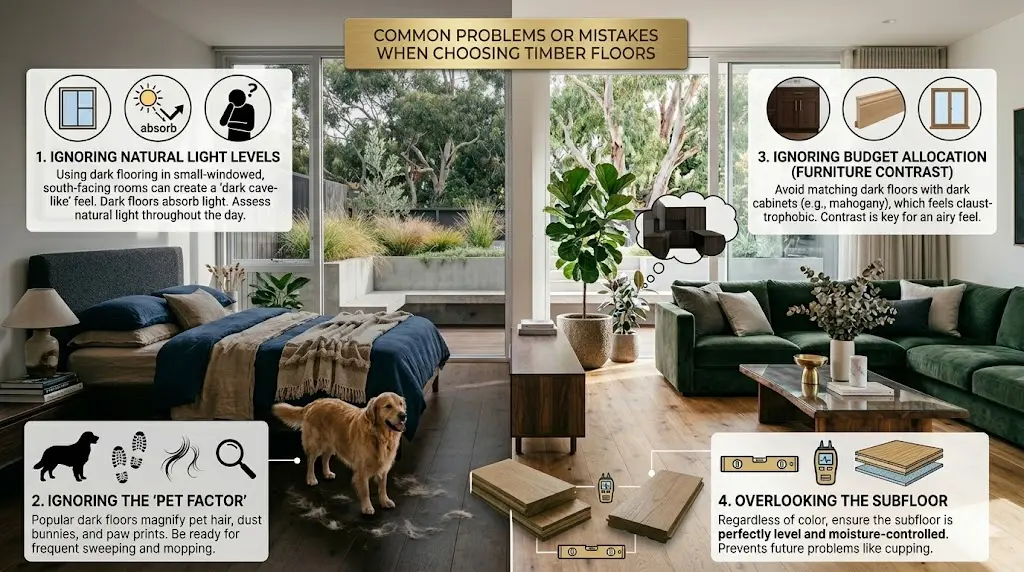
Common Problems or Mistakes To Choose Timber Floor Color
1. Ignoring Natural Light Levels
A frequent error is to use dark wood flooring in a small windowed south facing room. This can make a room that is intended to be cosy into a dark cave-like room since dark floors absorb light. Look at natural light throughout the day before you select.
2. Remove the “Pet Factor”
Espresso coloured floors are extremely popular, but a lot of people don’t realize that they have a golden retriever. Dark floors make pet hair, dust bunnies and muddy paw prints look brighter, like a magnifying glass! When using dark wood, you’ll need to be ready to sweep and mop with greater frequency.
3. Ignoring the Budget Allocation.
Your floors aren’t just floating in space. A common error is not comparing kitchen cabinet, skirting board and window frame samples with the existing flooring. A dark floor can make a dark, heavy mahogany kitchen seem exceptionally overstuffed and claustrophobic. Contrast is key.
4. Overlooking the Subfloor
The best color won’t do much good if the floor is not installed properly! It doesn’t matter if you choose light or dark, the most important thing is to make sure the subfloor is level to begin with and will not become moist or cupped over time.
How to Do It Right
Dark versus light timber floors is not a question that has to be decided, it’s a question that has to be done right. These are tips from experts to get your new flooring in top condition.
Styling Light Timber Floors
- Warm it Up: Sometimes light floors appear a little cold or clinical, add some warmth with textiles. For extra texture, consider chunky knit throws, woven rugs or linen curtains.
- Mix Wood Tones: Don’t be afraid to mix timber. A walnut dining table will really help to highlight the pale oak floors and will not clash with them.
- Accepting Pattern: Intricate patterns can be used on light floors. Alternatively try something like Parquet Flooring which can be a traditional herringbone or chevron design and doesn’t overpower too many dark colors.
Now that you have Dark Timber Floors, how do you style them?
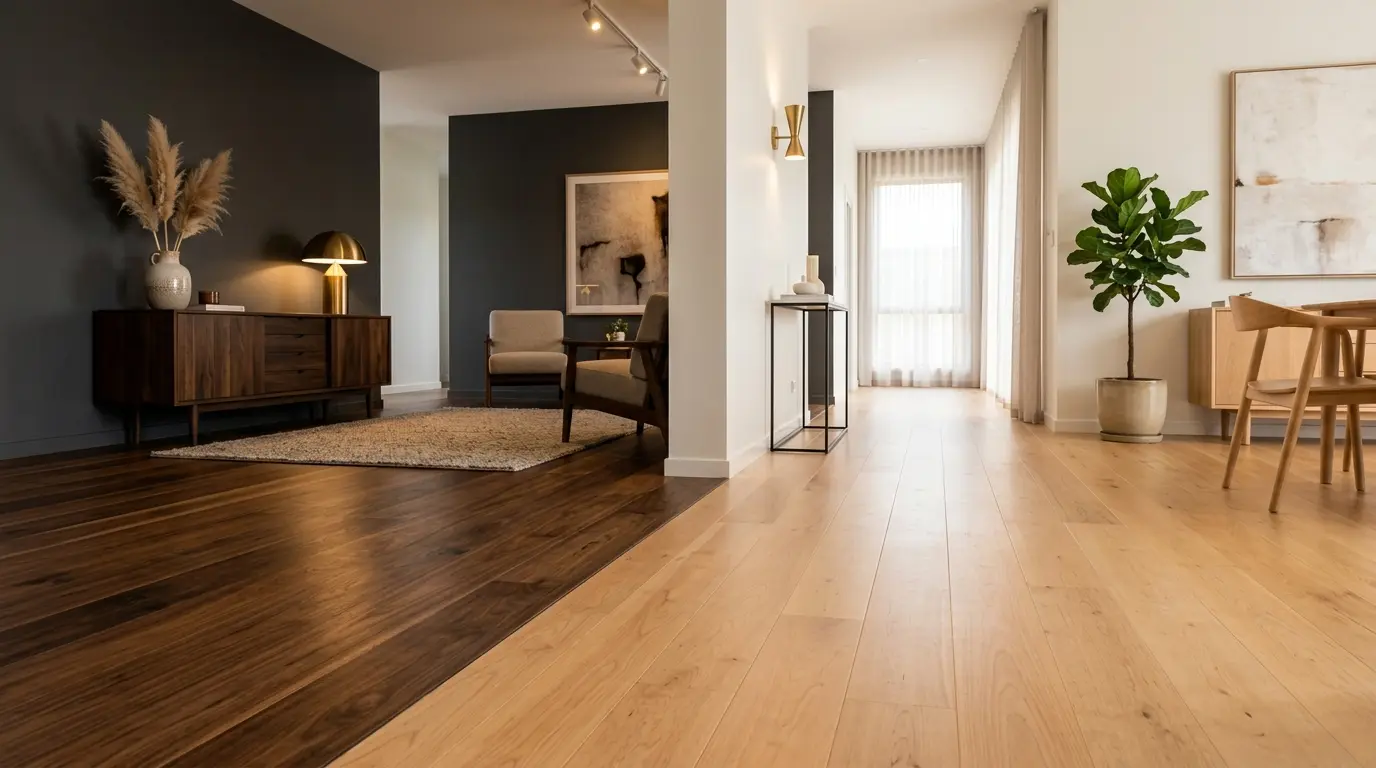
- Balance the Dark with Light: The golden rule for dark floors is balance. Use bright white, light cream or light grey for walls. This way the room won’t be too full of furniture and it will produce a beautiful, crisp contrast.
- Break up dark wood with large light coloured area rugs. This not only safeguards the surface of the floor in heavily used zones, but also creates various functional areas in an open-plan living space.
- Maximise Lighting: Avoid dark floors as they absorb light and brighten up your room. To maintain an inviting space throughout the evening, layer your lighting with overhead pendants, floor lamps and warm wall sconces.
When to Hire a Professional for Your Timber Floors
Timber floors are a science, whereas a ‘how-to’ project for laying a floor on a home improvement show is simply a fun weekend project. Dark vs light timber floors is a major investment, and hiring a professional service is the only means to obtain the best protection for your investment.
If you demand perfection, it’s time to call the experts in. We help you every step of the way, at Boss Timber Flooring. Whether it’s finding the ideal color to match your space or ensuring your flooring is installed with accuracy and flawless appearance, our team makes your flooring dreams a reality. Let the professionals, who know everything about timber, be in charge of your home’s foundation.
Looking to get your Melbourne home transformed?
If you’re captivated by the light breezy look of light oak or the rich luxurious colours of dark jarrah, there is a perfect floor for you. Come in and see our wide selection of flooring, touch and feel the different textures and consult our flooring engineers. Let us help you find the right match for you and take your home to the next level. Call us today for a free consultation!
FAQs
Does dark or light timber floor make a room look bigger?
Light timber floors generally make a room look bigger. Pale colours reflect natural and artificial light, creating an optical illusion of expansiveness and airiness, making them perfect for smaller Melbourne apartments.
Are dark vs light timber floors easier to keep clean?
Light timber floors are significantly easier to keep looking clean. They naturally camouflage daily dust, light pet hair, and minor footprints, whereas dark floors tend to highlight them, requiring more frequent sweeping.
Which timber colour is best for Melbourne homes?
There is no single best colour; it depends on your specific home. Light floors are highly popular in Melbourne for maximising light during grey winters, but dark floors remain a classic choice for heritage homes and modern luxury builds.
Can I change the colour of my dark vs light timber floors later?
Yes, if you have installed solid timber or high-quality engineered timber with a thick veneer. These floors can be sanded back by professionals and re-stained to a different shade, allowing you to update your home’s look in the future.