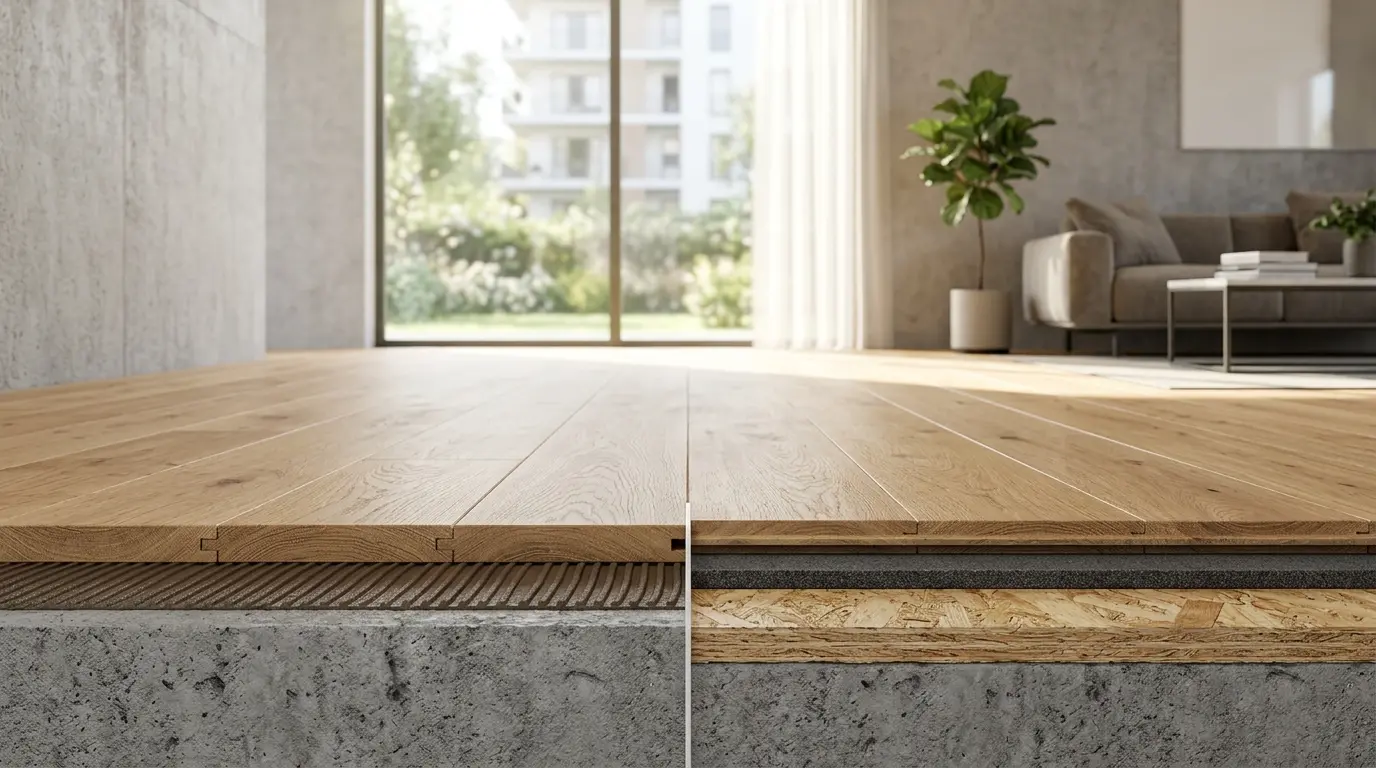
When comparing direct stick vs floating floor cost in Melbourne, floating floor installation is generally the more economical option, while direct stick installation typically involves higher installation costs due to additional adhesive, moisture protection and subfloor preparation requirements.
However, choosing the right timber flooring installation method involves more than comparing upfront costs. Factors such as the condition of your subfloor, acoustic requirements, flooring design, property type and long-term performance all influence which installation system is right for your home.
At Boss Timber Flooring, we help Melbourne homeowners understand the differences between direct stick and floating engineered timber floors, so they can make an informed decision before starting their flooring project.
Whether you are renovating an apartment, upgrading a family home or planning a premium timber flooring installation, understanding these differences can help you select a suitable solution for your property.
Direct Stick vs Floating Floor: At a Glance
| Feature | Floating Floor Installation | Direct Stick Installation |
|---|---|---|
| Installation method | Boards connect over an underlay without being fixed to the subfloor | Individual boards are bonded directly to the prepared subfloor |
| Installation cost | Generally more economical | Generally higher due to adhesive and preparation requirements |
| Acoustic feel | Can sound slightly hollow depending on the underlay and installation | Generally provides a firmer, more solid feel underfoot |
| Subfloor preparation | Requires a clean, stable and sufficiently level surface | Requires careful preparation, moisture assessment and suitable surface conditions |
| Repairability | Individual boards may be replaceable depending on the locking system | Damaged boards require careful removal and replacement |
| Best suited for | Suitable engineered timber products and projects where a floating system is approved | Suitable engineered timber products where a firm bonded installation is preferred |
| Design flexibility | Depends on the board system and expansion requirements | Often suitable for complex layouts and patterned flooring |
Direct Stick vs Floating Engineered Floors: What Is the Real Difference?
Before choosing between direct stick and floating engineered timber flooring, it is important to understand how each installation method works.
Both systems can use high-quality engineered timber boards, but the main difference is how the flooring connects to the subfloor.
The installation method affects the feel of the finished floor, preparation requirements, acoustic performance and overall project cost.

How Does a Floating Floor Work?
A floating timber floor is installed over an appropriate underlay rather than being permanently attached to the concrete or timber subfloor.
The individual boards are connected using a click-lock or approved tongue-and-groove system, creating a continuous flooring surface that can expand and contract as environmental conditions change.
The underlay sits between the flooring and the subfloor. Depending on the product, it may provide moisture protection, sound reduction and additional comfort underfoot.
Main advantages of floating flooring:
- Generally faster installation.
- Lower installation costs for suitable projects.
- No requirement to bond every board directly to the subfloor.
- Suitable for many engineered timber click-lock systems.
- Easier access to the underlying floor in certain situations.
- Different underlay options can provide acoustic and moisture-related benefits.
However, floating floors still require proper subfloor preparation. An underlay is not a substitute for correcting significant unevenness or structural problems.
Expansion allowances must also be maintained around walls, doorways and other fixed structures according to the flooring manufacturer’s specifications.
The Direct Stick Installation Method
Direct stick flooring involves bonding individual engineered timber boards directly to a prepared subfloor using a specialised timber flooring adhesive.
The adhesive is generally a flexible polyurethane or silane-modified polymer product selected for compatibility with the flooring and substrate.
Once the adhesive cures, it creates a strong bond between the boards and the underlying surface.
Unlike floating flooring, there is no continuous floating underlay beneath the boards.
This installation method generally provides a firmer and more solid feel underfoot, with less independent vertical movement when the system is correctly installed.
Main advantages of direct stick flooring:
- A solid, stable feel underfoot.
- Reduced hollow sound associated with some floating floor systems.
- Suitable for many large open-plan flooring projects.
- Can provide a suitable installation system for certain herringbone and chevron designs.
- Good compatibility with some underfloor heating systems when the flooring and adhesive are approved for that application.
Direct stick installation requires careful attention to moisture levels, adhesive compatibility and subfloor preparation.
A poorly prepared surface can compromise the adhesive bond and affect the performance of the finished floor.
According to Quick-Step Australia, timber flooring can be installed using either a click-based floating system or a glued-down installation method. The correct approach depends on the specific flooring product and its installation instructions.
Which Engineered Timber Flooring Installation Method Should You Choose?
Choosing between floating and direct stick installation should not be based on cost alone.
The engineered timber product, subfloor construction, room layout and manufacturer’s installation requirements all influence the right approach.
Standard Engineered Timber Planks
Many engineered timber plank systems are designed for either floating or direct stick installation, provided the manufacturer approves the selected method.
Floating installation can be suitable when installation efficiency, accessibility and a more economical installation approach are important.
Direct stick installation may be preferred when a firmer feel underfoot, reduced vertical movement and a bonded flooring system are desired.
The exact suitability depends on the board construction and installation specifications.
Herringbone and Chevron Flooring
Herringbone and chevron flooring require greater precision because individual boards must be positioned in a specific pattern.
Direct stick installation is commonly used for these designs because it helps secure the individual boards in their intended positions.
However, the correct installation method must always be confirmed against the flooring manufacturer’s technical requirements.
Always Check the Product Specification
Two engineered timber products may look similar but have different installation requirements.
Before selecting a flooring system, check:
- Approved installation methods.
- Adhesive compatibility.
- Underlay requirements.
- Subfloor preparation specifications.
- Moisture protection requirements.
- Expansion allowances.
- Pattern and layout restrictions.
Choosing the flooring product and installation method together helps prevent compatibility problems and unnecessary installation complications.
Direct Stick vs Floating Floor Cost in Melbourne: What Affects the Cost?
When comparing direct stick vs floating floor cost in Melbourne, the difference generally comes down to materials, labour and the preparation required before installation.
Floating flooring usually requires an appropriate underlay, whereas direct stick installation requires specialised adhesive and, where necessary, a moisture protection system.
However, these are only some of the factors that influence the overall project cost.
Adhesives and Installation Materials
Floating floor installation generally involves an underlay selected according to the flooring product and the property’s requirements.
Underlay performance can vary depending on its moisture protection, acoustic properties and compatibility with the flooring system.
Direct stick installation requires a specialised timber flooring adhesive designed to create a flexible bond between the boards and subfloor.
When installing over concrete, a suitable moisture barrier or primer may also be required depending on the slab condition, moisture assessment and adhesive manufacturer’s specifications.
These additional materials are an important reason why direct stick installation generally involves higher material requirements.
Subfloor Preparation
Subfloor preparation is another major factor affecting direct stick vs floating floor cost.
Floating floors still require a clean, stable and sufficiently level surface. However, the preparation requirements can differ from those of a direct stick installation.
Direct stick flooring requires particularly careful surface preparation because the adhesive must achieve consistent contact with the substrate.
If the concrete slab has high spots, depressions or moisture issues, additional preparation may be necessary.
This may involve:
- Mechanical grinding of high areas.
- Application of a suitable floor levelling compound.
- Concrete moisture testing.
- Installation of an appropriate moisture barrier.
- Repairing damaged or unstable sections of the subfloor.
The condition of the existing floor can therefore have a significant influence on the final installation requirements.
Labour and Installation Complexity
Direct stick installation is generally more labour-intensive because each board must be positioned and bonded correctly.
The installer must also consider adhesive application, working time, board alignment and the condition of the prepared surface.
Floating installation can be more straightforward for suitable click-lock flooring systems, although complex room layouts, transitions and detailed cutting still require professional workmanship.
Patterned installations, stairs and challenging room configurations can also increase the complexity of either project.
Acoustic Requirements for Melbourne Apartments
Acoustic performance is an important consideration for homeowners renovating apartments in Melbourne.
Some apartment buildings have specific sound transmission requirements set by the owners corporation or building management.
A floating floor with an approved acoustic underlay may be suitable for certain apartment installations.
In other situations, a direct stick system combined with an appropriate acoustic layer may be considered.
The correct solution depends on the complete flooring assembly, tested acoustic performance and building requirements.
Always check the relevant strata rules and flooring specifications before selecting an installation method.
Long-Term Value and Flooring Performance
The initial installation cost is only one part of choosing the right flooring system.
A correctly installed direct stick floor can provide a firm and stable surface, while a properly installed floating floor offers flexibility and practical maintenance advantages.
Long-term performance depends on several factors, including:
- Quality of the engineered timber.
- Thickness and quality of the natural timber wear layer.
- Subfloor condition.
- Correct installation method.
- Moisture management.
- Regular flooring maintenance.
Neither installation method automatically guarantees a longer lifespan. The flooring product and quality of installation are equally important.
Get an Accurate Timber Flooring Quote in Melbourne
Every flooring project is different, which is why providing a reliable installation quote requires an understanding of the actual site conditions.
At Boss Timber Flooring, we assess the flooring requirements, existing subfloor, selected engineered timber and preferred installation method before recommending a suitable solution.
Whether you are considering floating engineered timber or direct stick flooring, our team can help you understand the installation requirements and choose the right option for your property.
Contact Boss Timber Flooring today to arrange an on-site assessment and receive a personalised quote for your Melbourne flooring project.

Which Flooring Method Is Easier to Repair?
The repairability of floating and direct stick flooring depends on the board construction, joining system and location of the damaged section.
Neither method should automatically be considered easy or difficult to repair.
Repairing Floating Timber Floors
Some floating floor systems allow individual boards to be replaced, depending on their locking mechanism and the location of the damage.
If the damaged board is near a wall, the flooring may sometimes be carefully disassembled to reach the affected section.
For damage in the middle of a room, a more specialised repair procedure may be required.
Repairing Direct Stick Timber Floors
Direct stick boards are permanently bonded to the subfloor.
When a board becomes damaged, an experienced installer may need to carefully cut out the affected section, remove the adhesive and install a replacement board.
This process requires precision to avoid damaging the surrounding flooring.
The availability of matching replacement boards is also an important consideration.
Ultimately, proper installation and appropriate maintenance are essential for reducing the likelihood of future repairs.
Common Problems and Costly Mistakes with Timber Installation
Choosing the wrong installation method or overlooking important preparation requirements can create significant problems for timber flooring.
Here are some common mistakes homeowners should avoid.
- Concrete Moisture Problems
Concrete slabs can retain or transmit moisture, which may affect timber flooring and adhesive performance.
Before direct stick installation, the slab should be properly assessed using an appropriate moisture testing method.
Where required, a compatible moisture barrier must be installed according to the flooring and adhesive manufacturer’s specifications.
Ignoring moisture issues can contribute to adhesive failure, swelling and cupping of timber boards.
- Ignoring Apartment Acoustic Requirements
Melbourne apartment buildings may have specific acoustic requirements for replacement flooring.
Choosing an unsuitable underlay or installation system can lead to noise transmission problems and potential disputes with neighbours or building management.
Always check the relevant strata requirements before purchasing flooring materials or arranging installation.
- Insufficient Expansion Allowances
Floating floors move as a connected flooring system and need sufficient expansion space around walls, door frames and fixed structures.
If these allowances are not maintained, the floor may become restricted and develop buckling or other movement-related problems.
Follow the manufacturer’s expansion requirements throughout the installation.
- Pinning Floating Floors with Fixed Cabinets
Floating flooring must be able to move within its designed expansion allowances.
Fixed kitchen islands, built-in cabinetry and other heavy permanent structures should not trap or mechanically restrain the flooring unless the manufacturer specifically permits the installation arrangement.
- Using the Wrong Adhesive
Not every construction adhesive is suitable for timber flooring.
Using an incompatible or excessively rigid adhesive may compromise the bond and affect the performance of the boards.
Always select a specialised adhesive approved for the specific timber flooring product and substrate.
Can You Direct Stick Engineered Timber Flooring Over Existing Tiles?
In some situations, engineered timber flooring can be installed directly over existing tiles.
However, the condition and suitability of the existing tiled surface must be assessed before installation.
The tiles should be:
- Firmly bonded to the underlying surface.
- Structurally stable.
- Clean and free from grease, wax and contaminants.
- Suitable for the selected adhesive system.
- Within the required surface flatness tolerances.
Glossy tiles may require mechanical abrasion or an appropriate primer to improve adhesive bonding.
Any loose, cracked or unstable tiles should be repaired or removed before installation.
It is also important to check the existing floor height, door clearances and transitions to adjoining rooms.
A tiled floor that appears level is not necessarily a suitable substrate for direct stick timber installation.
Professional assessment helps determine whether the existing tiles can remain or whether additional preparation is required.
Tips for Choosing Between Direct Stick and Floating Boards
If you are still deciding between direct stick and floating flooring, consider the following factors before making your selection.
Evaluate the Subfloor Condition
The existing substrate is one of the most important considerations.
Concrete slabs must be assessed for moisture, stability and surface flatness.
Timber substrates should also be inspected to ensure they are structurally sound and suitable for the proposed flooring system.
For example, direct stick installation over an appropriate plywood or particleboard substrate may have different preparation requirements from installation over concrete.
Consider the Room Layout
The layout and size of your property can influence the suitability of each installation method.
Large open-plan spaces may benefit from a bonded installation where the flooring product and subfloor allow it.
Floating floors require appropriate expansion allowances and may need transition profiles depending on the manufacturer’s specifications and the overall floor layout.
Think About the Feel Underfoot
The two installation methods can produce different walking experiences.
Direct stick flooring generally provides a firmer, more solid feel because the boards are bonded to the subfloor.
Floating floors may have a slightly different acoustic and underfoot response depending on the board construction and underlay.
Visiting a showroom and comparing suitable flooring systems can help you understand these differences.
Match the Method to Your Property
Different properties have different flooring requirements.
Apartments may have acoustic restrictions, while older Melbourne homes may require additional subfloor assessment or structural preparation.
If you are considering quality products such as engineered timber flooring in Box Hill, it is important to confirm that the selected installation method is appropriate for your existing subfloor.
The right decision should be based on the flooring product, property conditions and intended use of the space.

When to Hire a Professional Timber Floor Installer in Melbourne
Although some floating flooring systems may appear straightforward to install, professional assessment is important when choosing between direct stick and floating timber flooring.
Direct stick installation requires specialist knowledge of adhesives, moisture management and subfloor preparation.
Professional installation is particularly important when:
- Installing over concrete slabs that require moisture testing.
- Mechanical grinding or floor levelling is necessary.
- Installing engineered timber over underfloor heating.
- Working with herringbone or chevron patterns.
- Completing complex stair installations.
- Meeting apartment acoustic or strata requirements.
- Installing over existing tiles or unusual substrates.
A professional installer can assess the site, confirm product compatibility and recommend a suitable installation system.
This helps reduce installation problems and protects the performance of your new timber flooring.
Choose the Right Timber Flooring Installation with Boss Timber Flooring
Choosing between direct stick and floating flooring does not need to be complicated.
At Boss Timber Flooring, we help Melbourne homeowners select suitable engineered timber products and installation methods based on their property, design preferences and practical requirements.
Whether you are planning a floating floor for an apartment or a direct stick installation for a premium renovation, our experienced team can assess your project and recommend an appropriate solution.
Our services include:
- Engineered timber flooring selection and installation.
- Direct stick timber flooring installation.
- Floating timber flooring installation.
- Subfloor assessment and preparation.
- Moisture testing and installation advice.
- Professional flooring solutions for residential properties.
If you are unsure which installation method is right for your home, speak with our team.
Contact Boss Timber Flooring today to arrange a complimentary, no-obligation on-site assessment and receive a personalised quote for your Melbourne timber flooring project.
FAQs
Is direct stick flooring worth the extra cost?
Direct stick flooring can be a worthwhile choice when a firm, stable feel underfoot and a bonded installation system are priorities.
It is particularly suitable for certain engineered timber products, complex layouts and projects where the subfloor is appropriate for adhesive installation.
However, the right choice depends on the flooring product, installation requirements and overall project conditions.
How much does direct stick vs floating floor installation cost in Melbourne?
The cost depends on the selected timber flooring, subfloor condition, preparation requirements, adhesive or underlay selection and complexity of the installation.
Floating installation is generally more economical, while direct stick installation typically requires additional materials and labour.
Because every property has different requirements, contact Boss Timber Flooring for an on-site assessment and a personalised installation quote.
Is floating flooring cheaper than direct stick flooring?
Floating flooring is generally the more economical installation option because it usually requires fewer specialised adhesive materials and less intensive preparation.
Direct stick installation typically involves additional adhesive, moisture management and preparation work.
However, the actual difference depends on the condition of the subfloor and the selected flooring system.
Can I install direct stick flooring over an existing tiled floor?
Yes, in some cases.
The existing tiles must be stable, securely bonded, clean and suitable for the selected adhesive system.
Depending on the surface condition, mechanical abrasion, priming or additional preparation may be required.
A professional assessment is recommended before proceeding.
What happens if a direct-stick timber board gets damaged?
A damaged direct-stick board can often be replaced by an experienced flooring installer.
The affected board must be carefully removed without damaging the surrounding boards or subfloor, and a suitable replacement must be bonded in place.
The availability of matching replacement boards is also important.
Which installation method is better for Melbourne’s climate?
Both floating and direct stick engineered timber flooring can perform well in Melbourne when the correct product and installation method are selected.
Floating systems accommodate movement through their expansion allowances, while direct stick systems rely on a compatible flexible adhesive bond.
Moisture management, subfloor preparation and adherence to manufacturer instructions are essential for both methods.
Is direct stick or floating flooring better for apartments?
The answer depends on the apartment’s acoustic requirements, building regulations and the flooring system being considered.
A floating floor with an approved acoustic underlay may be suitable for some apartments.
Other projects may require a different tested flooring assembly.
Always check the owners corporation requirements and seek professional advice before choosing an installation method.
Which installation method is best for herringbone engineered timber?
Direct stick installation is commonly preferred for herringbone and chevron engineered timber because it helps secure the individual boards in their intended pattern.
However, the final decision must follow the specific flooring manufacturer’s installation requirements.
Can floating floors be installed over concrete?
Yes, suitable floating engineered timber flooring can be installed over a properly prepared concrete slab.
The concrete must meet the flooring manufacturer’s requirements for moisture, cleanliness, stability and surface flatness.
An appropriate moisture-resistant underlay may also be required.


2 Responses
I’m renovating an older Melbourne house and can’t decide between direct stick and floating timber flooring. Is one method generally better for uneven subfloors, or does it depend more on the type of engineered boards?
It depends on both the condition of the subfloor and the engineered flooring system. Neither direct stick nor floating installation is a solution for a significantly uneven subfloor. In an older Melbourne home, the subfloor should be checked for level, moisture and structural condition first, with any necessary preparation completed before the timber is installed.
Floating systems can tolerate minor imperfections within the manufacturer’s limits, while direct-stick installation generally requires a well-prepared, stable surface because the boards are bonded directly to it. The engineered board’s construction and the manufacturer’s installation requirements should also be considered when choosing the method.