
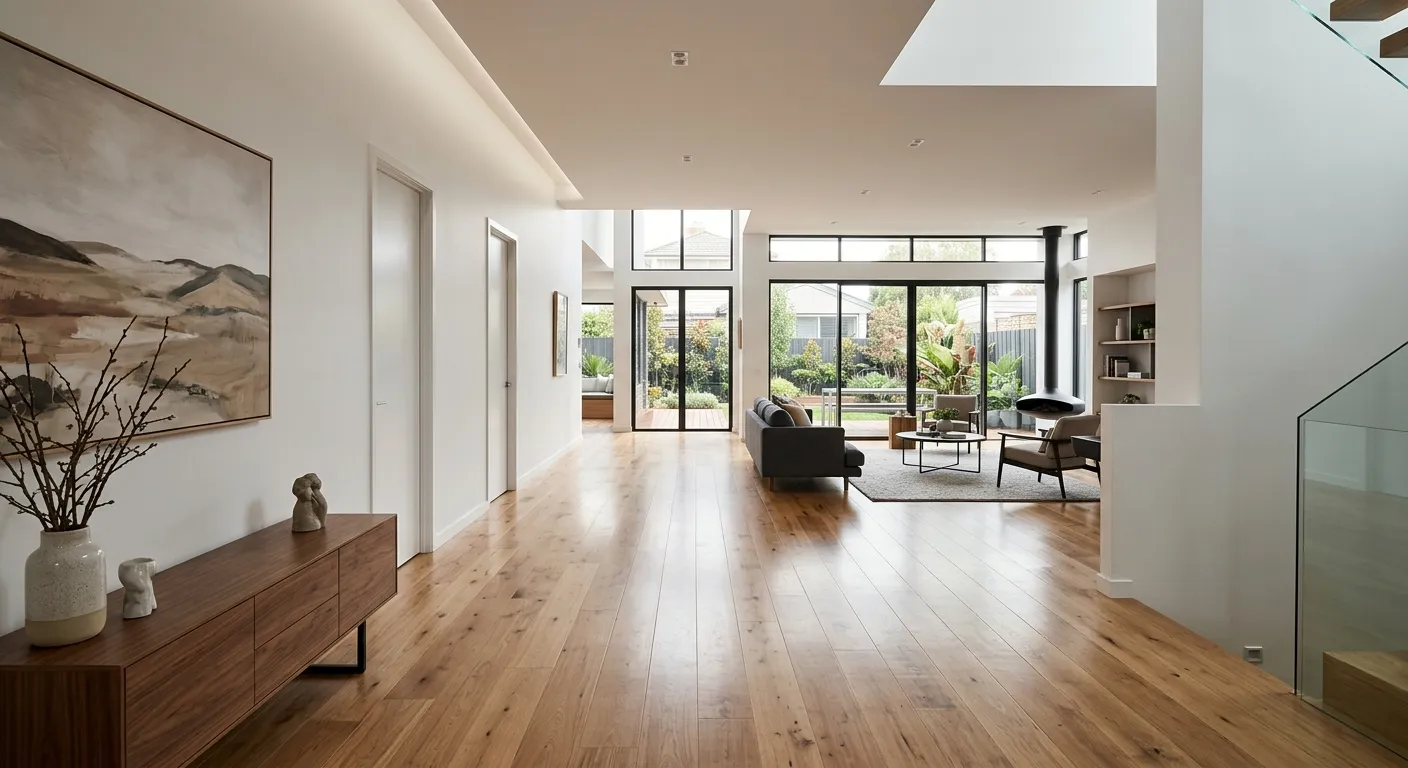
The best flooring for high traffic areas typically includes durable hardwoods, high-quality engineered planks, and intricate parquetry, as these materials offer the ultimate balance of resilience and aesthetic appeal. In busy Melbourne households, choosing the right surface prevents premature wear, resists scratches, and keeps your interior looking pristine for decades. If you are wondering which option suits your specific daily needs, the quick comparison below will help guide your decision.
| Topic | Key Info | Why It Matters |
|---|---|---|
| Solid Hardwood | Can be sanded multiple times, high Janka rating | Offers a lifetime of value for busy family homes |
| Engineered Wood | Real wood veneer, highly stable core layers | Resists temperature changes and heavy footfall |
| Parquetry Patterns | Small timber blocks laid in structural patterns | Intricate designs naturally disguise minor scratches |
Identifying the Best Flooring for High Traffic Areas
Typically, high-traffic areas in a home can be the hallway, front door, kitchen, and living room. These are your home’s blood vessels. They have to take their share of dropped objects, pet claws, heavy boots, and furniture pushed and shoved each day, along with the overall chaos of family life. Choosing the right flooring for high-traffic spaces is thus not only about interior design but also a crucial part of the construction process, making high-traffic floor solutions essential.
In order to resist the constant pressure, the material should be hard and structurally stable. One of the most sure bets is solid wood flooring for high traffic areas. It is made from a single block of wood and has great durability. If an area by the front door, which was in high use 10 years ago, starts to show signs of intense wear and tear, solid wood can just be sanded back to its bare roots and refinished, looking just like new again. Australian hardwoods like Spotted Gum or Blackbutt are ideally suited to Melbourne lifestyle as they are very dense and have a high Janka hardness rating.
Another amazing participant is Engineered Timber. A common misconception is that engineered boards are not as strong, but finding the best engineered wood flooring for high traffic means choosing high-quality engineered planks that are designed to perform in tough conditions. This flooring does not suffer from the built-up effects of the weather in Melbourne as it is constructed from a hard-wearing real-wood top veneer, overlaid with several cross-directional layers of plywood or high-density fibreboard. The top layer is thick and offers the same wear resistance as solid wood, so your occupied hallways stay elegant and strong.
Last but not least, the architectural beauty and resilience of Parquetry need to be taken into account. Parquetry is the technique used to create a pattern of solid wood pieces arranged in squares, rectangles, or triangles, commonly used in high-quality modern homes and grand historic buildings. This style is exceptionally brilliant for high-traffic areas. Not only is the solid wood extremely hard, but the multi-directional grain pattern also diverts the viewer’s attention from any scratches or dings that may happen over time. It’s a great idea for combining luxury looks with a lot of power.
How Timber Flooring Compares with Other High-Traffic Flooring Options
Although it may be an ideal material for the floors of busy Melbourne properties, timber flooring is not the only flooring created to accommodate heavy use. The most suitable flooring option in a high traffic zone will vary depending on the primary needs of the room such as durability, moisture resistance, comfort, maintenance, appearance and/or long term repair.
Luxury Vinyl Plank (LVP)
A luxury vinyl plank flooring is a great choice for areas with high foot traffic, as moisture, spills, and cleanliness are important factors to consider. Quality LVP is coated with a protective layer to help prevent scratching, scuffing and staining and the softer surface offers greater comfort underfoot than hard tile.
Vinyl may be very practical for entryways, homes with kids and pets. But it isn’t exactly providing the same natural material, repair or refinishing options as real wood floor.
Porcelain and Ceramic Tile
One of the most durable surfaces for high traffic, moisture, stain areas is porcelain tile. It is extremely wear resistant, scratch resistant, water repellent and resistant to UV rays, which makes it ideal for entryways, kitchens and other areas that are exposed to moisture.
The compromise is that tile is less soft and forgiving to walk on and damaged tiles are usually not sanded and refinished but replaced. Proper substrate preparation and workmanship are also necessary for installation.
Laminate Flooring
Laminate can offer very good resistance to everyday scratching and surface wearing, making it a competitive choice for the hectic spaces of the home. Laminate has as one of its advantages the tough top layer that protects it.
However, laminate cannot be sanded and refinished like solid timber as it is usually not possible to replace the wear layer after damage. The water resistance also varies widely among laminate products and cannot be assumed to be waterproofing.
Why Timber Still Makes Sense for Many Melbourne Homes
Timber’s uniqueness lies in its natural beauty, durability and ease of repair. If the surface gets worn, a quality solid timber floor can be sanded and refinished, instead of being totally replaced.
Engineered timber can also offer better dimensional stability than solid boards due to its layered design and still provide a true timber wear surface. Timber is a great choice for any homeowner who appreciates real wood and the dedication necessary to maintain it properly, as it is a good long-term alternative in a high-traffic living area.

How to Choose the Best Flooring for Different High-Traffic Areas
No one type of flooring material will fit every high traffic space. The selection will be determined by the use of the space, the amount of moisture exposure, and the type of use the floor will see.
Entryways and Hallways
Wear and tear is often heaviest on entryways and hallways in a house. The protective finish of a floor can be worn away over time by outdoor grit, sand, wet shoes and a high volume of foot traffic.
If you are installing timber flooring, a high-quality entrance matting and protective finish for the timber is essential. If frequent moisture exposure is anticipated, porcelain tile or a quality, water resistant vinyl product might be more appropriate.
Kitchens and Dining Areas.
Kitchens should also withstand foot traffic, as well as spills, dropped items and the need for regular cleaning. When properly specified, professionally installed and maintained, timber can be a great addition to any kitchen – but moisture needs to be managed carefully.
In the case of a high traffic area that is likely to be subjected to frequent water exposure, porcelain tile and quality vinyl typically have an edge. Aesthetically, it’s more appealing to use timber in order to make the space more continuous and natural with the adjoining living areas when the focus is to make a space that looks like a floor.
Living rooms and open-plan areas.
A living room typically should be both durable and comfortable, while also being aesthetically pleasing. This is where timber flooring can be really advantageous, as it offers a natural surface and a more comfortable, warmer feel to the floor than tile.
Where more dimensional stability is needed, engineered timber should also be considered; especially in larger open-plan spaces.
Staircases
However, when it comes to staircases, there is a slightly different approach, as slip resistance becomes more important. When there is a high level of polish or gloss to the surface, wear and slip may be more of an issue.
In the case of a timber stair, the finish should not only be grippy enough to provide protection against slipping, but should also make the wood look good. The most used portions of the staircase can also wear out if runners are used, stair finishes are the proper ones, and the staircase is professionally installed. When it comes to choosing flooring for stairs, slip resistance should always be taken into account, along with durability.
Homes with Children or Pets
When choosing timber for families with children and/or pets, it’s important to take into account the timber’s hardness. Long-term performance is affected by scratches, dirt and spills as well as frequency of cleaning.
Using a hardwearing timber species and an appropriate low-sheen protective finish can help to minimise the visibility of everyday marks and regular cleaning of grit and appropriate furniture protective pads will minimise unnecessary surface damage.
The Benefits of Upgrading High Traffic Zones
Selecting the right material in the highest-traffic areas of your home can have advantages beyond its beautiful appearance. The main benefit is a significant reduction in ongoing maintenance costs. Low-quality flooring materials can deteriorate rapidly under heavy use. Laminates can peel, carpets can flatten and become stained, and softwoods may dent easily. In these situations, homeowners can become trapped in a costly and frustrating cycle of premature replacement.
Choosing the best hardwood flooring for high traffic areas can greatly improve your return on investment (ROI). Durable hardwood floors are built to withstand daily wear while maintaining their appearance for years. When it comes to property value, long-lasting floors make a strong impression. Melbourne buyers are increasingly seeking homes with high-quality, durable surfaces that offer both style and a low-maintenance future.
In addition, hard floors are easy to clean and maintain in terms of hygiene. Dust, dirt and outdoor allergens tend to accumulate in the highest traffic areas. This type of dust can be swept and mopped easily on a smooth surface of timber, as opposed to carpets which trap it. This helps to create a healthier environment, especially for families with young children or allergy sufferers. After years of heavy foot traffic, the surface will lose its luster at some point, but you do not have to replace the floor at that time. A Sanding and Polishing service will remove the old, sagging finish and will be able to provide a new finish in a modern polyurethane or water-based finish, which instantly transforms the whole room, without the need to install a new floor, and at a much lower cost.
What to Look for When Choosing High-Traffic Flooring
But durability isn’t the only factor when selecting the best flooring for high traffic spaces. A room might be too moist, or need too much maintenance, be too comfortable, or have poor installation conditions, and be just as suitable for use as a floor, even though it has excellent scratch resistance.
Durability and Wear Resistance
Consider the anticipated performance of flooring under scratches, dents, heavy use and furniture movement. Timber can have a significant impact on the performance of the floor in use when considering species, board construction and protective finish.
Moisture Resistance
Floors in entryways or kitchens may be subjected to wet shoes, spills and cleaning water. Hardness is not the only criteria to consider when choosing timber; installation, sealing and moisture management are also relevant and important.
Slip Resistance
Slip resistance is most important in areas where there’s a possibility of water or spills, particularly on stairs. Durable is not necessarily safe if surface becomes too slippery when wet.
Comfort and Noise
Certain hard floor surfaces may exhibit very different acoustical and underfoot properties. Timber has a more natural and warmer look and feel than some tile surfaces and vinyl can offer more cushioning and sound absorption. This can be a significant part of the consideration in the congested family houses.
Maintenance Requirements
Think about what you want from your floor after it is installed, rather than just what it looks like on the first day. Premature wear can be minimized with regular cleaning, quick spill clean up, and protective mats and furniture pads.
Another important benefit of timber is that if the surface gets badly worn out over time, it may be possible to sand and refinish solid timber instead of replacing it.
Long-Term Value
The lowest-cost flooring to install doesn’t always equal the lowest-cost flooring to own. The complete life cost also includes the frequency of replacement, maintenance, repairability, and service life.
When it comes to picking timber for the living space, the purpose is to choose the proper timber species, building and surface for the real circumstances of the room and not simply the hardest or costliest timber.
Common Problems or Mistakes in Busy Households
A common error homeowners make is buying something because it is cheap now, and not considering how long it will last. It’s easy to opt for a less expensive and harder wood species only because it falls within the immediate budget constraints. If you are looking for the best hardwood floor finish for high traffic, choosing a suitable finish and durable wood species is essential. If you put a soft wood such as pine in a public hall, however, it’s a recipe for disaster. In a matter of months you’ll see your paths showing lots of wear and tear, pet claw marks and deep gouges in the busiest areas.
Another mistake is not taking into account moisture and sun. Kitchens and entryways are where you can have spills and wet shoes. If it is not properly sealed, water will leak in between the boards, leading to cupping, warping and discolouration. Likewise, a huge window in the living room can let severe UV rays bleach spots on your floor over time.
Last but not least, people are often oblivious to the finish. The wood may be extremely hard, but if the protective layer is thin or is not of good quality, then the floor will look terrible. If you don’t choose the appropriate finish for your lifestyle, such as a high gloss in a large dog house, it will show every mark of scratching and smudging, thus defeating the purpose of having durable flooring.
Choosing Flooring Based on Appearance Alone
A flooring product can look impressive in a showroom and still be unsuitable for the conditions of a high-traffic room. Before choosing a floor, consider the level of foot traffic, moisture exposure, pets, cleaning routine and the amount of natural light the room receives.
For timber flooring, the species, board construction and protective finish should be considered together. A durable timber species with an unsuitable finish may still show premature surface wear, while the right combination can provide much better long-term performance.
The goal is not simply to choose the hardest flooring available. It is to choose a flooring system that matches the way the room is actually used.

Practical Tips on How to Do It Right
Proactive care is necessary so that you will be able to make an investment that will last you a lifetime. Prevention is the key to keeping the best parts and pieces of the floor in high traffic areas in the best condition, not just fixing when it gets broken.
Firstly put in good quality dirt-trapping mats at all exterior entrances. Most of the damage to timber floors is due to tiny particles of grit, sand and small stones that are carried on the underside of shoes. These are akin to sandpaper to the finish. Prevents the grit from getting through the door, meaning that you double your polish’s life at once.
Secondly, utilise area rugs or runner rugs in the busiest zones, such as long hallways or the area directly in front of the kitchen sink. This gives a sacrificial zone of protection at the zone of highest wear. Use underlays under rugs that are non-slip and breathable to avoid rugs scratching the floor and moving around.
Have a routine for cleaning but do it slowly and gently. Regularly sweep or vacuum (using hard floor attachment) to collect dust. If using a mop, a microfiber mop with a mop pad meant for timber floors and just a little damp should be used; never make the floor wet when mopping.
As highlighted by the experts at Homebuilding & Renovating regarding resilient home design:
“When dealing with heavy footfall, the hardness of the wood is paramount. Hardwoods… offer incredible resilience against daily wear and tear, making them a permanent fixture rather than a temporary fix.”
[Source: Homebuilding & Renovating Guide to Flooring]
When to Hire a Professional
While there are many DIY projects you can tackle around the house, installing or restoring premium flooring in high traffic areas is rarely one of them. Timber requires precise acclimatisation, correct subfloor preparation, and expert installation techniques to allow for natural expansion and contraction. Improper installation will lead to squeaking boards, large gaps, or buckling.
When it comes to restoring an older floor, professional machinery and expertise are non-negotiable. An inexperienced person using a heavy drum sander can permanently ruin a floor in seconds by creating deep, uneven divots.
If you are undertaking a comprehensive home makeover, coordinating your trades is crucial. For instance, installing new floors often goes hand-in-hand with updating your walls. It is highly recommended to plan your schedule carefully; a professional house painter melbourne should ideally finish their prep work and painting before the final floor polishing occurs, or vice versa depending on the project scope, to ensure that dust and paint splatters do not compromise your brand new, flawless timber surface. Always rely on specialists to protect your investment.
If you are tired of looking at worn, damaged floors and want to upgrade to a surface that truly lasts, our team of Melbourne experts is here to help. Contact us today for a free consultation on the most resilient timber solutions tailored specifically to your home’s unique traffic patterns.
FAQs
What is the best flooring for high traffic areas with large dogs?
Solid Australian hardwoods or premium engineered timber with a tough, matte polyurethane finish are ideal. The hard wood resists deep dents, while the matte finish helps disguise superficial claw scratches.
Is engineered timber genuinely good for high traffic areas?
Yes, absolutely. High-quality engineered timber features a thick, real-wood top layer that handles heavy footfall just as effectively as solid wood, with the added benefit of supreme structural stability.
How often do I need sanding and polishing for busy hallways?
For extremely busy high traffic areas, a professional sanding and polishing service is typically required every 7 to 10 years to strip away scratches and restore the floor to its original, beautiful condition.
Can parquetry withstand heavy footfall in entryways?
Yes. Parquetry is exceptionally durable because it is made from solid hardwood blocks. Furthermore, its complex geometric patterns are fantastic at hiding everyday wear and tear in busy entryways.


4 Responses
Thanks for the informative article! We have two large dogs and three kids, so our hallway and living room get a lot of daily traffic. We’re leaning towards engineered timber, but we’re concerned about scratches and long-term maintenance. With the right finish, can engineered timber still look good after years of heavy use, or would solid hardwood be a better investment?
Thanks for your question, Sarah! High-quality engineered timber is an excellent choice for busy family homes when it’s paired with a durable, scratch-resistant finish. It offers outstanding stability, performs well in high-traffic areas, and is easier to maintain than many people expect. Solid hardwood is also a fantastic long-term investment because it can be sanded and refinished multiple times over its lifetime. The best option depends on your budget, lifestyle, and the specific timber species you’re considering. We’d be happy to recommend the most suitable flooring solution for your home and help you choose a finish that will stand up to everyday family life.
We’re replacing the flooring in a busy hallway and living area where there’s constant foot traffic. What should I look for in a timber floor to make sure it holds up well without showing wear too quickly?
For high-traffic areas such as hallways and living rooms, look beyond the timber species alone. Consider the timber’s hardness, the quality and durability of the finish, and the construction of the boards. A finish with good resistance to everyday wear can help protect the surface, while naturally varied grain and colour can make minor marks less noticeable.
It’s also worth considering the board’s ability to be sanded and refinished in the future, particularly if you’re choosing solid or quality engineered timber. Good installation, regular cleaning and protective pads under furniture will also help the floor maintain its appearance for longer.