
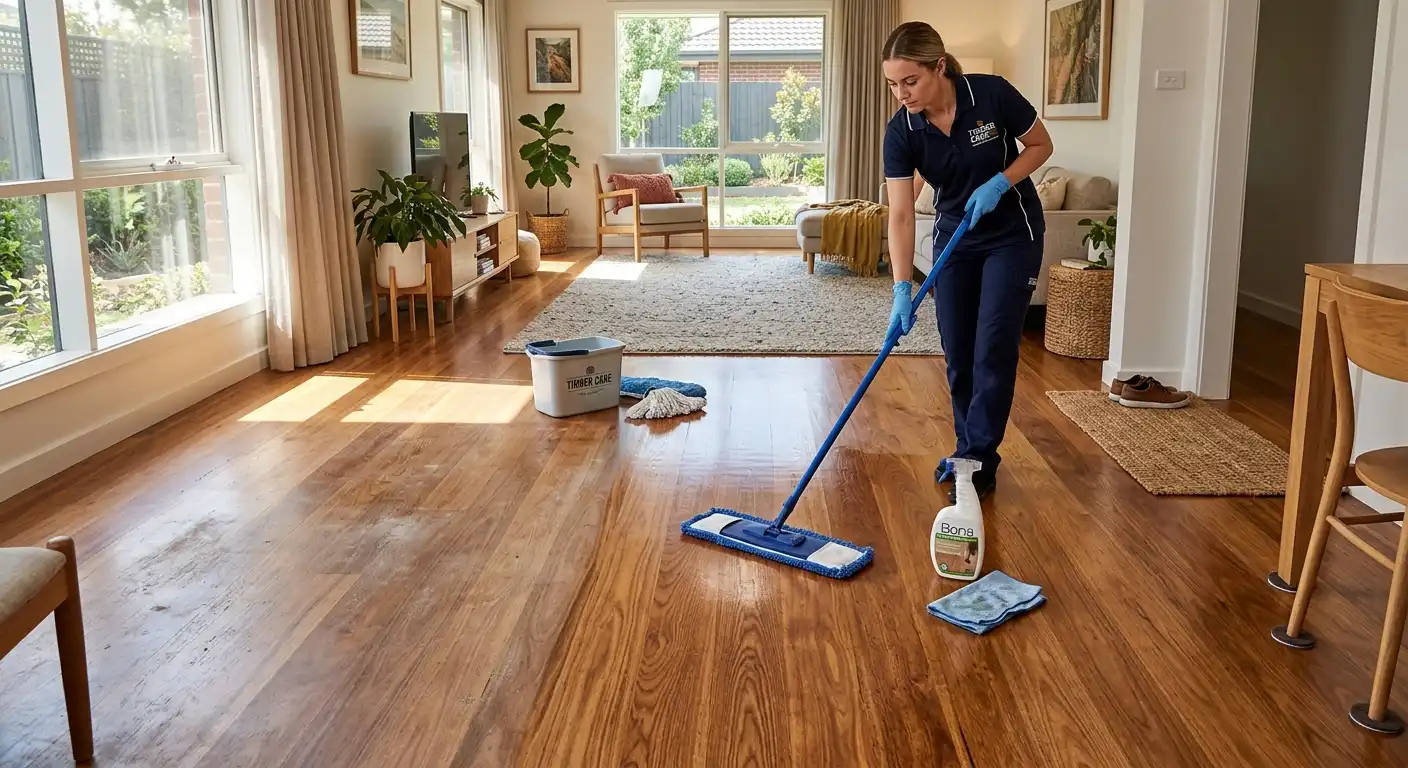

Identify your floor finish first
The right cleaner depends on the finish, not just the timber. Check your installer’s care sheet. If unsure, place a single drop of water in an inconspicuous spot: if it beads on the surface, the floor likely has a film finish such as polyurethane; if it soaks in or darkens the timber, it is likely oiled or unfinished.
| Finish | Care notes |
|---|---|
| Polyurethane (water- or oil-based) | pH-neutral cleaner, damp mop, no wax or polish |
| Hardwax oil | Use cleaners made for oiled floors; re-oil high-traffic areas per manufacturer schedule |
| Wax / older traditional finish | Keep water to a minimum; use dry cleaning or wax-safe products |
| Engineered / pre-finished | Follow the manufacturer’s guide; the top layer limits how many times it can be sanded |
| Laminate, hybrid, bamboo | Not solid timber; check manufacturer instructions |
Essential Tools for Cleaning Timber Floors
Using the wrong equipment can do more harm than good. Here is a quick reference table of the tools you should (and shouldn’t) use:
| Tool / Product | Recommended? | Purpose & Notes |
| Microfiber Dust Mop | Yes | Traps dust and pet dander without scratching the surface. |
| Soft-Bristle Broom | Yes | Great for daily sweeping of larger debris. |
| Vacuum with Hard Floor Setting | Yes | Ensure the beater bar/rotating brush is turned OFF. |
| PH-Neutral Wood Cleaner | Yes | Specifically formulated to clean without stripping the finish. |
| Steam Mop | No | Pushes intense heat and moisture into the wood, causing warping. |
| Abrasive Sponges/Brushes | No | Will scratch the polyurethane or oil finish. |
Essential Pre-Cleaning Steps
Proper preparation is a must before any water is placed on your beautiful floors. Many people can miss this step and ruin their wood finish for good.
- Clear the Space: First step is to clear any obstructions and furniture so that you can access all areas effectively.
Remember to roll-up area rugs – be sure to keep out of the way of the freshly cleaned floor until it is dry to avoid trapped moisture and possible discoloration. - Vacuum or sweep before Mopping: Abrasive Debris: Always vacuum or sweep the floor before starting the mopping.
Dirt, Grit and Debris are like sand paper. The hardwood surface will be scratched if a wet mop is dragged over them. - Use the correct attachments: Use soft-bristle brush attachment or a soft broom to gently lift dust when vacuuming, do not use hard, tough bristle attachments, as this can scuff the wood.
- Dry Mop: Do a weekly dry mop with electrostatic fibers. They work like a magnet and effectively safely capture fine dust particles.
How to Clean Timber Floors (A guide in steps)
-
Daily Dry Cleaning
When cleaning floorboards, removing abrasive particles is the best way to protect against dull floors. Mop or dry-mop high-traffic areas every day. If you prefer to vacuum, always use the bare-floor setting to ensure the rotating bristles do not scratch the timber.
-
Weekly Damp Mopping
When a more thorough cleaning is required, you should not use the old-fashioned method of mop and bucket. Standing water and wood do not blend.
Lightly spray your floor with a specially designed, PH neutral timber floor cleaner.
- Wipe dirt using slightly wet microfiber mop.
Always mop along the grain of the wood to get the best clean and so as not to streak.
To add to the professional opinion on routine maintenance, the specialists at Floorworld suggest the minimization of moisture as one of the key regulations of long-term timber maintenance.
-
Immediate Spill Management
Accidents occur, but it is inadvisable to leave standing liquids on timber. Clean up water, wine or pet spills as quickly as possible using a soft, dry cloth.
“MAINTENANCE is the key aspect that ensures the ongoing appearance of a floor.”
— Australasian Timber Flooring Association (ATFA), Coating Choices – Consumers

Expert Stain Removal and Problem Areas
Things can go wrong, but what happens next will determine if a spill is permanent damage. So here are a few tips on how to approach problem areas without jumping to major conclusions:
- Immediate Action is Key: The golden rule of wood floor care is to address spills immediately
Clean up liquids immediately, before they can soak in or do damage to the wood.
Use a clean, absorbent cloth to blot ” never to spread the liquid around “ - When Stubborn Stains occur: When a sticky residue or tough stain persists, don’t be tempted to scrub it with abrasive scrubbing pads.
Rather, a natural hardwood floor cleaner, an enzymatic cleaner, or a mild detergent in water should be used. Use sparingly and gently massage using a soft cloth. - For physical damage, such as deep dents or scratches, there are special repair kits, with mixable colored waxes that have been developed to seamlessly repair the damaged area, such as the QuickStep Repair Kit.
If a specific board is very discolored or seriously broken, it may be necessary to replace the board (as a last resort).
Caring for timber floors in Melbourne’s climate
Melbourne’s humidity swings, hot dry summers and winter heating all move timber. Boards expand in humid weather and shrink in dry air, so small seasonal gaps are normal, while cupping usually points to a moisture source.
- Summer: close blinds during peak sun to limit UV fading; keep air conditioning steady.
- Autumn/Winter: place mats at entries for wet shoes and grit; avoid wet mopping when the house is damp; heaters dry the air, so gaps may widen.
- Spring: replace worn felt pads and check for fine scratches.
- All year: keep indoor humidity as stable as possible; many manufacturers cite roughly 40–60%, so confirm with yours.

Removing common marks (spot test first)
| Mark | Method |
|---|---|
| Spills, wine, pet urine | Blot immediately, then damp microfibre with pH-neutral cleaner |
| Heel marks | Soft cloth with a small amount of timber-safe cleaner |
| Grease or food | Blot, then timber-safe cleaner on a soft cloth |
| Candle wax, chewing gum | Harden with ice, lift with a plastic scraper |
| Deep scratches or dents | Colour-matched timber repair wax or filler kit |
| White water rings | Usually a finish issue; call a flooring professional |
Real Customer Example
After a few years, a Melbourne homeowner noticed that their engineered timber floor was looking dull and uneven after just a short time.
The owner thought that the floor would be cleaned with a steam mop each week as this would provide a deeper clean and this was found during our inspection.
Unfortunately, the protective coating itself had begun to have problems in repeated exposure to heat and water, and a part of the floor was beginning to look lifeless and patchy.
The floor was restored and a basic maintenance plan was put into place with a microfiber mop and a timber-safe cleaning solution and the floor has looked great since.
One of the most frequent errors that we see with maintenance is that an inlet is never changed.One of the most common maintenance blunders we see is that an inlet is never replaced.
Avoiding Damage: Preventive Maintenance.
- Install Mats at Doorways: Prevent dirt at the door. Outside put heavy-duty doormats to trap grit before it can get to your timber. Inside, use softer rugs over all doorways to trap grit before it can reach your timber.
- Control Sunlight: Direct UV rays have the ability to change the color of wood when exposed to long periods. Hang sheer curtains or blinds at the high sunlight hours to avoid fading.
- Trim Pet Nails: Make sure that the nails of your pets are neatly cut to avoid them gouging the finish on the floor when they run.
When cleaning wooden floorboards, it is also important to maintain a consistent level of humidity inside the house, as excessive changes can cause the timber boards to expand or contract too much.

Recommended Tools for a Flawless Finish
Say goodbye to the “mop and bucket”! Excessive water use leads to warping and water damage quickly and over time.
Here are your ultimate resources for safe and effective care of your timber floors:
- Microfiber and Spray Mops: Experts strongly suggest using a microfiber mop or a special spray mop.
Spray mops are a great choice as they put down a regulated and limited amount of cleaner and prevent moisture buildup, which is always safe for the protective finish of the floor. - Safe Cleaning Solutions: Use wood floor cleaners with a neutral pH level or make a homemade wood floor cleaner with warm water and a few drops of natural dish soap you may even add a little olive oil to give the wood floor a natural shine.
There are good brands such as Bona, Enzyme Wizard and LOBACARE that provide very good, professionally formulated products. - The following items to avoid: Do not use steam mops – high pressure and high moisture can cause timber to warp; protective finish may be removed.
Also, avoid storing tough, acidic or abrasive household cleaning products (white vinegar, lemon juice, ammonia and baking soda will, in particular, strip the shine and mar the finish on your wood floors).
When cleaning is not enough
Signs your floor needs a recoat or refinish: dull traffic lanes that do not recover after cleaning, water soaking in instead of beading, or scratches through to bare timber. A recoat restores the finish; sanding and polishing removes deeper damage. Learn more about timber floor sanding and polishing in Melbourne

FAQs
How do you make timber floors shine?
Remove grit with a soft vacuum, clean with a pH-neutral cleaner and a damp microfibre mop, then buff dry. Shine comes from a clean, intact finish, so avoid wax or polish unless your finish is designed for it.
How do you clean timber floors without streaks?
Use very little water, mop along the grain, and change or rinse the mop head often. Streaks usually come from detergent residue or too much cleaner.
How do you clean engineered timber floors?
Same routine as solid timber, with even less moisture. Use a lightly damp microfibre mop and a pH-neutral cleaner, and never steam clean.
How do I clean timber floors naturally?
Warm water on a well-wrung microfibre mop is enough for routine cleaning. Vinegar and olive oil are not recommended, because acid can dull the finish and oil leaves a film.
Are spray mops better than a mop and bucket?
Yes. Spray mops apply a controlled amount of cleaner, which limits moisture reaching the joints.
How often should timber floors be recoated?
It depends on traffic, finish and wear. Recoat when the finish looks dull in traffic areas or water no longer beads. Ask your flooring professional to assess it.


2 Responses
Great article! One thing I’m still unsure about is whether it’s okay to use warm water every time I mop my timber floors, or if I should always mix it with a timber floor cleaner. I don’t want to damage the finish over time.
Hi Daniel,
Thanks for your question!
Warm water on its own is generally fine for light cleaning, as long as the mop is only slightly damp and you avoid leaving any standing water on the floor. However, for routine maintenance, we recommend using a pH-neutral timber floor cleaner every few cleans. These products are specifically formulated to remove dirt without affecting the floor’s protective finish.
It’s also important to avoid household detergents, bleach or vinegar-based solutions unless your flooring manufacturer specifically recommends them. Following a simple cleaning routine will help keep your timber floors looking their best for many years.
Thanks again for reaching out—we’re glad you found the guide helpful!