
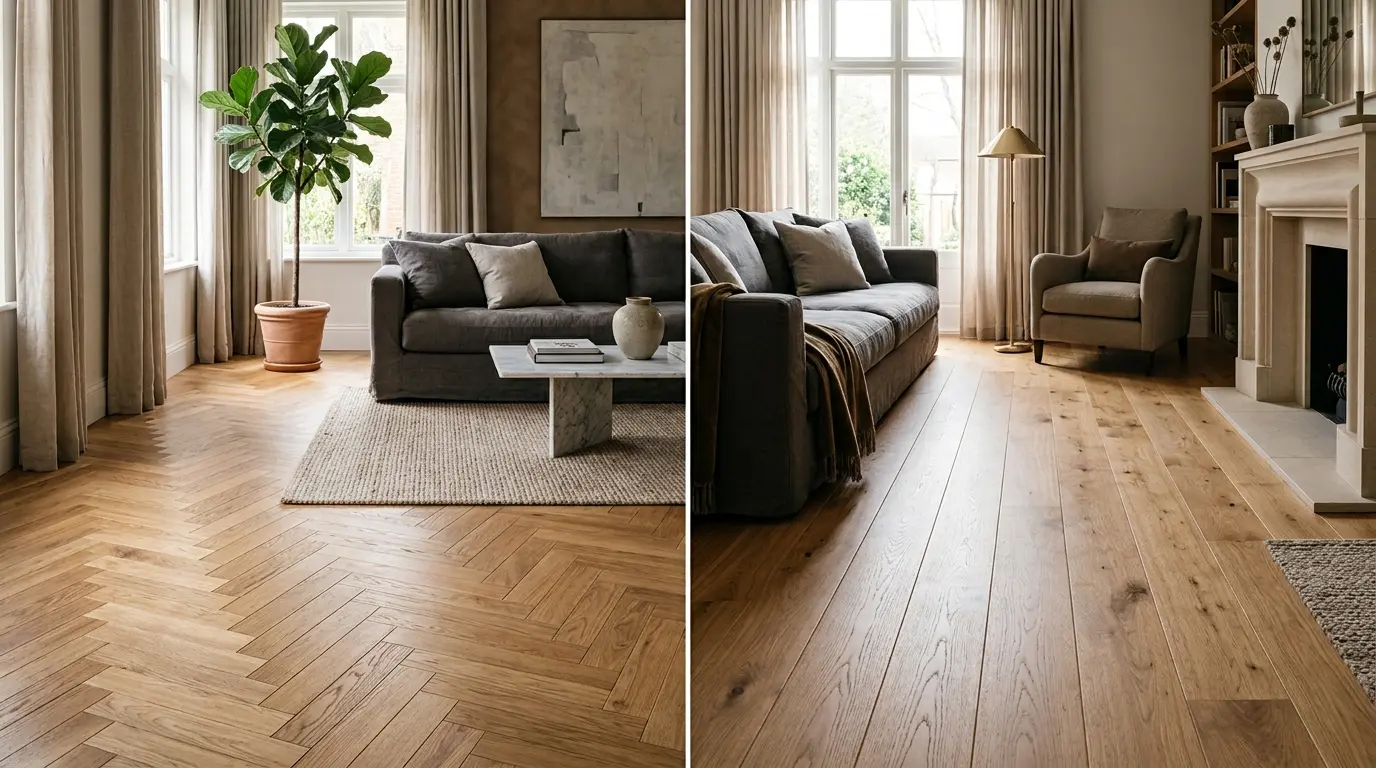
When Choosing Between Herringbone and Straight Flooring, the direct answer lies in your design goals: traditional straight planks create a clean, expansive, and modern aesthetic that visually elongates a room, while herringbone delivers luxurious, geometric texture and classic architectural elegance. For Melbourne homeowners, whether renovating a classic Victorian terrace in Carlton or building a modern minimalist home in the bayside suburbs, herringbone flooring vs straight is an important consideration when selecting the right flooring pattern. Understanding the distinct differences in cost, installation, and visual impact will ensure you choose a floor that perfectly harmonises with your lifestyle and property value.
| Feature | Traditional Straight Plank | Herringbone Parquetry |
|---|---|---|
| Visual Impact | Clean, minimalist, and elongates the room. Draws the eye forward. | Rich, textured, and luxurious. Creates a geometric focal point. |
| Installation Cost | Generally lower due to faster laying times and less material waste. | Higher due to intricate labour, precise alignment, and more cut waste. |
| Room Suitability | Perfect for any size, especially highly cluttered or very small rooms. | Best in large, open-plan spaces, hallways, and grand entrances. |
| Property Value | Highly sought-after, offering a safe, universally appealing canvas. | Adds premium, high-end architectural value and prestige to the home. |
Herringbone vs Straight Flooring
When choosing a new style for your upcoming renovation you’ll need to understand the underlying differences in style manufacturing, preparation and installation. The debate of herringbone or straight flooring is not so much about which of the two types of timber is better, but rather about the geometry of the wood and the geometry of your house.
Traditional Straight Plank Flooring
The most popular and widely recognised style of timber flooring worldwide is straight plank flooring. As the name suggests, the floorboards are laid side-by-side in parallel straight lines from one end of the room to the other. They may be of different lengths (usually in random lengths to create a natural staggered join) and width. Recently, ultra-wide straight planks (190mm – 240mm) have been used with much greater frequency in contemporary Melbourne homes, as they are fewer and less noticeable than the configuration of narrower traditional planks, offering a smooth unbroken and very modern fabric.
Herringbone Parquetry Flooring
Herringbone is one particular type of parquetry that has existed since the Roman Empire’s roads and was a feature of luxury European architecture in the 16th century, particularly the Chateau de Fontainebleau, France. Herringbone blocks are cut to precise and uniform rectangular dimensions than straight planks. They are then placed at an exact right angle to each other, forming a unique staggered zig zag pattern. The side of one board is joined to the end of another. This design produces a beautiful illusion of motion and texture in the actual light that reflects off the wood, which has two sets of grains that capture the light in a different manner.
According to WoodSolutions, parquet flooring can be arranged in a wide range of patterns, with herringbone being one of the established designs used in both residential and commercial interiors.

Herringbone vs Straight Flooring Pros and Cons
Your choice of pattern will determine the overall look of your interior. We will delve into the advantages and disadvantages of Herringbone floors vs. traditional straight plank flooring to shed light on the importance of this choice.
The Pros of Traditional Straight Planks
- Cost-Effective: Installation of straight planks is quicker and less cutting is required which results in lower labour costs. There is also only 5% – 7% material waste to account for.
- Space Enhancing: When placing long straight planks across the longest axis of a room, they pull the eye towards the floor, creating the illusion of a larger room and length.
- Versatility: Straight planks serve as a serene and elegant background. They don’t clash with vibrant furniture, eye-catching rugs, or intricate architectural details.
The Cons of Traditional Straight Planks
- Less ” Wow” Factor: Although gorgeous, straight planks are common. They may not provide the instant, eye-catching effect of a custom patterned floor.
- Limited Directions: You must go in a specific direction. While a perfectly laid floor for the hallway can look just a little bit crazed as it connects to the living room’s perpendicular floor, it can still look fine.
The Pros of Herringbone Parquetry
- Herringbone is an architectural prestige that simply transforms any room from a regular one into a luxurious one. It’s one of the most renowned symbols of luxury real estate, adding to the prestige and resale value of your property. This pattern is the granddaddy of all timber parquetry flooring melbourne.
- Dynamic Light Play: The boards are positioned to opposite angles, which means that the light falling on the grain is different. This creates the illusion of a multi-dimensional floor, which glides through the room, changing colour and depth as you walk across it.
- In fact, the herringbone pattern is both busy and textured, which makes it very effective at disguising surface scratches and dust – an advantage for active homes.
The Cons of Herringbone Parquetry
- Higher investment: Installation is very meticulous. All of the blocks need to be precisely glued, and the waste factor is quite high (typically 12% to 15% because the walls need to be cut in such complex fashion).
- The zig-zag pattern can add to the feeling of chaos, clutter and “busy” in a very small, high-dracon room.

Common Problems or Mistakes When Choosing Between Herringbone and Straight Flooring
Owning a home, many homeowners get hooked on a photo on Pinterest, but the concept of their floor plan never crosses their mind. These are some of the expensive mistakes that can be made when Deciding How to Use Herringbone vs Straight-Grain.
1. No Subfloor Preparation (The Parquetry Killer)
Herringbone is less forgiving than straight planks, especially when the subfloor has some minor imperfections, as the planks will not accept them. Parquetry should be glued on a surface that is perfectly level. If there is a dip in your concrete slab, the sharp corners of the herringbone blocks will project above the surface creating “lippage. This will ruin the look and cause an uncomfortable scratch on your socks and rapidly wear down. Good subfloor leveling is essential!
2. Herringbone for Tablecloths and Linen
One of the biggest design blunders is having a complicated herringbone in a room that is already overloaded with heavy patterned rugs, floral wallpapers and lots of furniture. The furniture will be on the floor and trying to out-compete the floor for attention, which is creating visual anxiety. Herringbone is a great choice to be the center of focus, surrounded by clean lines, neutral colors, and simple styling.
3. Crisscrossing at the center of the straight planks.
The orientation of straight planks can make a huge difference if you opt for them. One of the most frequent errors is to place the planks horizontally across a narrow hallway, resulting in a “ladder effect” which causes the hall to appear short, choppy and closed in.
4. Underestimating Material Waste
Often clients will order premium materials from a parquet flooring supply hawthorn by the square meter of their room. Herringbone will create a lot of offcuts, since the blocks must be cut 45° to fit to straight walls. If the 15% wastage margin is not ordered the installers will run short of wood halfway through the work.
How to Do It Right
Follow these tips for a professional design and installation for an investment that will look great and increase your home’s value.
Follow the Light
When planks are used in a traditional vertical pattern, the golden rule of interior design states that when the only source of natural light is the largest window or glass door in the room, you should run the planks parallel to this window or glass door. This way, the seams do not produce any small shadows, resulting in a seamless surface.
Play with Proportions
The oversized herringbone block can be used if you wish for herringbone but are concerned about it being “busy. Traditional blocks are smaller, but modern European Oak herringbone sometimes is available in larger sizes (e.g. 150mm wide x 900mm long). This larger scale helps minimize the amount of zig-zags that will be on the floor, for a cleaner and more modern rendition of the traditional pattern.
Consider a Border
If you want a truly custom look, request one of your installers to use straight plank borders to frame your herringbone floor. The single and double plank around the perimeter of the room defines this zig-zag pattern in an extremely refined manner, and the room appears to be a very high-end art gallery.
Consider Transition Zones
When renovating on a large scale, think about what the flooring will look like as it spans from one room to another. Others opt for herringbone in the bedrooms where you want a more relaxed and tranquil atmosphere and then change to straight planks in the grand entrance hallway and main living room, where guests will make an immediate impression.

When to Hire a Professional
Some very talented DIYers may try to assemble a floating straight plank floor in a small bedroom, but it is certainly no weekend project to lay herringbone.
The process of installing parquetry involves locating the geometric centre of the room, setting up a perfect spine with laser levels and positioning and attaching the parquetry with specific adhesives. Even when it’s off by a millimetre at the very first row of the herringbone floor it will add up until it is totally wrong at the other wall.
From the clean, minimalistic design of wide straight planks to the luxurious feel of parquetry, having a master tradesperson on Timber Flooring melbourne will ensure that the subfloor is ready to roll, the expansion gaps are cut flawlessly and the final design is just a picture-perfect sight.
Looking to Take Your Interior Design to a New Level?
Herry is the difference between herringbone and straight plank flooring and it will determine the character of your home. Making this critical decision doesn’t have to be a one-person job. Our design team and master craftsmen are here to help you along the way at Boss Timber Flooring. We provide and professionally fit Melbourne’s best range of high quality timber, no matter the pattern you go for, we can do it right. Call Boss Timber Flooring today for a complimentary design consultation and site evaluation and allow us to turn your dreams into reality.
FAQs
1. Is herringbone more expensive than straight flooring?
Yes. While the timber itself may be similarly priced, the labour required to install herringbone is much higher. The process takes significantly longer, requires specialized adhesives, and involves roughly 15% material waste due to complex edge cutting.
2. What are the herringbone vs traditional straight plank flooring pros and cons for small rooms?
In very small rooms, straight planks are generally superior as they draw the eye outward, making the space feel longer and less cluttered. Herringbone in a tiny, heavily furnished room can feel visually overwhelming and busy.
3. Is Choosing Between Herringbone and Straight Flooring just about aesthetics?
Mostly, yes. Both patterns, when made from high-quality engineered or solid timber, offer excellent durability and longevity. The choice primarily impacts the visual atmosphere, installation timeline, and your overall project budget.
4. Does herringbone flooring increase property value?
Absolutely. Herringbone parquetry is globally recognised as a hallmark of luxury and bespoke craftsmanship. It often yields a high return on investment, attracting premium buyers in the Melbourne real estate market.


2 Responses
I really like the look of herringbone but I’m wondering whether the extra pattern makes a room feel smaller. Would straight-laid timber generally be a better choice for a narrow living space?
Herringbone doesn’t necessarily make a room feel smaller, but the strong pattern can draw more visual attention to the floor. In a narrow living space, the direction and scale of the boards can have a bigger impact than the choice of pattern itself.
Straight-laid timber can create a cleaner, more continuous look and may make a narrow room feel more open, particularly when the boards run along the length of the space. That said, a well-designed herringbone layout can work beautifully in smaller rooms too. Board size, colour, natural light and the direction of the pattern should all be considered before deciding.